TLDR: This guide covers what matter management is, why teams outgrow email and spreadsheets, how it connects to legal operations and AI, and what to look for when evaluating matter management software — with real examples from teams like Co-op, Cockroach Labs, and Craveable Brands.

Legal teams are being asked to do more than ever before - managing growing volumes of work, supporting business growth, reducing risk, and providing strategic insight, often with limited resources.
Yet many legal departments still manage work through a combination of emails, spreadsheets, shared drives, and disconnected tools.
Legal requests arrive through multiple channels; with documents scattered across systems, tracking progress and updating stakeholders on requests involves a lot of back and forth, and reporting often requires significant manual effort. As workloads increase, these challenges grow – matters become increasingly difficult to prioritize, manage, and turnaround in a timely manner.
This is where matter management becomes essential - and the definition matters more than most teams realize. Modern legal matter management provides the operational foundation that allows legal teams to manage requests, documents, workflows, knowledge, and reporting within a single system, and for the business to have the visibility and confidence in how their requests are progressing.
Matter management is the foundation of modern legal operations and one of the most important technology investments for organizations evaluating in-house legal matter management software.
As legal technology continues to evolve and AI becomes increasingly embedded into legal workflows, matter management is no longer simply a productivity tool. It has become the operational backbone that enables legal departments to scale, demonstrate value, and support better business outcomes.
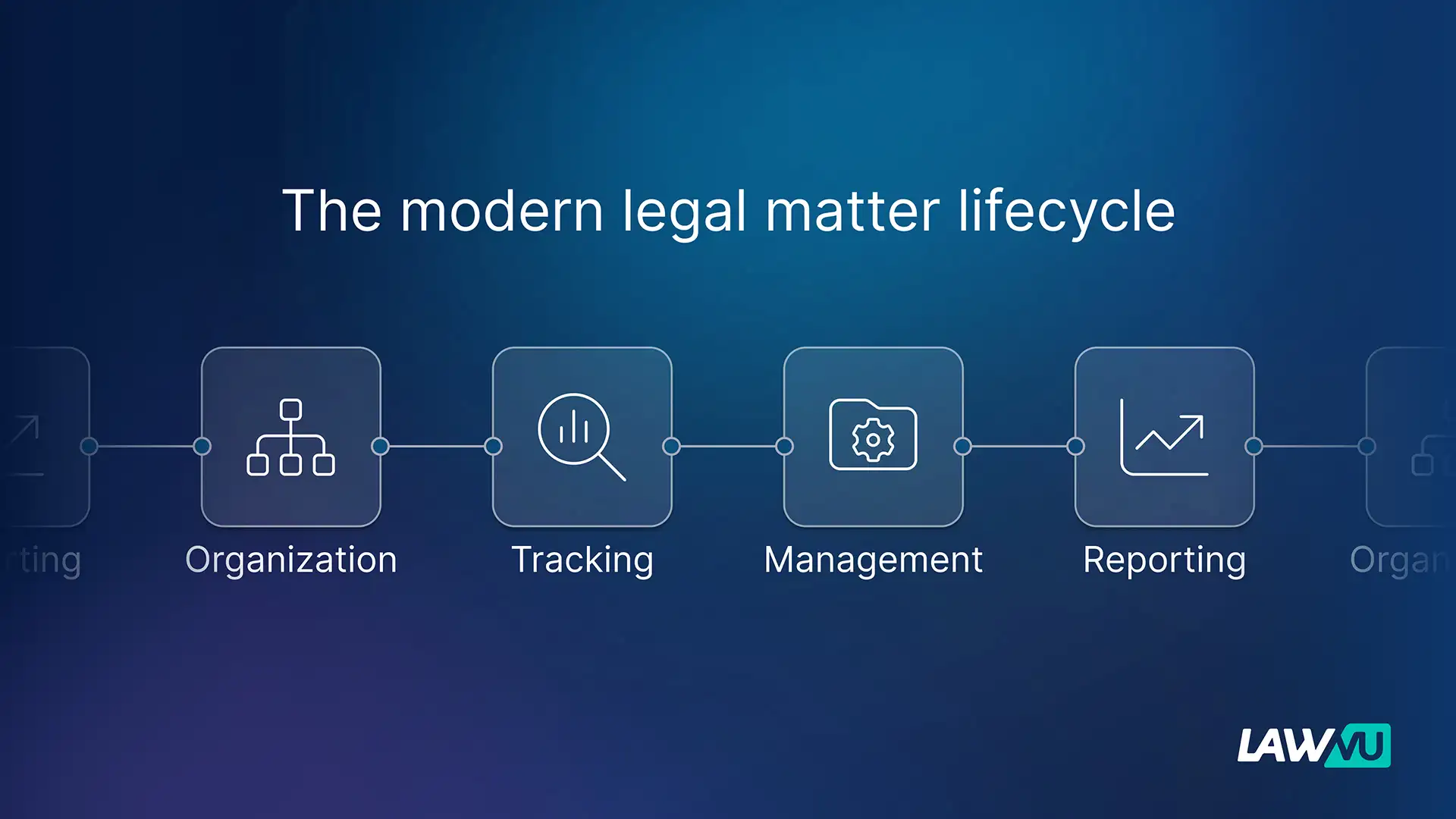
A modern matter management system provides legal teams with a centralized environment for managing intake, matters, documents, workflows, communications, and reporting. Plus, there is the option to include contracts, which are inherently linked to matters.
A matter represents any piece of legal work that requires oversight, collaboration, documentation, decision-making, or reporting. Matter management provides a centralized framework for managing that work consistently and efficiently.
Unlike disconnected systems that force legal professionals to search through emails, documents, and spreadsheets to understand and provide updates on the status of work, matter management brings everything together in a single location.
This creates visibility into open matters, matter status, ownership, documents, communications, deadlines, spend, and reporting metrics.
For many organizations, a matter management system becomes the primary system of record for legal operations, helping legal teams replace fragmented processes with a more connected and scalable approach that improves legal efficiency and service delivery.
A legal matter is any legal issue, request, project, dispute, transaction, or advisory engagement that requires legal involvement.
Examples include:
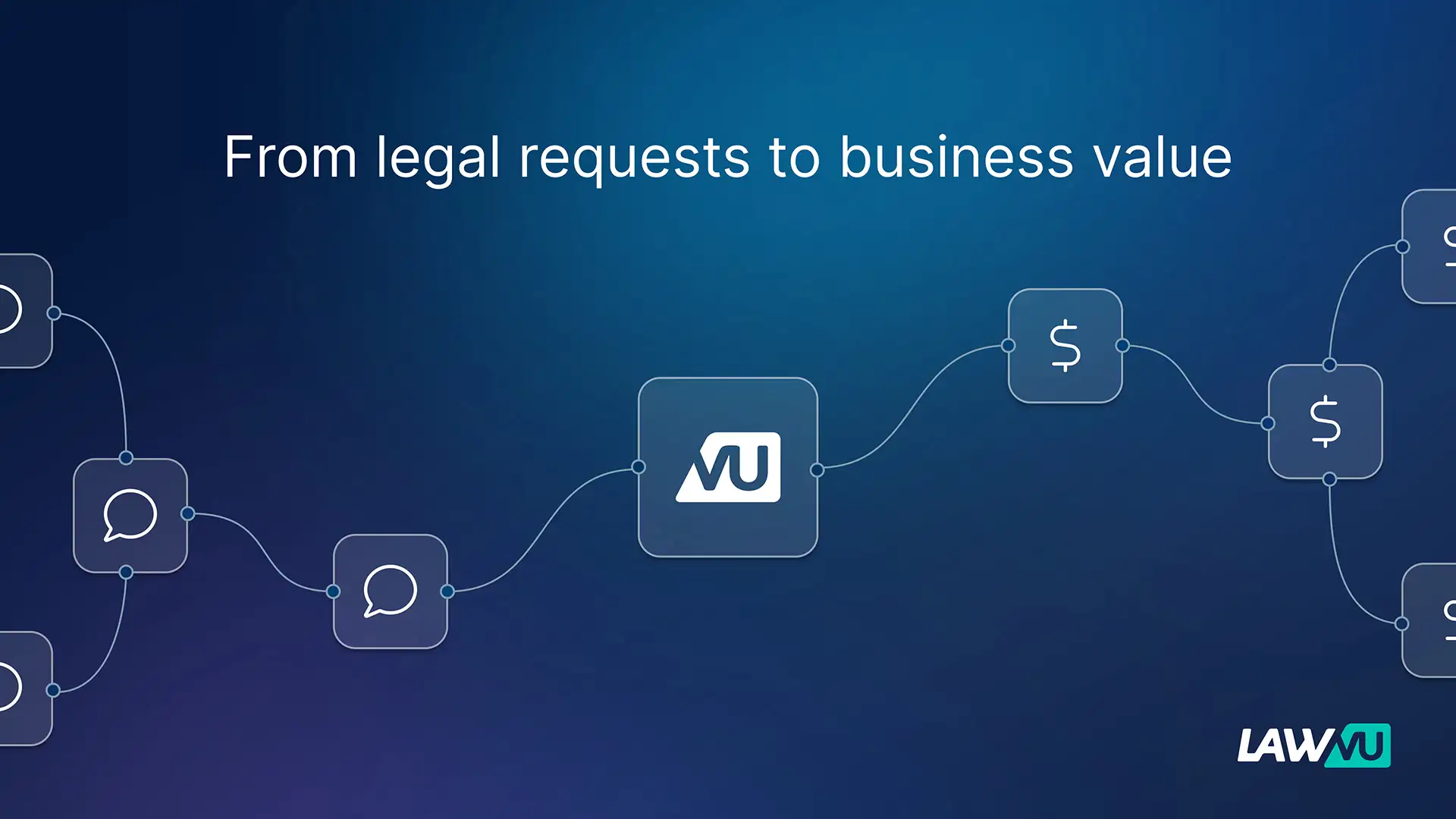
Effective legal matter management gives legal leaders the visibility they need to understand demand, allocate resources effectively, and demonstrate value to the business.
Without matter management, common challenges emerge:
Organizations that centralize legal work often discover that visibility is the catalyst for broader operational improvement.
For example, Emapta and Northern Tool adopted a more unified approach to managing contracts and matters, helping their legal teams improve collaboration, reduce information silos, and gain a clearer picture of legal demand across the business.
Every matter starts with a request.
Structured intake ensures requests are captured consistently, categorized appropriately, and routed to the right people.
Requests are evaluated based on urgency, complexity, risk, legal resource, and business impact.
Legal professionals collaborate on documents, approvals, negotiations, communications, and decision-making activities.
Leaders gain access to real-time information about workload, capacity, performance, and outcomes.
Completed matters become reusable organizational knowledge.
In reality, effective matter management serves as:
The most effective matter management systems become the operational backbone of legal departments, serving as a trusted source of information for legal professionals, legal operations teams, and business stakeholders.
Cockroach Labs approached matter management as part of a broader effort to build a modern legal department prepared for future growth. By creating greater consistency, visibility, and operational structure, the legal team established a stronger foundation for scaling legal services as the business evolved.
Every matter generates valuable information.
Contracts reveal negotiation strategies. Regulatory matters provide compliance insights. Advisory requests create precedent. Litigation matters generate institutional expertise.
Matter management transforms legal work into a reusable organizational asset.
“Everyone in the legal team is using LawVu now. Before LawVu, there was a significant risk around documentation – it was scattered throughout emails. I now have a much more robust record of what’s happening, and LawVu has reduced our exposure for not having complete matters.”Andrew Hay, Head of Operations, Legal and Secretariat, Co-op
The most effective legal matter management software solutions provide a centralized environment for managing legal work, documents, workflows, reporting, collaboration, and knowledge management:
Modern in-house legal matter management software increasingly combines matter management, contract management, document management, reporting, workflow automation, and AI-powered capabilities within a single platform.
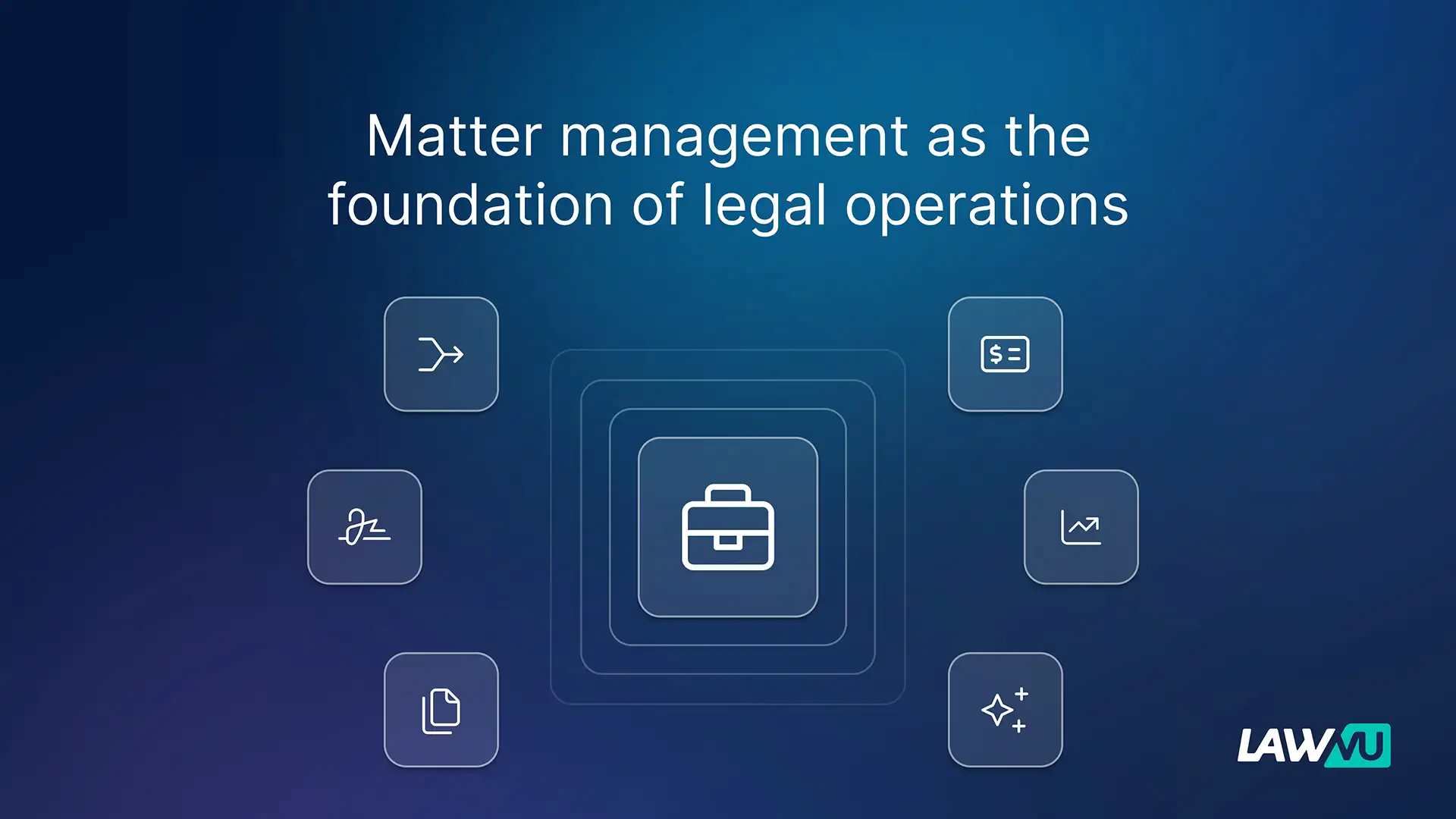
Matter management sits at the center of legal operations and serves as the foundation for effective legal matter management across the organization.
Matter management connects:
Northern Tool and Emapta both adopted a more unified approach to contracts and matters, creating a more complete view of legal work and enabling stronger operational oversight.
Common obstacles include:
Craveable Brands faced many of the challenges common to growing legal teams. By introducing more structured workflows and automation, the legal team created a more scalable approach to managing legal work while improving efficiency across the department.
Case management traditionally focuses on litigation and disputes.
Matter management encompasses all legal work, including commercial requests, contracts, compliance, governance, employment matters, and litigation.
As legal departments modernize operations, selecting the right legal matter management software becomes increasingly important.
The best in-house legal matter management software combines matter tracking, workflow automation, document management, reporting, search capabilities, and AI readiness within a single platform.
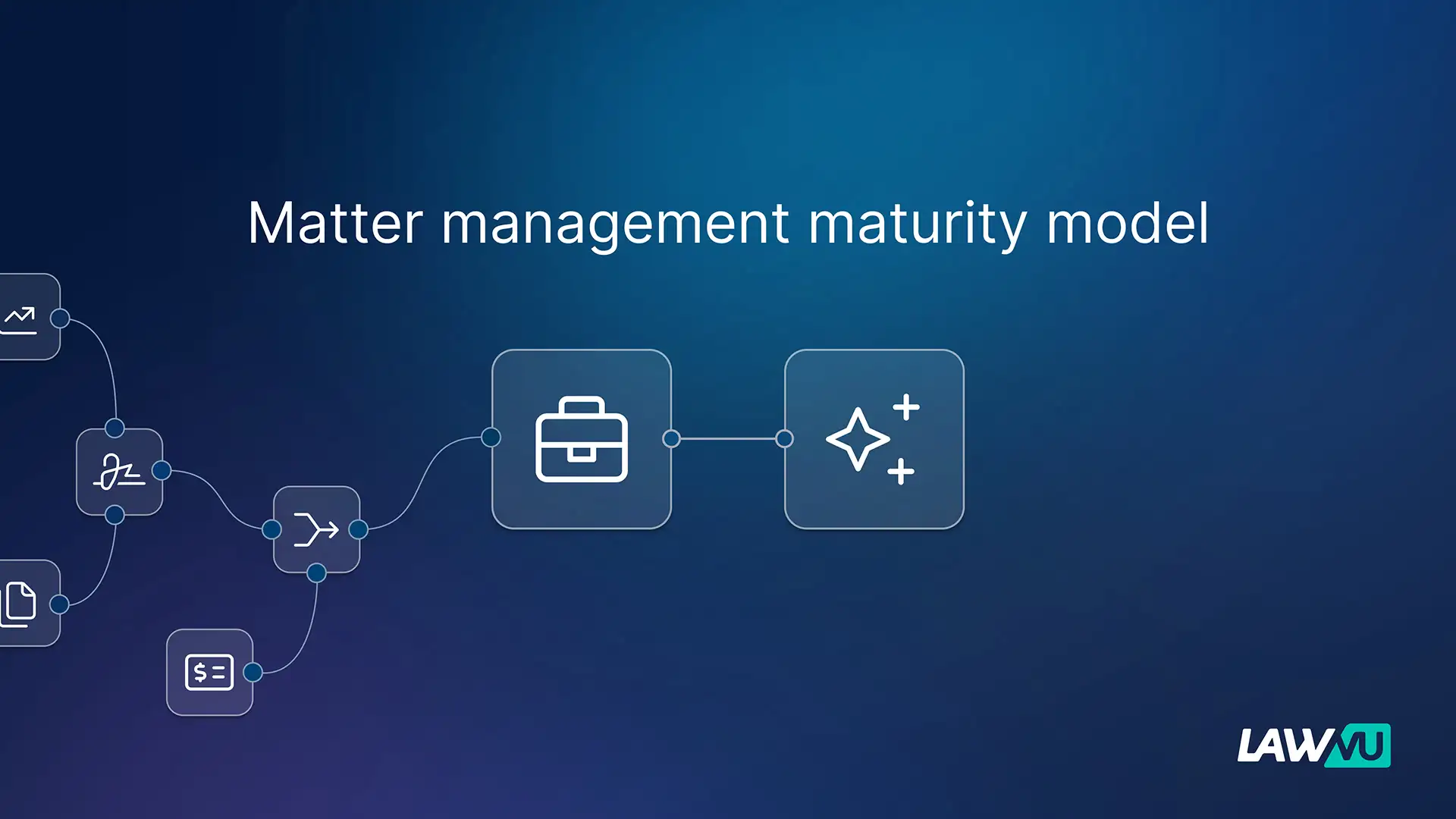
Matter management creates structured data, context, relationships, and institutional knowledge that allow AI to deliver meaningful legal outcomes.
When legal work is organized consistently, AI can:
What began as a way to track legal work has evolved into a strategic capability that supports legal operations, business collaboration, knowledge management, reporting, and context-aware AI.
As legal departments continue to modernize, matter management will increasingly serve as the system that connects legal data, workflows, and decision-making across the organization.
For legal leaders seeking greater visibility, operational efficiency, and business impact, matter management is no longer optional – it is foundational.
Matter management is the process of organizing, tracking, managing, and reporting on legal work throughout its lifecycle. It provides legal teams with a centralized system for managing requests, projects, disputes, contracts, compliance activities, and advisory work. Effective matter management improves visibility, consistency, collaboration, and reporting while helping legal departments operate more efficiently.
A legal matter is any issue, request, project, transaction, dispute, or advisory engagement that requires legal involvement. Examples include contract negotiations, employment matters, litigation, compliance investigations, privacy requests, regulatory filings, intellectual property matters, and outside counsel engagements.
Legal matter management software helps legal teams organize, track, manage, and report on legal work throughout its lifecycle. It provides a centralized system for managing matters, documents, workflows, collaboration, and reporting while giving legal leaders greater visibility into workload and performance.
A matter management system is a centralized platform used to manage legal work, documents, workflows, deadlines, reporting, and collaboration. It creates a single source of truth for legal operations and helps teams improve visibility, consistency, and efficiency.
Matter management helps legal teams gain visibility into workload, prioritize requests, reduce risk, improve service delivery, and demonstrate value to the business. Without matter management, legal work often becomes fragmented across emails, spreadsheets, and disconnected systems, making it difficult to track progress, measure performance, or retain institutional knowledge.
Matter management software helps legal teams:
- Centralize legal work
- Improve collaboration between legal and the business
- Standardize processes
- Reduce administrative effort
- Increase visibility into workload and status
- Improve reporting and analytics
- Preserve institutional knowledge
- Support legal operations initiatives
- Improve turnaround times and business service
- Create a stronger foundation for AI and automation
The result is a more efficient legal department that can spend more time on strategic work and less time managing administrative tasks.
Case management traditionally focuses on litigation and dispute-related activities. Matter management encompasses all legal work, including contracts, compliance, employment matters, governance activities, legal requests, and litigation.
For most in-house legal teams, matter management provides broader functionality because it supports the full range of legal work rather than focusing exclusively on disputes.
How does matter management improve legal operations?
Matter management provides the operational framework that connects legal requests, workflows, documents, reporting, knowledge, and collaboration.
By creating a single source of truth for legal work, matter management helps legal operations teams:
- Measure performance
- Allocate resources effectively
- Identify bottlenecks
- Improve service delivery
- Standardize processes
- Identify opportunities to automate or template processes
- Support strategic decision-making
Many legal operations initiatives begin with establishing strong matter management practices.
Matter management reduces risk by ensuring legal work is documented, tracked, and managed consistently.
Key risk-reduction benefits include:
- Better visibility into deadlines and obligations
- Centralized document storage
- Audit trails and historical records
- Consistent workflows
- Improved collaboration
- Reduced reliance on individual knowledge
Having a complete record of legal activity also helps organizations respond more effectively to audits, investigations, disputes, and regulatory requirements.
When evaluating matter management software, look for capabilities such as:
- Structured intake and self-service
- Matter tracking
- Workflow automation
- Document management
- Search and retrieval
- Reporting and dashboards
- Collaboration tools
- Integrations with key business tools (Email, Teams, Slack, Salesforce, etc.)
- Security and governance controls
- AI-powered capabilities
The best solution should align with your team's workflows while providing flexibility to evolve as your legal department grows.
AI is only as effective as the data and context available to it.
Matter management creates structured, searchable legal data that helps AI deliver more accurate and useful outcomes. When legal work is captured consistently, AI can assist with:
- Knowledge discovery
- Document summarization
- Matter creation
- Workflow automation
- Recommending and undertaking actions
- Reporting and analytics
- Legal research and drafting support
For many organizations, matter management is becoming the foundation for successful AI adoption within legal operations.
Yes. Matter management is valuable for legal teams of all sizes.
Smaller teams often benefit because matter management helps them maximize limited resources, improve organization, and avoid relying on informal processes that become difficult to scale as the business grows.
Establishing strong matter management practices early can also make future growth and technology adoption significantly easier.
One of the biggest challenges facing in-house legal teams is demonstrating their contribution to the business.
Matter management helps by providing data on:
- Matter volume
- Workload trends
- Response times
- Resource allocation
- Business demand
- Risk management activities
This information allows legal leaders to communicate impact, justify investment, support staffing decisions, and demonstrate how legal contributes to broader business objectives.
Yes. Matter management is one of the foundational components of a LegalOS - a system that connects legal work, legal knowledge, legal data, and AI-powered workflows.
The future of matter management is increasingly connected, intelligent, and data driven.
Modern matter management platforms are evolving beyond simple tracking tools to become operational hubs that support collaboration, automation, reporting, knowledge management, and AI-powered workflows.
As legal departments continue to modernize, matter management will play a central role in helping legal teams operate more strategically, scale efficiently, and deliver greater value to the business.