Legal, meanwhile, has traditionally operated across email, spreadsheets, shared drives, disconnected point solutions, and manual workflows. That fragmentation creates operational drag, slows down the business, and makes it difficult for legal leaders to gain visibility into risk, workload, spend, and performance.
A legal operating system changes that.
A legal operating system is a connected platform where in-house legal teams run their entire function – from intake and matters to contracts, spend management, reporting, and AI-powered workflows – inside one unified environment.
LawVu LegalOS is designed specifically for in-house legal teams. It brings together legal intake, matter management, contract lifecycle management, spend management, documents, reporting, and AI capabilities in one connected platform that becomes the operational foundation for legal.
Instead of stitching together multiple systems, legal teams work from one intelligent platform with shared workflows, shared data, and embedded AI.

That usually looks like:
Many legal departments are now rethinking whether a collection of point solutions can support the demands of modern legal operations. As legal work becomes more complex, organizations are increasingly adopting platform-based approaches that centralize work, data, and collaboration.
If this sounds familiar, explore:
According to LawVu, many in-house legal teams spend more than an hour every day simply switching between systems to gain visibility into their work.
A legal operating system replaces fragmented workflows with a connected model where every request, workflow, document, approval, and AI interaction operates on the same data foundation.
That shift matters even more in the AI era.
Standalone AI tools often lack visibility into legal matters, contracts, obligations, spend data, policies, approvals, and organizational workflows. That limits accuracy, governance, and usefulness.
LawVu describes this as the difference between “AI as a feature” and “AI as an engine.”
When AI operates inside a legal operating system, it can securely work across connected legal data and workflows that are specific to the organization to deliver more meaningful outcomes.
This is one reason many legal teams are moving toward platform-based operating models rather than continuing to add standalone tools.
Further reading:
LawVu LegalOS enables AI capabilities across intake, contracts, reporting, spend management, and workflow orchestration through a shared legal data foundation.
That includes:
The result is better context, stronger governance, greater efficiency, and more useful outcomes for legal teams.
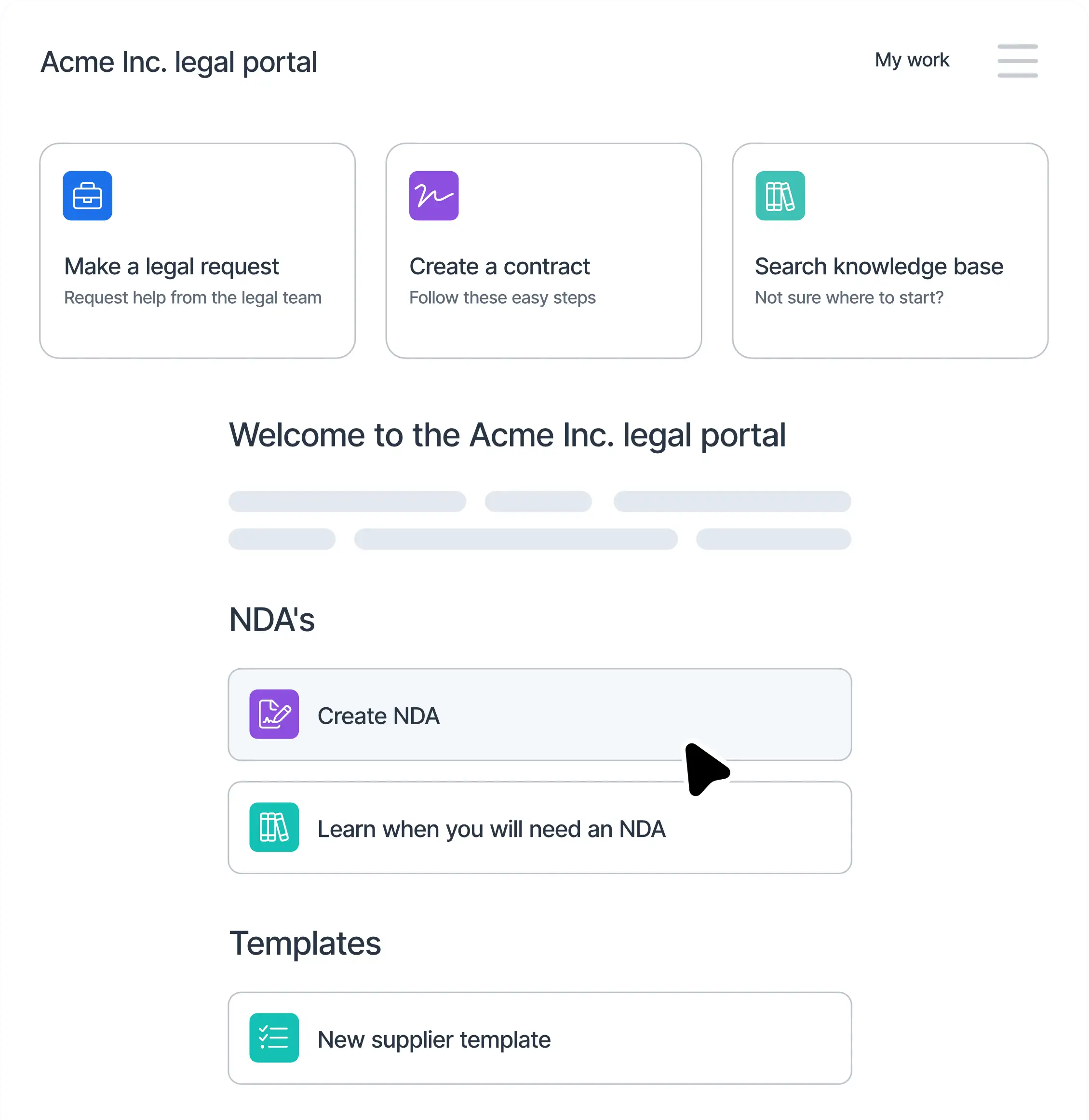
Legal teams are often overwhelmed before work even begins. Requests arrive incomplete, through the wrong channels, or without sufficient context.
LawVu’s AI Intake is designed to become the intelligent front door that controls legal demand.
Intake is often where operational friction begins. When legal requests arrive through multiple channels, teams spend valuable time gathering context, clarifying requirements, and manually routing work.
Organizations beginning this journey may find value in how implementing in-house legal software works.
AI Intake enables business users to submit requests directly from the business portal, Teams, Slack, or email using plain language without needing to understand legal terminology or complete complex forms.
The platform can:
LawVu describes this as “shaping demand before it shapes you.”
For legal teams, that means less administrative overhead and earlier visibility into risk.
For the business, that means fewer bottlenecks and faster decision-making.

Traditional matter management systems often function as static systems of record.
A legal operating system goes further by orchestrating work across the entire legal function.
Matter management serves as the operational backbone of a legal department. By connecting requests, tasks, documents, approvals, and reporting, legal teams gain complete visibility into workload and can better align resources with business priorities.
LawVu LegalOS centralizes matters, projects, tasks, documents, approvals, and collaboration into one connected workflow.
Northern Tool adopted LawVu to bring contracts and matters together in one environment, giving the legal team a unified view of work and reducing the need to switch between disconnected systems.
Product capabilities include:
The platform also introduces conversational workflows through the LawVu AI Assistant, allowing legal teams to create matters, assign tasks, and trigger workflows using natural language.
As LawVu describes it: “Ask to answer. Ask to act.”
Andrew Hay, Head of Operations, Legal and Secretariat at Co-op, explains the value of a centralized legal operating model:
“Everyone in the legal team is using LawVu now. Before LawVu, there was a significant risk around documentation – it was scattered throughout emails. I now have a much more robust record of what's happening, and LawVu has reduced our exposure for not having complete matters.”
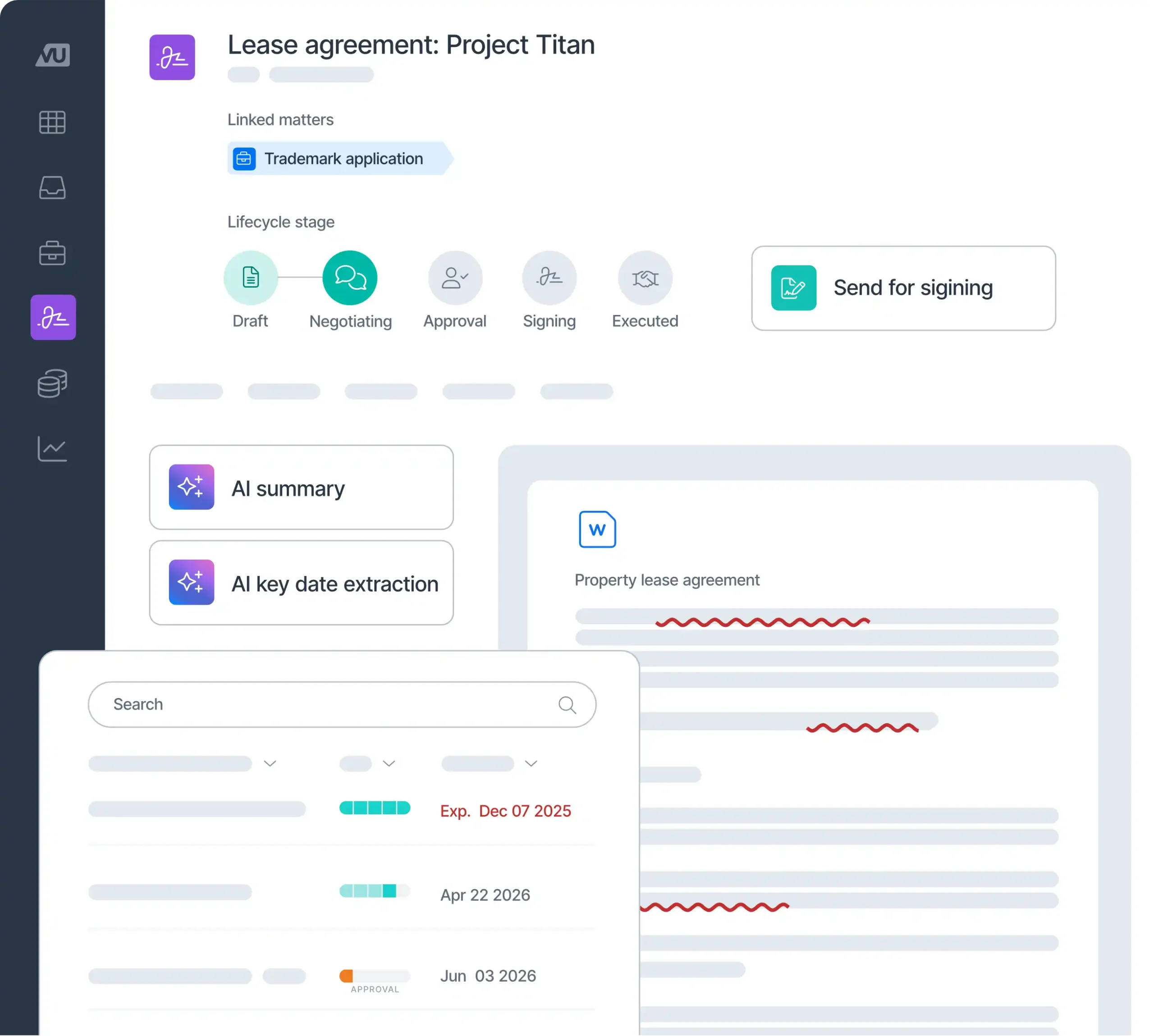
Contracts are one of the most valuable sources of operational and risk intelligence inside an organization – but only if the data inside them is accessible. A legal operating system transforms contracts from static files into connected operational intelligence. LawVu LegalOS combines contract lifecycle management, AI drafting and review, AI extraction, approvals, collaboration, reporting, and cross-contract analysis in one system.
LawVu Draft enables legal teams to quickly draft, review, redline, and refine contracts directly inside Microsoft Word using AI-powered workflows combined with precision tools and the legal team’s clause libraries, precedents, templates, and playbooks. Related resources:
Capabilities include:
Health care legal operations teams using LawVu have reported significant reductions in contract turnaround times after introducing more structured contract workflows and automation: Healthcare legal ops cuts contract timelines by 71% and gains board-level metrics
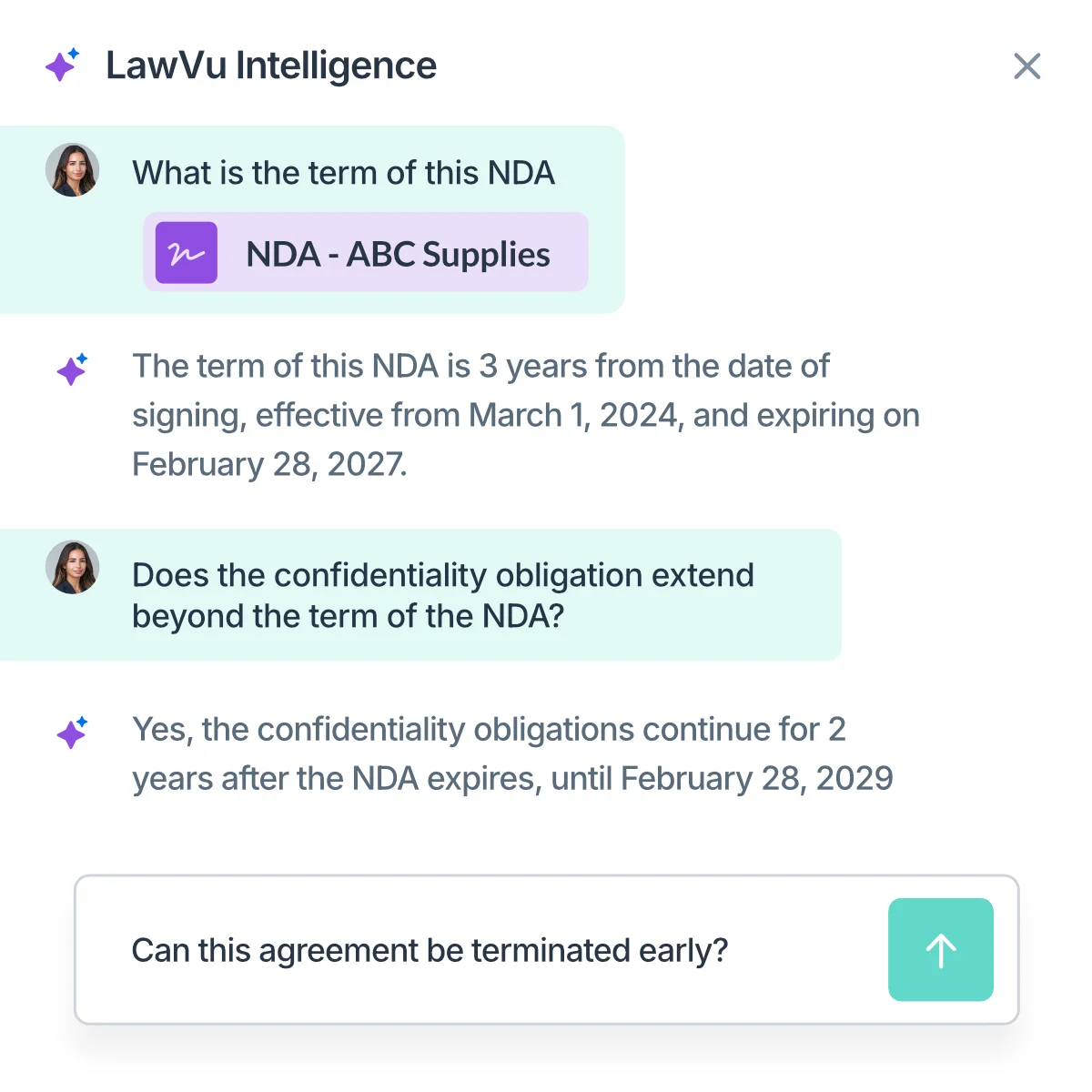
LawVu Lens is designed to provide cross-contract analysis across an organization’s contract repository. Instead of manually reviewing hundreds or thousands of agreements, legal teams can identify:
LawVu Lens turns contracts into structured, searchable data. Searchability becomes increasingly important as organizations scale. Rather than relying on institutional knowledge or manual reviews, legal teams can identify obligations, risk patterns, renewal exposure, and operational insights across thousands of agreements. One LawVu customer reported saving 10–15 hours per week previously spent searching for contracts and legal information:

Legal spend is another area where disconnected systems create inefficiency and risk.
Many legal teams still manage spend across invoices, spreadsheets, finance systems, and email approvals. Consolidating these processes within a legal operating system creates stronger governance while reducing administrative effort for both legal and finance.
A legal operating system connects invoices, approvals, outside counsel management, reporting, and billing guideline review into one workflow.
For a deeper dive, see:
LawVu’s spend management capabilities include:
The goal is to reduce manual review effort while improving financial governance and transparency.
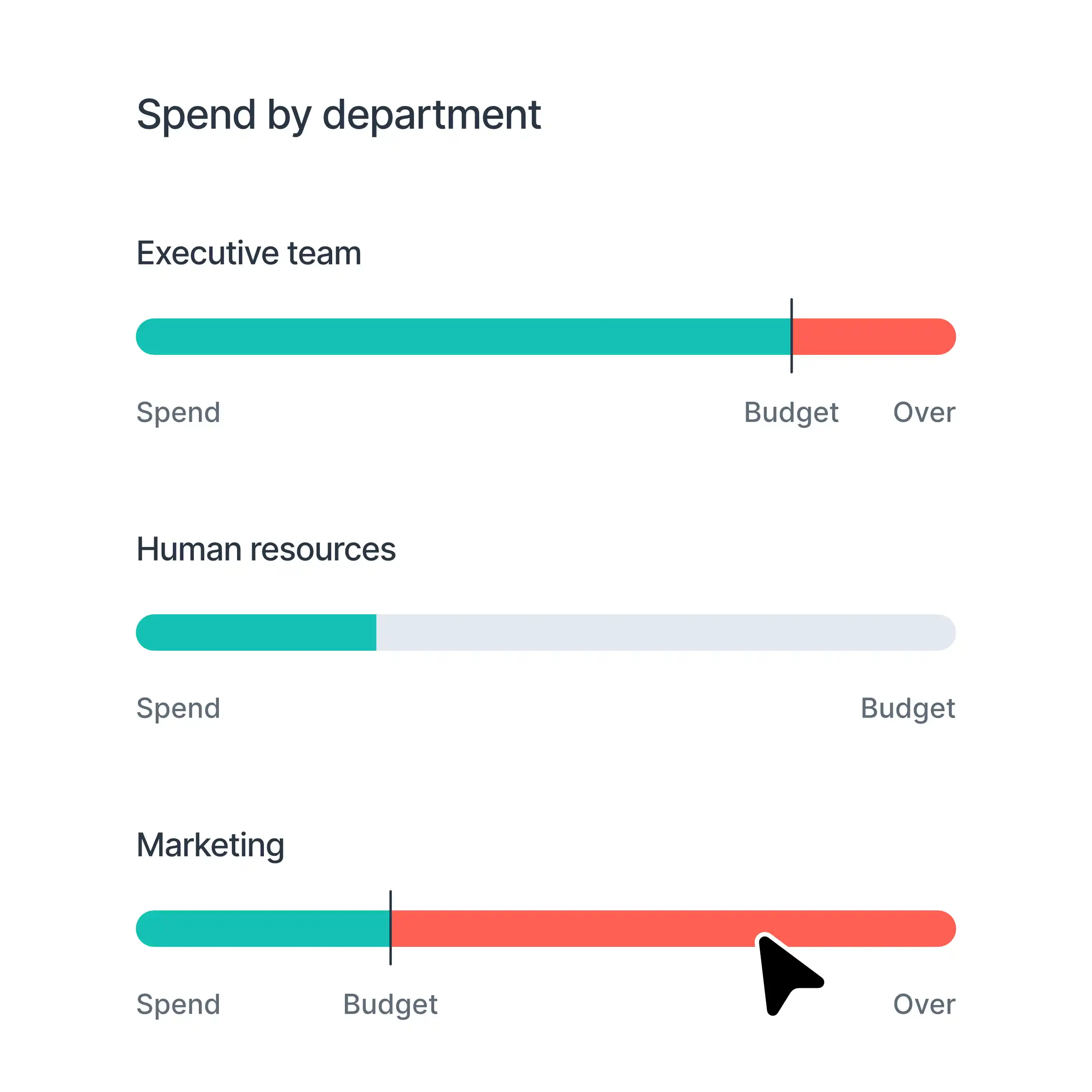
Legal teams increasingly need to demonstrate value, forecast workload, surface risk, and provide strategic insight to the business. A legal operating system connects operational data across the legal function to make that possible. LawVu’s reporting and insights capabilities provide visibility across matters, contracts, spend, obligations, and workflows.
Capabilities include:
For many legal leaders, reporting is no longer simply about tracking activity. It is about demonstrating legal's impact on business outcomes.

“Legal doesn’t need another point solution. It needs the foundational layer that powers the function. A system of action, not just a system of record.”
Modern legal teams need:
A legal operating system becomes the platform legal runs on – not just another tool legal logs into.
Legal teams are expected to move faster, support more business complexity, manage growing risk, and deliver strategic insight without proportional headcount growth.
At the same time, AI is reshaping expectations around productivity and operational efficiency.
This combination is accelerating the shift toward connected legal infrastructure.
Rather than layering AI onto fragmented systems, LegalOS creates one connected environment where legal work, legal knowledge, and AI operate together securely and contextually.
Rosanna Biggs, General Counsel at Linktree, explained the value this way:
“Having a legal operating system like LawVu is the best foundation for AI because all of our data is in one place. It allows us to automate repetitive tasks, freeing up our lawyers to focus on high-value work.”Rosanna Biggs, General Counsel at Linktree
Dentsu reached a similar conclusion:
“I was trying to find a solution that we could use end-to-end with billing, looking at new matters, a CMS storage solution, and as a method of communicating with the business and enabling them to check the status in real-time.”Russell Davies, Global Head of Operations - Legal and Compliance, Dentsu
Emapta also adopted LawVu to unify contracts and matters into a single platform. Customers consistently describe the value of having a single source of truth across legal operations, contracts, spend, and collaboration.
It connects intake, matters, contracts, spend, documents, reporting, and AI workflows inside one operating system designed specifically for legal operations.
Organizations using LawVu have reported measurable operational improvements, including:
Customers including Dentsu, Linktree, Northern Tool, Healthcare Legal Ops, Emapta, Property Finder, Craveable Brands, and NGM Group have used LawVu to modernize legal operations while creating a more connected foundation for future growth.
Rather than relying on disconnected point solutions, legal teams gain:
That enables legal to move from managing work to running the legal function strategically, efficiently, and at scale.