TL;DR: This guide walks through five steps to better matter management: understanding what it is, recognizing where email and spreadsheets fall short, defining what good looks like, evaluating AI, and choosing the right software.
Matter management is the system in-house legal teams use to capture, assign, track, and report on all legal work, from routine advice requests to complex disputes and contract negotiations.
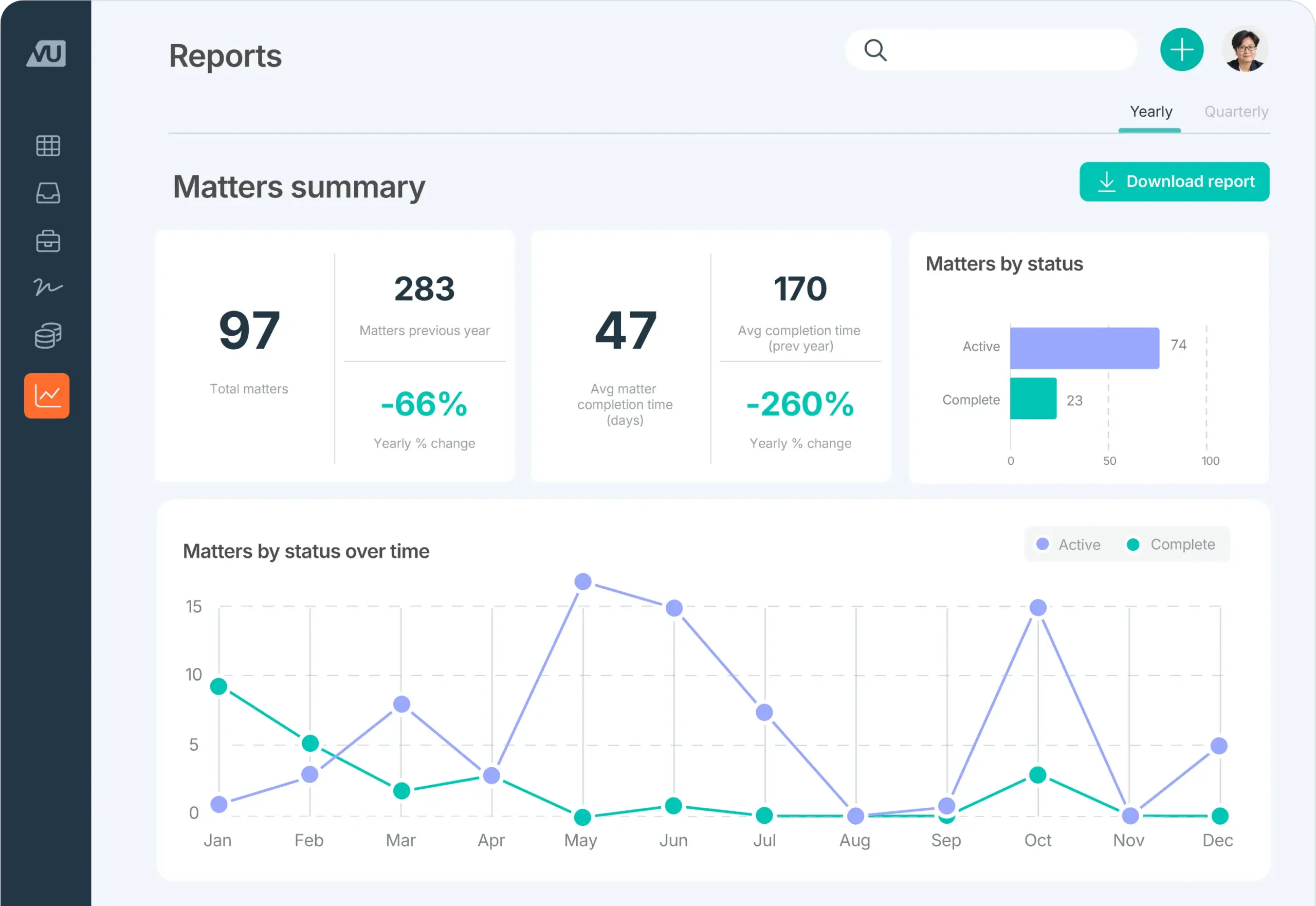
A legal matter for in-house legal teams is any piece of work that requires legal involvement. That includes:
A matter management system gives your team a structured way to handle all this work, track progress, manage documents and deadlines, and report on output, rather than piecing it together from inboxes, internal chat tools and spreadsheets.
Most in-house legal teams manage their work reactively, relying on email, spreadsheets, and shared drives that were never designed for legal workflow management. The result:
These aren't edge cases. They're the everyday reality for teams without dedicated matter management software.
Effective matter management gives legal teams a single place to centralize intake and manage work, track progress, and report on output, with consistent processes that scale as the business grows. The shift from reactive to proactive matter management comes down to four things:
When these elements work together, legal stops being a black box and starts operating like a strategic business function.
The most effective matter management systems don't just track legal work. They create a connected operating environment where matters, documents, knowledge, and communication all live together.
Every matter generates valuable information, including documents, emails, decisions, approvals, and precedents. Without a central system, that information becomes fragmented across inboxes, shared drives, chat tools, and personal folders. Over time, legal teams spend more time searching for information than using it.
Modern matter management software brings together matter tracking, document management, knowledge management, and collaboration into a single source of truth. This allows legal teams to quickly find past work, reuse institutional knowledge, and maintain complete records from intake through resolution.
As legal workloads increase, this connected approach helps teams scale without adding unnecessary complexity.
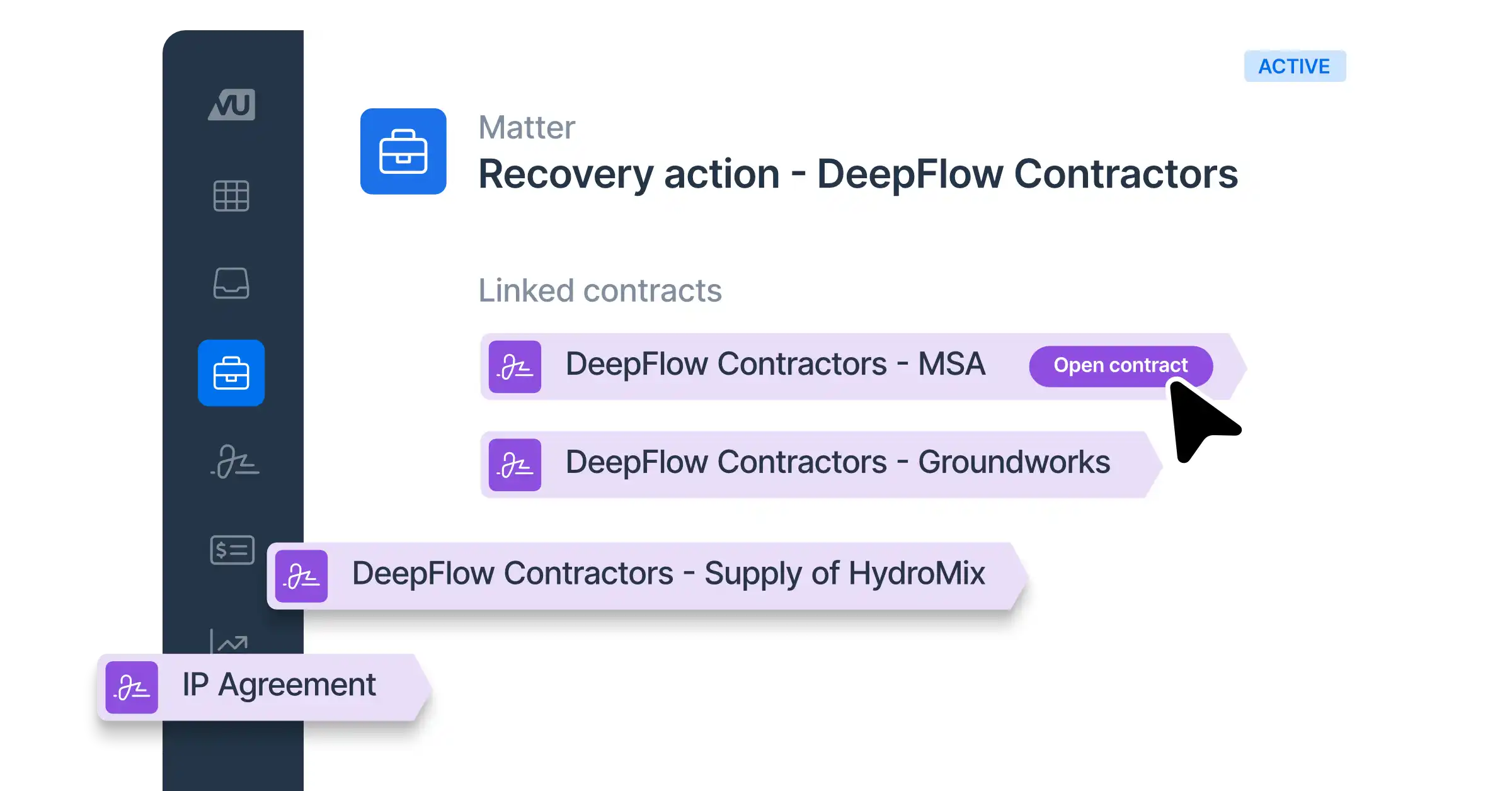
AI is now a practical part of matter management for in-house legal teams, reducing time spent on admin, resolving routine requests without legal involvement, and helping teams get more done without adding headcount.
Intake. AI can automatically classify incoming requests, capture information, and flag priority or risk, cutting the time between request received and work started. It can also resolve common business questions based on existing policies and guidelines, freeing legal to focus on work that genuinely requires their expertise.
Triage. AI suggests the right matter manager based on past work and current workload, so matters get assigned to the right person faster and with less manual effort.
Matter notes and summaries. As matters progress, notes and updates can quickly pile up. AI automatically summarizes everything into a clear, concise overview, so anyone on the team can get up to speed instantly without reading through every entry. No more lengthy handovers or hunting for the latest update.
Document understanding. AI is also improving how legal teams discover information across their work. Rather than manually searching through matters, emails, contracts, attachments, and knowledge repositories, lawyers can quickly surface relevant information from across the LegalOS.
The result is a legal team that responds faster, handles more work, and spends less time on tasks that don't require legal expertise – with a direct impact on both team productivity and demonstrable ROI for the business.
Embedded AI works inside your legal workflows rather than alongside them, which means it has the context to be genuinely useful and the security controls legal teams require.
Not all AI is equal. A standalone AI tool that sits outside your legal workflows adds another system to manage and another place for data to leak. For legal teams handling sensitive matters, that's a real risk – confidential information should never pass through third-party AI tools with different data handling standards or opaque privacy policies.
Embedded AI keeps everything within your existing legal environment, so your data stays where it belongs. It also makes AI governance simpler: with one platform, you have clear visibility into how AI is being used, by whom, and on what. That's increasingly important as organizations face growing pressure to demonstrate responsible AI use.
The difference with embedded AI is also context. When AI is built directly into your matter management system, it understands your matters, your documents, and your team's work history. It doesn't need prompting to find the right information. It's already there.
LawVu LegalOS embeds AI directly into legal workflows, from intake to insights, so teams move faster without losing control or creating new risk.
Every completed matter creates valuable knowledge for future work. Contracts, approvals, regulatory guidance, playbooks, templates, and matter outcomes all contribute to an organization's legal intelligence.
Without a centralized system, this knowledge often remains trapped in individual inboxes or buried in shared drives. Matter management software helps legal teams capture and organize institutional knowledge so it can be reused across future matters.
This improves consistency, accelerates onboarding, reduces duplicated effort, and helps legal teams deliver faster, more informed advice.
The main benefits of matter management software are time savings, improved visibility, reduced risk, and greater consistency across legal operations. Teams that move from email and spreadsheets to a dedicated matter management platform typically see:
"Our team has saved two days a week on administrative tasks as a direct result of using LawVu.”

LawVu is the AI-powered LegalOS that connects legal work, legal knowledge, legal data, and AI-powered workflows in one platform.
LawVu also embeds document management, knowledge management, search, and collaboration directly into matter management, so legal teams can manage work, information, and business requests without stitching separate systems together.
This creates a complete operational record for every matter while making it easier to find information, reuse knowledge, and demonstrate legal's value to the business.
Unlike point solutions that solve one problem at a time, LawVu gives in-house teams:
"Before, it might have taken 15–20 minutes just to start working on certain requests because information was stored in so many places. These days, it takes two minutes because all the information is at hand. That time saving really adds up."
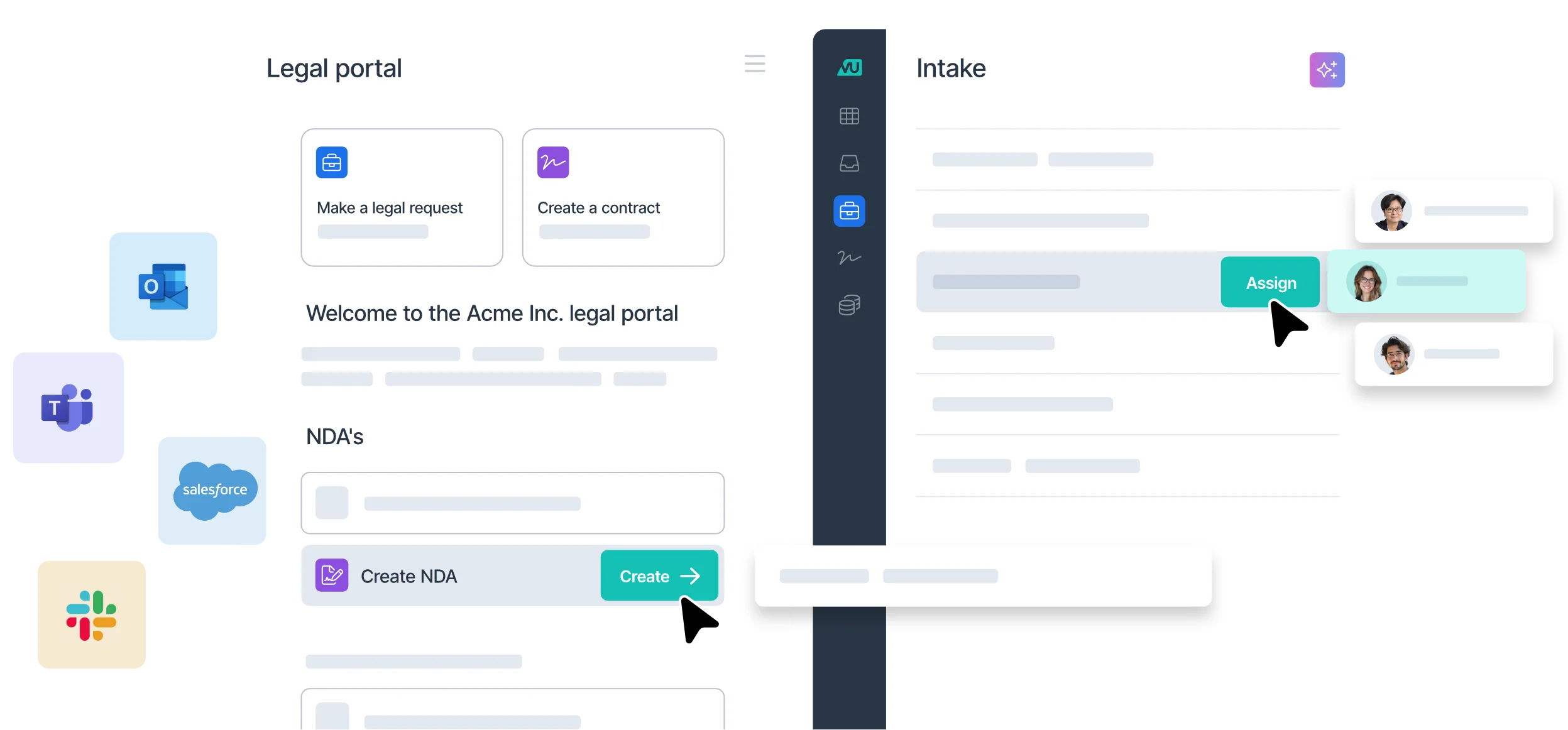
Matter management is a broader term used by in-house legal teams to cover all types of legal work, including advice requests, contracts, compliance tasks, and disputes. Case management typically refers to litigation or dispute-specific workflows. In-house teams generally use matter management software to handle the full range of their work.
Matter management software is used to capture incoming legal requests, assign work to team members, track matter progress, store related documents, manage outside counsel, and report on legal output and team performance. It replaces manual systems like email and spreadsheets with a structured, searchable workflow.
AI improves legal matter management by automating intake and triage, resolving routine business questions that don't require legal involvement, summarizing matter notes and documents, and surfacing relevant precedents so lawyers can get up to speed faster. The most effective AI is embedded directly into the matter management platform rather than added as a separate tool.
In-house legal teams should look for software that is easy to use for both legal and business stakeholders, configurable to their workflows, and equipped with strong reporting, integrations, AI capabilities, and enterprise-grade security.