+
%
+
%

“Having a legal operating system like LawVu is the best foundation for AI because all of our data is in one place. It allows us to automate repetitive tasks, freeing up our lawyers to focus on high-value work.”




































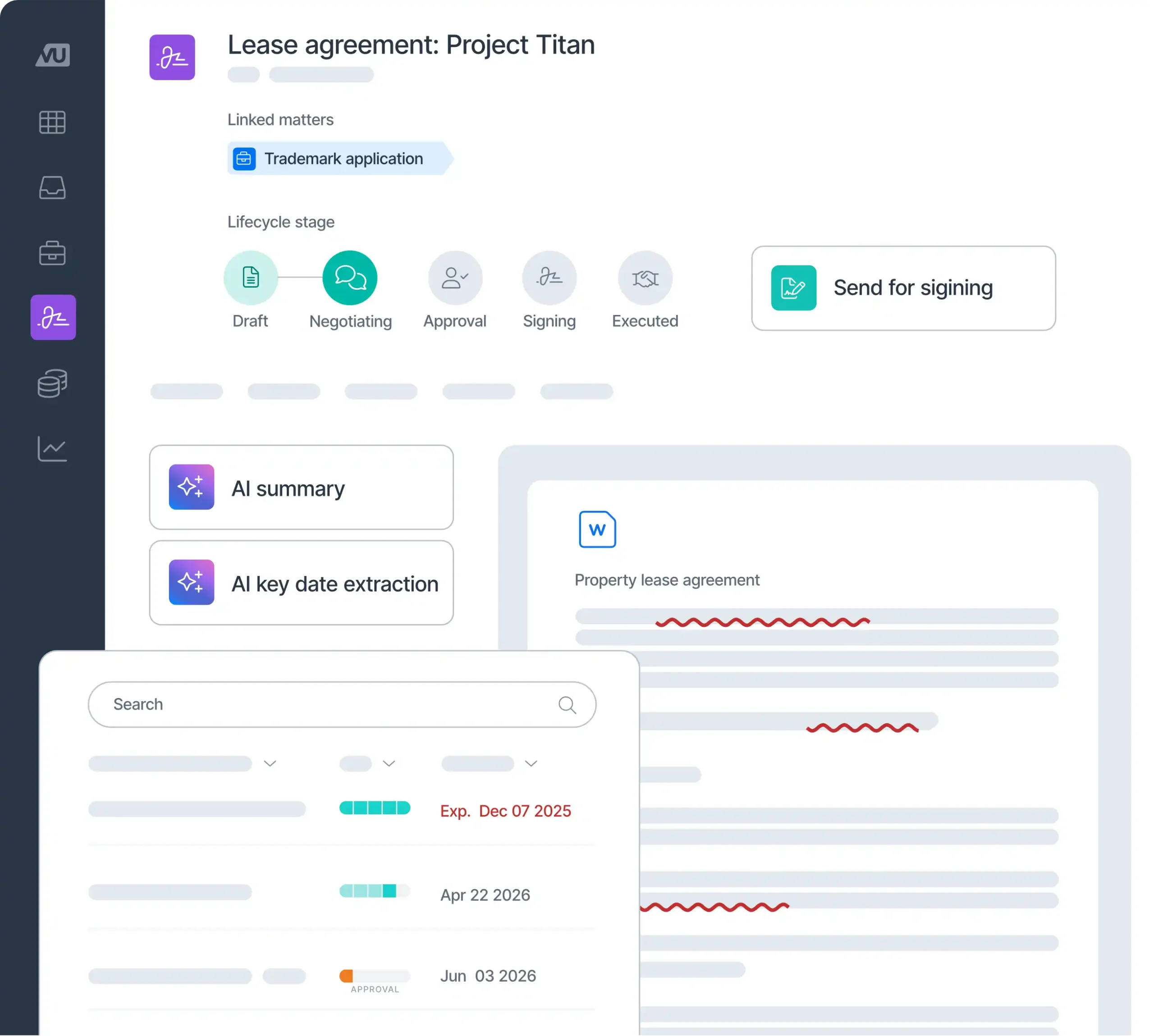
Legora is expanding in that direction but their product history and primary customer base is law firms – and their platform reflects that origin. LawVu was built exclusively for in-house legal operations from day one. That means the intake system, spend management layer, and reporting tools were designed for how in-house teams operate – not adapted from a firm-side workflow after the fact.
Legora's document AI is genuinely capable, and if deep legal research is your primary need, it's worth evaluating seriously. LawVu's AI is designed to do something different: act across your entire legal function. LawVu Assistant orchestrates work across matters, contracts, spend, and intake using natural language. LawVu Lens monitors your contract portfolio and surfaces risk before it escalates. Because the AI has context across every workflow – not just the document in front of you – it delivers better results, stronger governance, and more useful intelligence. That's the difference between AI as a feature and AI as an operating system.
Momentum is worth watching, not following. Legora is expanding fast but from a law firm foundation, building toward in-house capabilities that LawVu has offered for years. Matter management, spend management, and operational reporting are still gaps on Legora's roadmap. LawVu delivers all of it today, purpose-built for in-house teams from day one.
LawVu is built for in-house legal teams of all sizes including lean teams of four to ten people. Unlike Legora, there's no minimum seat commitment. You can start with the modules you need and expand as your team grows.