Ten years ago, LawVu made a boring bet – it’s now paying off
 Sam Kidd
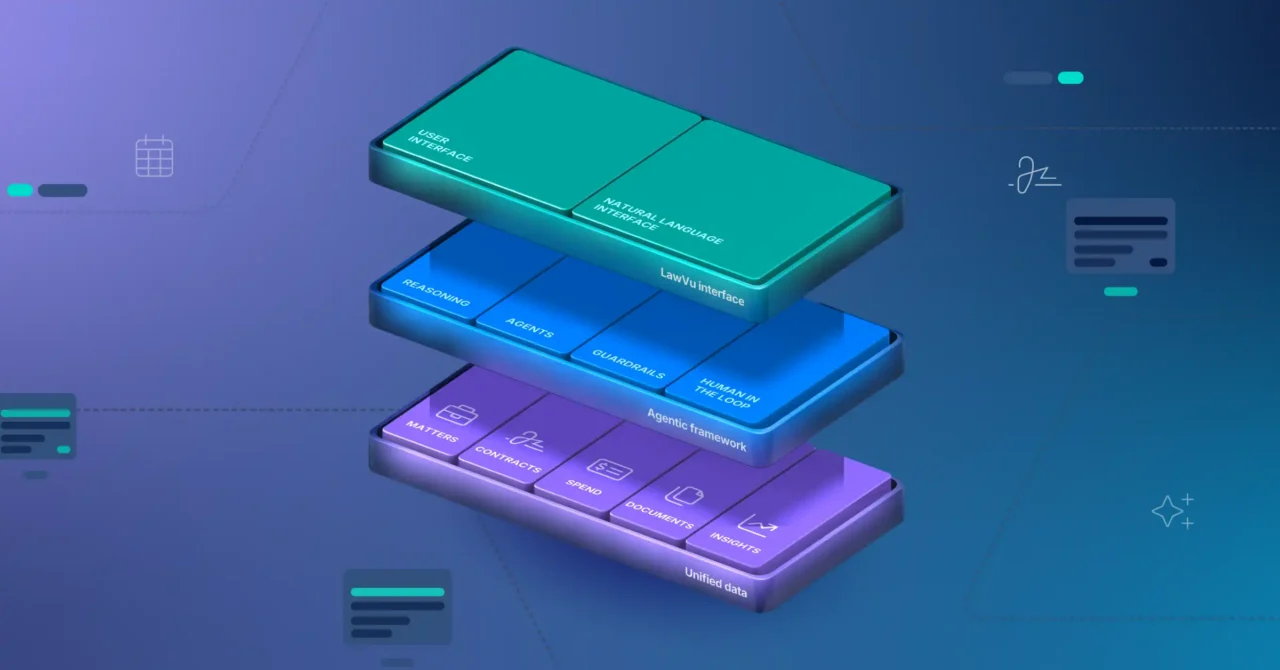
On why we built the foundation before the features – and why that decision defines everything we’re announcing today.
When we started LawVu, we didn’t set out to build AI, agents, automation, or anything that would have sounded exciting at a conference. We set out to solve something that seemed almost embarrassingly basic: legal teams couldn’t see their own work.
Requests disappeared into inboxes. Contracts lived in folders; no one could search. Reporting meant someone manually pulling data from five different places the night before a board meeting. The knowledge that made legal teams effective lived inside the heads of individuals, not in systems the organization could access.
That was the problem. And we believed the solution wasn’t a smarter tool. It was a foundation.
The bet nobody wanted to talk about
We decided early on that before we could build anything truly useful; we had to get the data right. Every matter, contract, request, and invoice – connected, structured, governed, and queryable in real time. Not locked in documents or scattered across systems. Actually organized, in a way that a legal team could see their entire function at a glance.
I truly believed – and our team believed – that if you got the foundation right, everything that came next would become achievable. Skip it, and no amount of clever features would save you.
What AI revealed
When generative AI arrived, the market moved fast, and vendors rushed to launch AI features. Copilots appeared everywhere. Summarization, drafting, Q&A on documents – all useful things, built on top of whatever data already existed.
I noticed the same problem playing out at a new level.
AI built on fragmented data produces fragmented intelligence. A copilot that can search your documents but can’t see your matters, spend, open requests, risk exposure – that’s not a legal operating system.
The moat, it turned out, was never the model. Models are becoming commoditized. The real advantage is the environment the AI runs in – the data, workflows, governance, and context. And you can’t retrofit your way to that. Either you built the foundation, or you didn’t.
We built it.
Introducing the next evolution of LawVu
At Legal Leaders Connect 2026, we unveiled LawVu LegalOS – a connected, intelligent operating system purpose-built for in-house legal teams.
It is a single operating environment where intake, matters, contracts, spend, documents, reporting, and AI capabilities all run on the same connected data layer we’ve spent a decade building.
And now we’re overlaying something new on top of that foundation: agentic AI workflows.
What does this mean in practice? It means legal work can now progress autonomously – within guardrails your team defines. It means a request that arrives through email can be automatically identified, classified, routed, and progressed without anyone manually touching it. It means policy reviews can trigger workflows. Exceptions can escalate. Work moves forward while your team focuses on the things that need their judgment.
But here’s what I think matters most about how we’ve built this: the autonomy is yours to configure.
Work moves at the speed you choose
Not every workflow should run at the same level of automation. Some things should run themselves. Others need a human in the loop before they proceed. Others you want to trigger manually, on demand.
LawVu LegalOS is designed around that reality. Your team can configure workflows to run in three modes: fully automated for routine, low-risk actions; human-in-the-loop for decisions that need to sign-off before proceeding; and on-demand for actions you want available when you need them.
The thing that governs all of it is your risk profile – the organizational guardrails your team defines. AI moves autonomously where you’ve said it can. It waits where you’ve said it should. It only acts on demand where you’ve said it must.
That’s what makes this governable. And governance, in legal, isn’t optional.
What this enables
The capabilities we’re making available within our LegalOS include:
LawVu Assistant
A conversational interface that lets legal and the business chat with LawVu in plain language to get instant answers and submit requests from the tools they already use, while enabling legal to automate workflows within approved risk profiles.
Agentic workflow builder
Legal teams can create agentic workflows using natural language prompts and an easy drag-and-drop step builder. The workflow builder generates complete workflows with steps like contract search, risk assessment, approvals, and task creation. Workflows can be triggered automatically by events, on a schedule, or manually – giving legal complete control and visibility into every step.
LawVu Draft
A complete drafting and review toolbox embedded inside Microsoft Word that combines AI-powered drafting, review, and precision tools with organizational playbooks, clauses, and legal knowledge to speed up contract work, while standardizing quality and consistency across legal teams.
AI intake
An intelligent legal front door that enables business users to self-serve and to submit legal requests through familiar tools like email, Microsoft Teams, and Slack using plain language – while AI-powered intake workflows triage requests, assess risk and urgency, automate routine work, and route matters to the right team with the right context before a lawyer ever picks them up.
MCP server connectivity
A governance layer that securely connects LawVu with external AI ecosystems and tools including ChatGPT, Claude, and Microsoft Copilot, while maintaining permissions, auditability, and organizational controls.
Why I think this moment is different – and what comes next
Finance had its ERP moment. Sales had its CRM moment. Both looked like software upgrades at the time. Both turned out to be a complete rewiring of how those functions operated.
Legal is having its moment now. It’s time to stop thinking about legal technology as a collection of tools and start thinking about it as an operating system – one that runs in the background, moves work forward, surfaces what needs attention, and frees your team to focus on the work where human judgment matters most.
In the age of AI, the destination isn’t just a better system of record. It’s a function that can run itself, at the speed the business needs, within the guardrails legal defines.
That only works if the data underneath is clean and connected. It only works if the workflows are structured, not scattered. It only works if someone spent the last decade building the foundation before the features.
The boring bet turned out to be the right one. Legal now has its operating system – LawVu LegalOS.