+
%
+
%

“Having a legal operating system like LawVu is the best foundation for AI because all of our data is in one place. It allows us to automate repetitive tasks, freeing up our lawyers to focus on high-value work.”








































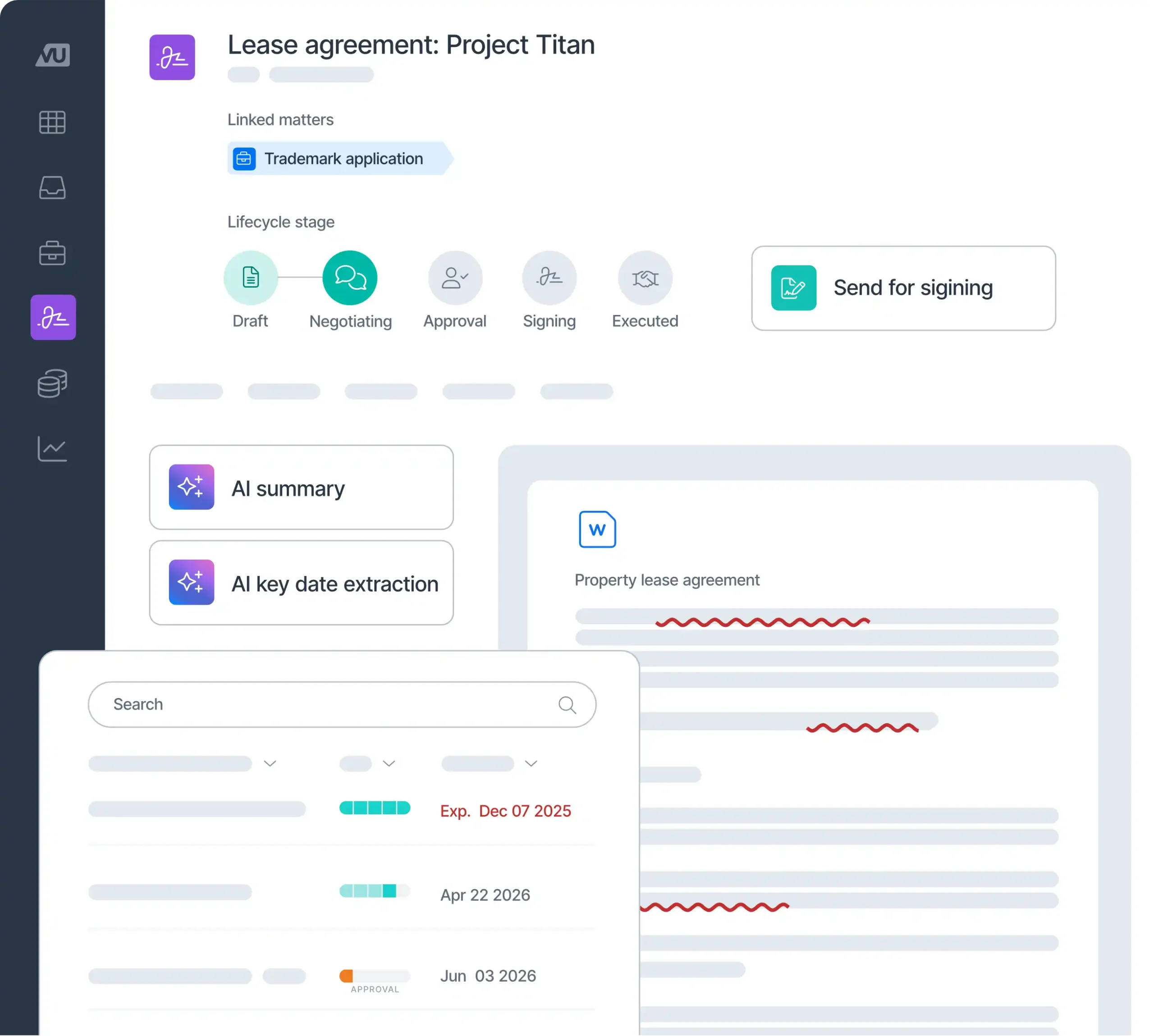
LawVu is a broader alternative. Teams choosing Wordsmith are solving request volume. Teams choosing LawVu are consolidating the systems legal runs on, including matter management, contract lifecycle, and outside counsel spend, which Wordsmith doesn't cover.
Wordsmith consolidates AI capabilities rather than systems of record. Its own documentation explains how it integrates with your existing CLM, and contracts stay in SharePoint or Google Drive. The underlying systems, and their licence costs, remain. LawVu consolidates the systems themselves and connects to your business tools.
Both are built for in-house legal, so the difference isn't audience, it's scope. Wordsmith is built around the inbound request: capture it, triage it, resolve what it can, record what happened. LawVu is built around the whole function, including the operational layers a request eventually touches: the matter it belongs to, the contract it produces, the budget it consumes, and the report your GC takes to the board.
It can only see the work that passed through it. Ask about spend across your matter portfolio, how a position held in a negotiation last quarter, or which contracts are about to auto-renew, and there's nothing to draw on. LawVu Assistant searches and acts across matters, contracts, spend, and history.
It reports on the external work your team handled internally. It doesn't review invoices, enforce billing guidelines, track budgets, or manage vendor performance. LawVu does all four in the same platform as the work.