Matter management in legal operations: Building a modern legal operating model
 Michaelle Noble

Why matter management sits at the center of legal operations
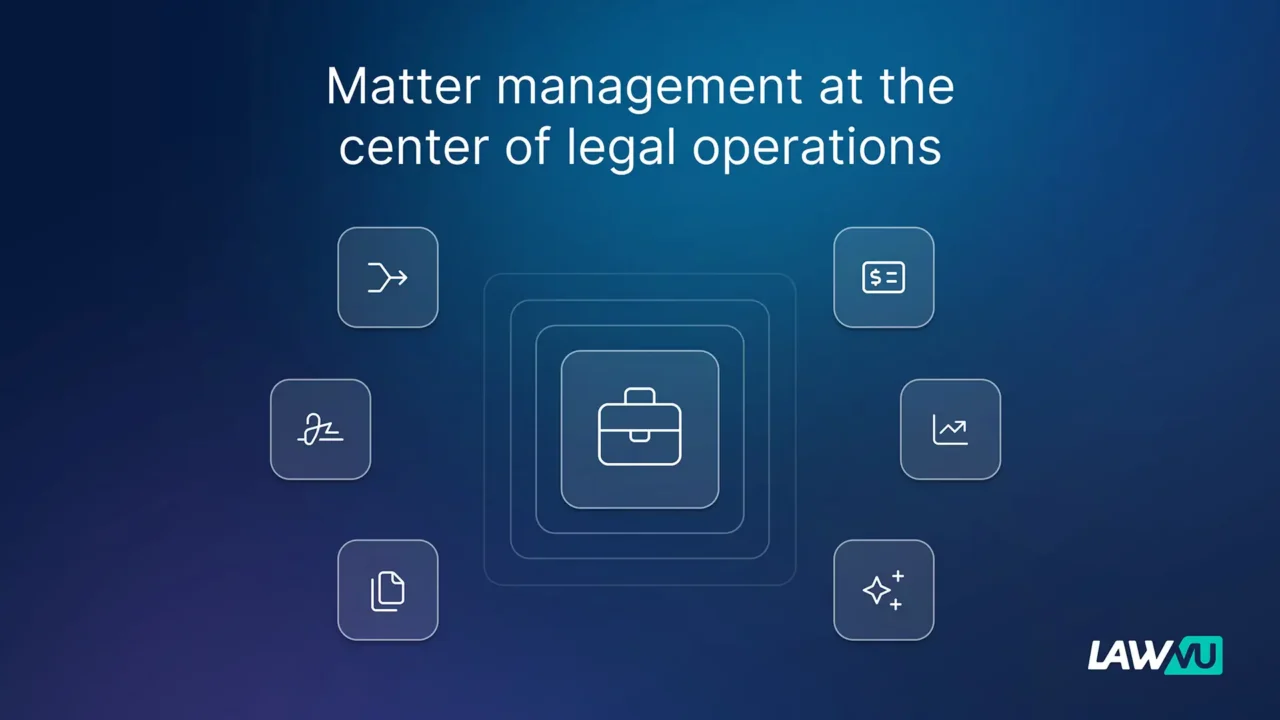
Matter management touches nearly every aspect of legal work. Whether a legal team is reviewing contracts, responding to disputes, managing compliance activities, or advising business stakeholders, work needs to be organized, tracked, and measured consistently.
Matter management provides the structure that makes this possible by connecting people, processes, documents, and data. It also serves as the foundation for other legal operations initiatives, including reporting, knowledge management, workflow automation, and AI adoption. For many legal departments, matter management becomes the operational hub that supports how legal services are delivered across the organization.
The legal matter lifecycle
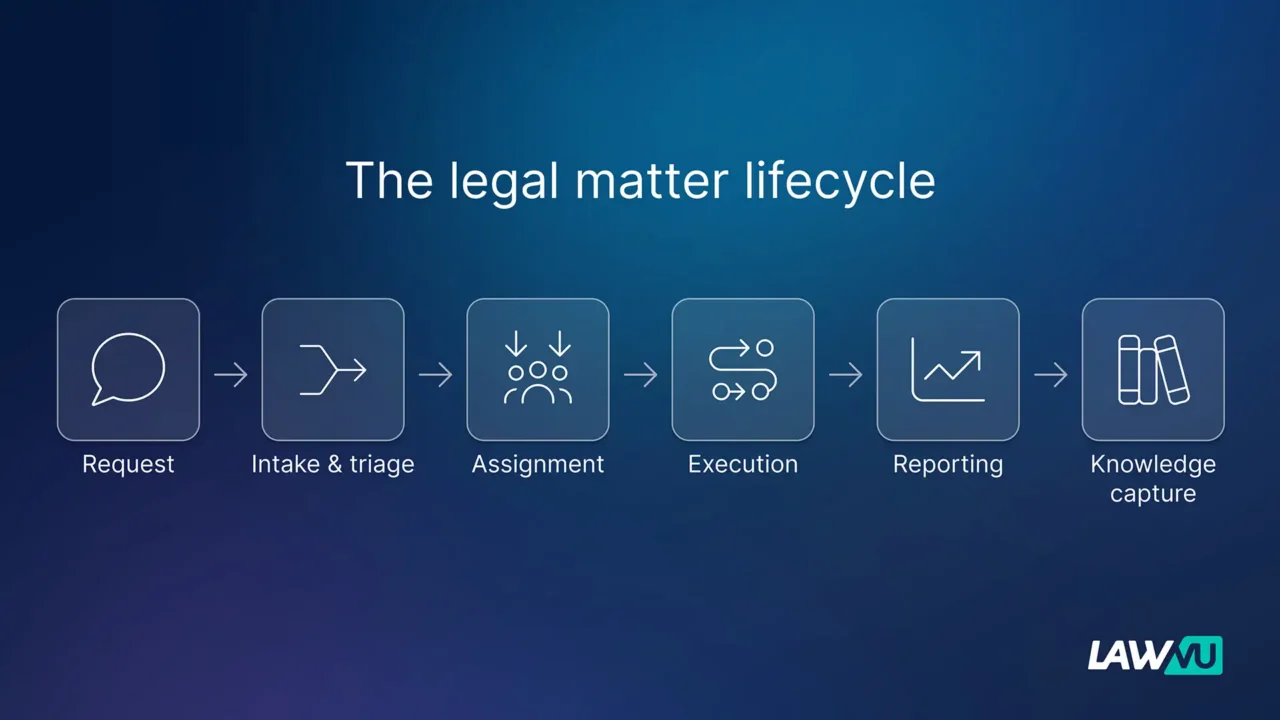
A modern legal operating model starts with a structured approach to legal work. Most matters follow a similar lifecycle, beginning with intake and triage before moving through execution, reporting, and ultimately knowledge capture.
Standardizing this process helps legal teams improve consistency, increase visibility, and reduce administrative effort. It also creates a complete record of legal activity that can be used for reporting, continuous improvement, and future decision-making. As legal workloads grow, a structured matter lifecycle becomes increasingly important for maintaining efficiency and control.
As AI becomes embedded into legal workflows, the intake and triage stages are increasingly becoming the intelligent front door to legal. Modern legal teams can use AI to help manage demand, capture information earlier, surface risk, and automate routine work while maintaining appropriate oversight.
Intake
Requests are submitted through consistent channels rather than arriving through disconnected emails, chats, or informal conversations. Increasingly, legal teams are enhancing intake with AI-powered capabilities that allow business users to submit requests in plain language through email, Microsoft Teams, Slack, or self-service portals. AI can help capture the right information upfront, answer routine questions using approved guidance, and reduce the back-and-forth that often slows legal work.
Triage
Legal teams assess urgency, complexity, business impact, and risk before determining the appropriate course of action. Modern legal operations teams are increasingly using AI-assisted triage to evaluate requests, identify potential risk, and route matters to the right people with the right context before a lawyer ever begins work. This helps reduce manual effort while ensuring legal maintains visibility, governance, and control over incoming demand.
Assignment
Work is routed to the appropriate legal professional, team, or outside counsel resource with the right context.
Execution
Teams collaborate on documents, negotiations, approvals, investigations, and legal advice.
Reporting
Legal leaders gain visibility into workload, capacity, performance, and business demand.
Knowledge capture
Completed work becomes reusable organizational knowledge that supports future decision-making.
Related resources
- How to meet the challenges of legal matter management for in-house teams
- Implementing matter management software for in-house teams: 3 Steps to success
What mature legal operations teams do differently
High-performing legal departments share several characteristics. They prioritize visibility into workload, standardize how work is managed, and use data to drive decisions. Rather than relying on email chains and manual processes, they establish repeatable workflows that improve consistency and scalability. They also treat knowledge as a strategic asset, ensuring valuable information from completed matters remains accessible to the broader team.
These practices help legal departments operate more efficiently while delivering greater value to the business.
- They standardize intake
Requests enter through structured processes rather than email chains, improving visibility and consistency across the department.
- They measure performance
Leaders use reporting and analytics to understand workload, identify bottlenecks, and support resource planning.
- They capture knowledge
Institutional knowledge remains accessible after matters close, reducing duplicated work and improving onboarding.
- They continuously improve
Processes evolve based on data, stakeholder feedback, and changing business needs.
Customer perspective
“By bringing contracts and matters together in a single platform, we created a more consistent way of working across the legal team and improved visibility into legal requests and priorities.”
— EMAPTA
Matter management and business alignment
One of the primary goals of legal operations is improving how legal interacts with the business.
Matter management supports this by:
- Improving responsiveness
- Increasing transparency
- Creating accountability
- Enabling self-service
- Reducing administrative work
The result is a more predictable and scalable legal service delivery model.
Matter management, reporting, and demonstrating value
Many legal leaders struggle to communicate the impact of their teams. Matter management helps address this challenge by providing visibility into workload, matter volume, turnaround times, and business demand. With access to reliable data, legal departments can move beyond anecdotal reporting and demonstrate how they contribute to risk reduction, operational efficiency, and business outcomes. Reporting also helps identify trends, allocate resources more effectively, spot opportunities for automation, and support strategic planning. As legal teams face increasing pressure to do more with less, the ability to measure and communicate value is becoming a critical capability.
Matter management creates visibility into:
- Matter volume
- Workload trends
- Response times
- Resource allocation
- Legal demand across departments
This data helps legal leaders make informed decisions and demonstrate value to stakeholders.
Related resources
- Five ways to save time and deliver more value to the business with effective legal matter management
- Without matter management technology, modern data-driven legal leadership is a challenge
Preparing legal operations for AI
AI is changing how legal work is performed, but successful adoption depends on more than technology alone. AI requires structured data, accessible knowledge, and consistent processes to deliver meaningful results. Matter management provides this foundation by centralizing legal work and creating a searchable record of matters, decisions, and documents. Legal departments that invest in operational maturity today are often better positioned to benefit from AI tomorrow. In many cases, effective matter management is one of the most important building blocks for AI-ready legal operations.
AI requires:
- Structured data
- Consistent processes
- Accessible knowledge
- Connected workflows
Matter management provides the operational foundation that enables successful AI adoption.
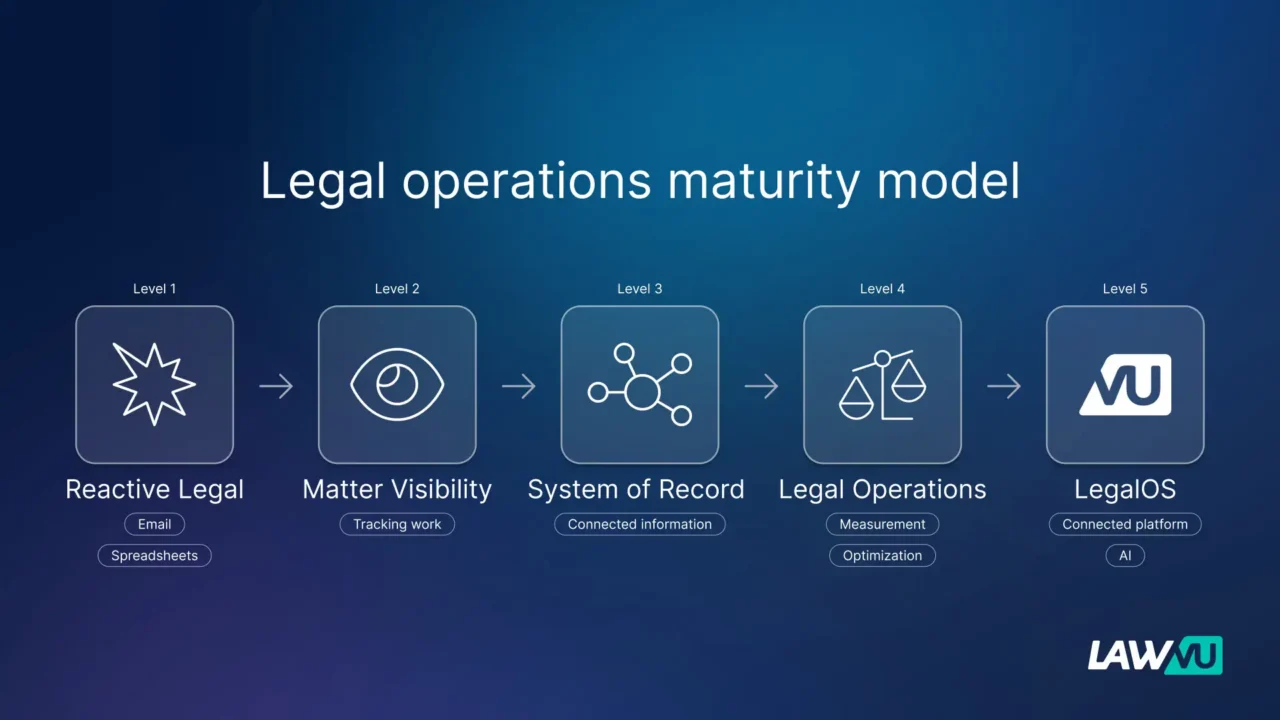
Legal teams that invest in strong operational processes today will be better positioned to leverage AI tomorrow. Rather than viewing AI as a standalone initiative, leading organizations are focusing on strengthening the underlying systems, processes, and data that will enable long-term success.