4 ways to improve legal intake in 2026
 Marija Barbarich

TL;DR
Legal intake is how requests reach the legal team, and at most organisations it is informal by default. That inconsistency means response time depends on who happens to see a request first, not on how urgent or risky it actually is. Thirty-nine percent of business leaders cite rejected requests due to bandwidth as a top pain point with in-house legal, and much of that traces back to intake, not review. Fixing it means giving every request a consistent path to the right person, regardless of which channel it arrives through.
What is legal intake?
Legal intake is the process by which requests reach the legal team, whether through email, a form, a chat message, or an informal conversation.
For general counsel and legal operations leaders, intake is often the least visible part of the legal function, and also one of the most consistent sources of delay, because the point at which a request first arrives is rarely tracked with the same discipline applied to the matter it eventually becomes.
Why the request that starts a matter is rarely the one anyone sees
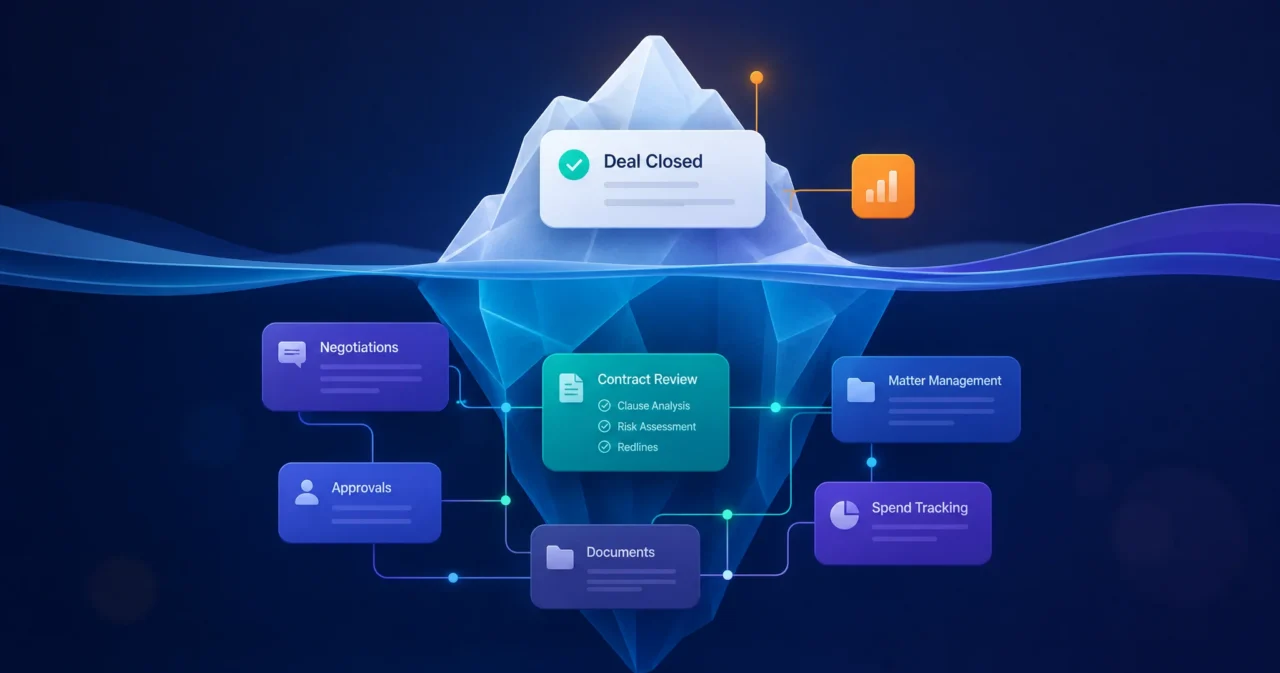
Every matter, every contract, every legal question has a starting point: a moment when someone in the business decides they need legal’s input.
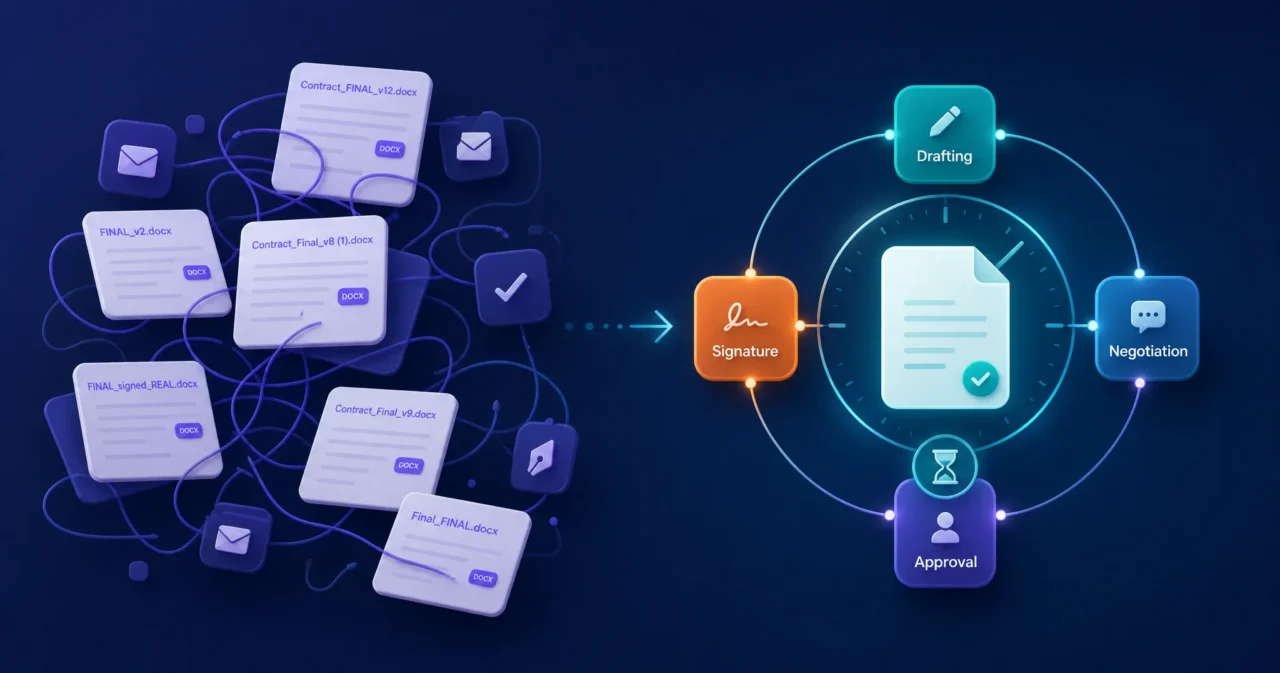
That starting point rarely looks the same way twice. It might be a message to whoever is online, a forwarded email thread, a form nobody remembers exists, or a request mentioned in passing in a meeting legal was not part of.
This pattern holds under any deadline-driven process involving multiple parties, including a transfer window, where a request can originate from any one of several parties simultaneously. The request that starts a deal is rarely a single, trackable point of origin.
The measurable cost of poor legal intake
According to IDC’s study of over 350 in-house legal counsel and business leaders, 39% of business leaders cite rejected requests due to bandwidth as one of their top pain points when working with in-house legal, and 31% say the business is not enabled to self-serve at all.
Both of these symptoms trace back to the same root cause: legal never had a consistent way to see, triage, and route requests in the first place.
The effect extends beyond legal’s own workload. IDC’s research found that 49% of legal teams identify scattered communication across multiple channels as the single biggest contributor to waste when working with other departments, and only 27% currently use any dedicated intake tool, such as a chatbot or legal front door, to bring structure to how requests arrive.
Sales teams feel this directly: 12% of sales department initiatives are reported as declined or delayed due to legal friction, often traced back to a request that never reached the right person quickly enough to matter.
Why legal intake breaks down: absence of a connected legal operating system
When there is no structured way for requests to arrive, response time stops depending on urgency or risk. Instead, they depend on who happened to see the message first, and how much capacity they had when they saw it.
A low-risk request that lands with someone who has capacity gets turned around quickly. An urgent, high-risk request that lands with someone mid-deadline can sit for days, not because it was flagged as unimportant, but because there was no urgency raised.
| Informal intake | Structured intake | |
| Entry point | Varies by channel and habit | One consistent point, regardless of channel |
| Triage | Depends on who sees the request first | Automatic, based on request type and risk |
| Visibility | Only visible if someone asks | Visible to legal and the business without asking |
| Response time | Depends on timing and the recipient’s capacity | Depends on the request’s actual urgency and risk |
This is the structural gap that a legal operating system, or LegalOS, is designed to close.
Rather than adding another channel for requests to arrive through, a LegalOS gives every request, however it originates, a single consistent entry point with automatic routing, so that response time becomes a function of what a request actually needs rather than an accident of timing. What improves legal intake in practice:
Improving intake is not about adding process to something that currently feels simple. It is about giving every request a consistent path to the right person, regardless of channel.
- Establish an entry point for all requests. Whether a request originates by email, form, or chat, it should resolve to a single system, rather than depending on which channel the requester happened to default to.
- Route automatically by type and risk. A request should reach the appropriate person based on what it is, not based on who happened to see it. This removes the dependency on timing that currently determines response speed.
- Enable self-service for low-risk, routine requests. Not every request requires legal’s direct involvement. Standard requests can be resolved against pre-approved guidance without waiting in a queue built for higher-risk work.
- Make outstanding requests visible without a status check. Legal, and the business, should be able to see what is currently outstanding without either side needing to ask the other.
None of these measures require additional legal headcount. They require one entry point instead of six.
Consistent by design, not by channel
Fixing legal intake doesn’t mean another adding process, it means giving every request, however it arrives, a consistent and visible path to the right person in the legal team.
See how a connected legal operating system brings every request, however it arrives, into one place, with automatic routing and full visibility from the moment it lands, in the LegalOS guide.