Your board wants an AI strategy. Your team is juggling tools that don’t talk to each other. And every vendor is telling you their model is the answer. Before you invest further, there’s a more important question to answer: is your legal function actually built for AI?
“Having a legal operating system like LawVu is the best foundation for AI because all of our data is in one place. It allows us to automate repetitive tasks, freeing up our lawyers to focus on high-value work.”

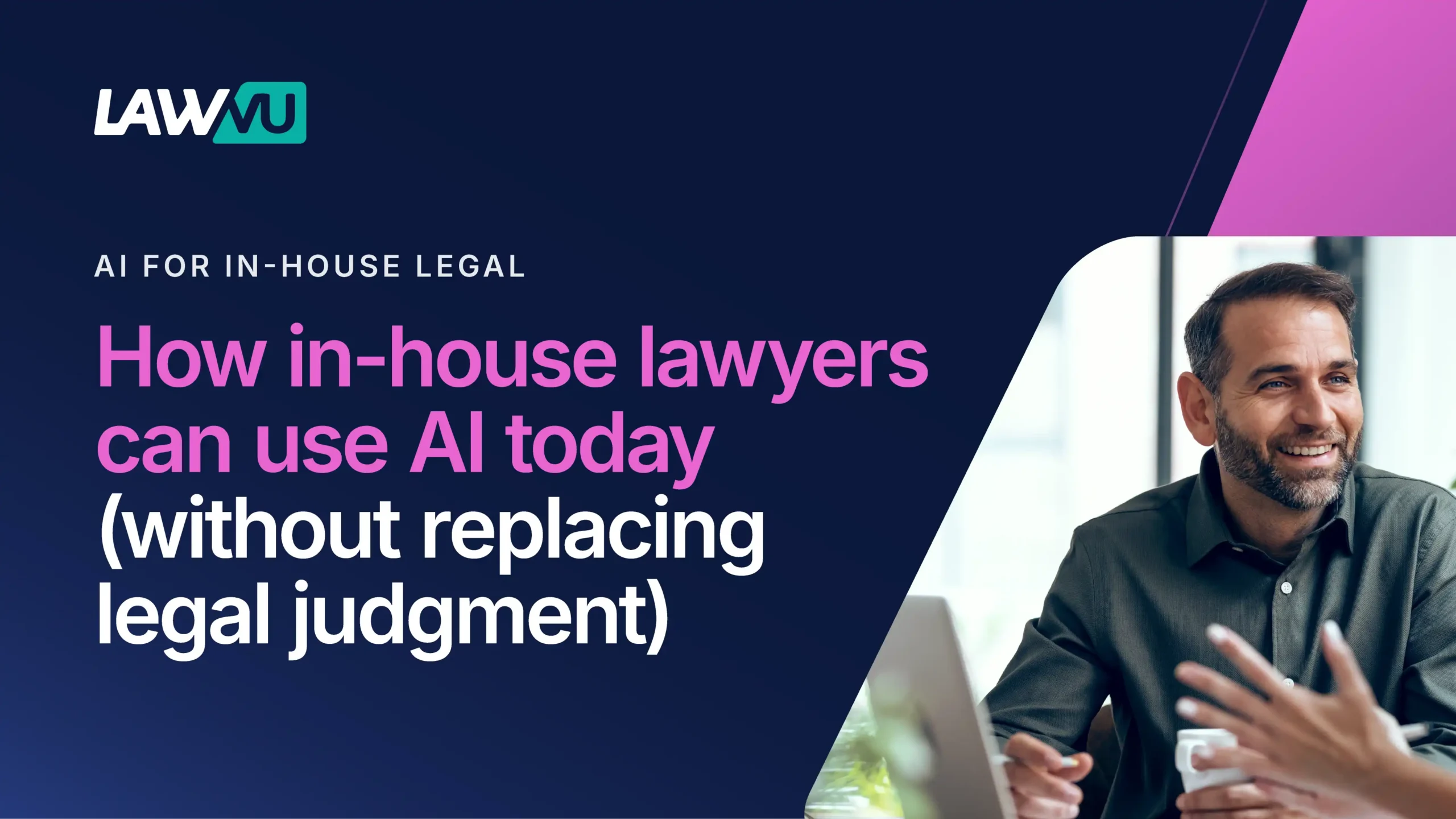
"It's not replacing your judgement - you're using it to sharpen what your judgement is."
- Shaun Plant, Co-founder, LawVuLawVu co-founder Shaun Plant shares the practical ways he uses AI every day – from comparing clauses and researching unfamiliar regulations to drafting emails faster than ever before.
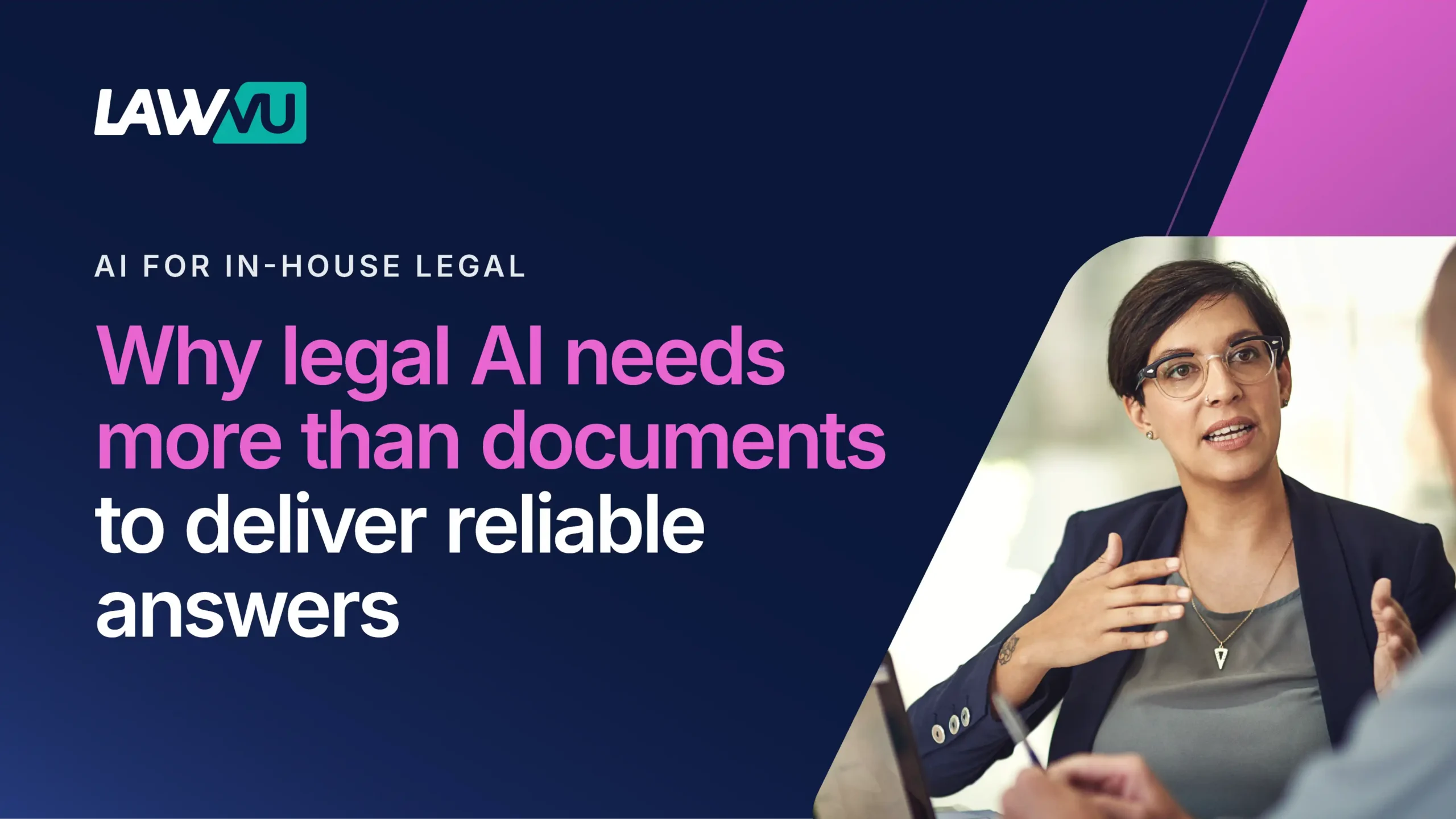
"The limitation isn't the model. It's the absence of the system around it."
- Sarah Webb, COO, LawVuSarah Webb explains why an AI connected only to documents still lacks the context behind legal decisions. Shaun Plant then walks through the critical differences between the three categories of legal AI – and what each one can actually do for your team.
"AI and chaos is just faster chaos. Get your house in order first."
- Shaun Plant, Co-founder, LawVuBefore you commit budget to another AI tool, these three questions will tell you whether your legal function is actually ready – or whether your first investment should be in the operational foundation AI depends on.
Now that you've seen the problem in practice, here's what sets the legal operating system apart from the others on the market.
No – not the good ones. But the gap between organized and disorganized legal teams is accelerating fast. Lawyers won’t be replaced by AI; they’ll be replaced by lawyers who use AI really well. The bigger shift is at the team level: those with a strong operational foundation will increasingly outperform those running on email and spreadsheets.
ChatGPT is free in the same way a shared drive is free – cheap to start, expensive to rely on. The real cost isn’t the tool; it’s a confident wrong answer with no audit trail behind it. One badly drafted contract provision that gets missed because AI gave a plausible but incorrect answer can be a very expensive tool.
IT’s concern is usually data governance, not AI specifically. The answer is to get into the conversation early with a governance framework – rather than routing around the block. That’s actually an argument for enterprise-grade tooling over workarounds: it gives IT something real to approve and a clear security boundary to work within.
MCP is a standardized way for AI tools to connect directly to your systems and pull information, rather than relying on you to paste things in. It’s a real improvement – but it doesn’t create structure where none exists. If your MCP connects to an organized legal operating system, you get powerful, grounded answers. If it connects to a shared drive of unlabeled folders, you get fast answers that may not be reliable ones.