The modern legal department as a competitive advantage
 David Lancelot
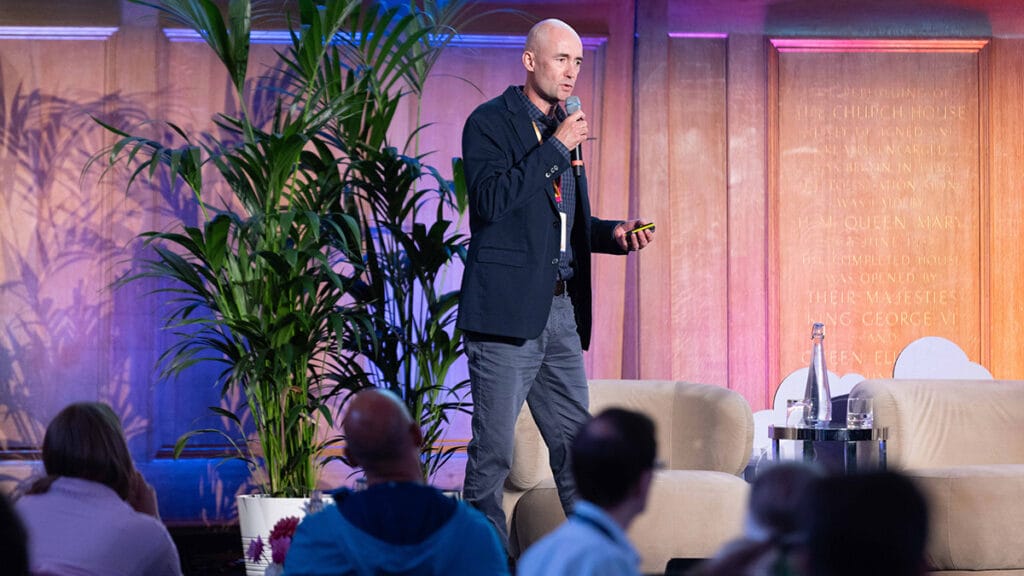
The role of the Chief Legal Officer is changing. What was considered primarily a reactive advisory and control function for many years is now increasingly understood as a strategic leadership role with operational responsibility. David Lancelot, Chief Legal Officer and Executive Vice President of Advocacy at LawVu, explains why, while legal excellence is indispensable in times of AI, regulatory consolidation, and growing competitive pressure, entrepreneurial thinking is becoming the real differentiator.
This interview was originally published in German on Der Betrieb. The interview was conducted by Viola C. Didier, RES JURA editorial office.
Where exactly do legal departments stand today in comparison to the development of CFO and CHRO roles in recent decades?
David Lancelot: 20 years ago, the head of finance was often thought of as the back-office bean counter who did not add strategic value to the leadership team and was therefore not invited to the party.
10 years ago, HR leaders were in a similar position, very much staying in their own swim lane, focusing purely on HR substantive issues. Both of those functions have now accelerated and become strategic operators within the leadership team.
How did that happen?
David Lancelot: There are two main reasons for this: a change of philosophy that they were going to act as businesspeople with finance skills or human resources skills, and fit-for-purpose technology paired with an operational mindset. This enabled both finance and HR to take administrative work off their plates and focus more on strategic matters.
In-house legal is now at a similar tipping point at which they can move from more administrative tasks to strategic matters at the leadership team level.
Was the legal function in companies historically strategically underestimated, or did it simply have a different purpose?
David Lancelot: Frankly, both. For decades, in-house lawyers operated in a more back-office stance and were unable to have significant strategic impact.
However, there were a small core of cutting-edge legal leaders who saw themselves as businesspeople with legal skills, as opposed to substantive experts that operate inside companies.
That thinking has spread over the last five to 10 years and has informed a new way of operating as in-house counsel.
The term “tipping point” comes up frequently. What specifically determines that this turning point has been reached for General Counsel?
David Lancelot: The strongest evidence to me is that instead of a small group of in-house lawyers discussing strategic leadership, we now have head-hunters, boards of directors, and CEOs recruiting for modern legal leaders to build, lead, and operate from a visionary perspective as well as an operational perspective across people, processes, and technology.
I’ve seen job descriptions for major roles, including multiple significant roles in Europe, where a modern, visionary legal leader is being hired to replace a more traditional general counsel.
To what extent does artificial intelligence change the competence requirements for lawyers, and what remains irreplaceable despite automation?
David Lancelot: Junior in-house professionals will absolutely need to be AI native, similar to how we once had to learn how to use Google or online legal databases.
At a senior level, legal leadership is no longer just about being the consigliere to the leadership team or board of directors. Visionary people management and a sophisticated operational mindset is required to implement a new way of working that gives the legal team the ability to focus on strategic matters as opposed to substantive or even administrative matters.
Mid-level and senior in-house professionals will need to embrace strategic legal operations and modern, fit-for-purpose technology. Our business partners will demand it. The benefits that accrue from modernizing our way of working and tool kits cannot be ignored.
Many legal departments see themselves primarily as risk control bodies. How can they achieve a cultural shift from “gatekeeper” to “business accelerator”?
David Lancelot: A friend of mine says that “a good legal function facilitates the business, and a great legal function accelerates the business.” Risk management is a fundamental part of our role, and by and large, lawyers are very good at it.
What we have not been traditionally great at is understanding how we as a legal function can be innovative and accelerate business processes to drive strategic objectives. Modern legal leadership requires focusing the legal team on those objectives, collecting data to ensure that the team is operating in a way that’s aligned with those objectives, and then driving the business to accelerate based on the people, processes, and technology that the legal leader has the vision to implement.
How are the expectations of CEOs and boards of directors regarding the legal function changing?
David Lancelot: In my experience, boards of directors and CEOs are now recruiting actively for modern legal leaders much more than the traditional substantive expert in the room.
I regularly speak with executive search consultants in Europe and globally, and they tell me that we have now reached the tipping point where business leaders have seen how valuable a modern approach to in-house legal leadership can be to an organization; and they want that acceleration for their company.
Will legal specialization – traditionally a career advantage – be more of a hindrance than a differentiating factor in the future?
David Lancelot: That depends on the role. If you’re the competition law expert at a large corporation, you still need to be very specialized.
However, I don’t think highly specialized knowledge has ever been a particularly impactful leadership skill. Leadership, a strategic mindset, and an understanding of operations is much more scalable than adding more substantive experts.
How can legal departments prove that they generate added value and not just incur costs?
David Lancelot: Legal teams need to speak the language of business, which requires the collection and analysis of data in a way that legal functions have not previously been particularly proficient at.
The use of technology like LawVu allows a legal team to collect data about the impact they are having as opposed to just time spent internally or money spent on external counsel. This enables legal leaders to prove the value in terms that business leadership understands and engages with.
Many companies still have a fragmented IT landscape within their legal departments. Is technological integration a strategic issue or primarily a question of efficiency?
David Lancelot: This is absolutely a strategic issue.
For a long time, in-house legal teams were burdened by numerous point solutions for their technology and operational needs. Over the past decade, fit-for-purpose legal workspaces have become available, now integrating most in-house legal workflows.
The right workspace can accelerate the integration of the legal function into the business, provide the data and analytics to allow the legal team and leadership to speak the language of the business, and enable the efficiency that allows the legal function to focus its efforts on the highest-value strategic initiatives.
As legal touches so many parts of the business, accelerating the legal function accelerates the entire business, and can thus drive significant strategic advantage across the enterprise.
How is the relationship between in-house teams and external law firms changing as a result of this transformation?
David Lancelot: Law firms are certainly more at risk for significant disruption of their traditional business model than in-house legal teams. As with the move to online legal databases and search engines like Google that were able to do much of the work that external counsel did, particularly for questions that in-house lawyers have where they don’t have time to engage external counsel, artificial intelligence and technology in general will allow in-house legal teams to do even more of the work internally.
In fact, many of the in-house legal teams we work with at LawVu have been able to reduce their reliance on external counsel due to their operations becoming significantly more efficient, enabling them to internalize significant amounts of strategic work and stop sending that work to external counsel.
Will the CLO of the future be more of a transformation manager than a chief legal officer?
David Lancelot: The legal leader of the future must create and lead with a vision of a dynamic, integrated, and operationally focused organization made up of businesspeople with legal skills.
At LawVu, I have spoken to a number of customers who have been invited to become part of their company’s innovation teams, as the rest of the business recognizes that their implementation of modern, intuitive, and fit-for-purpose legal tech is cutting edge.
I look forward to a future where our in-house legal profession is seen as the innovative driver of business acceleration.
What leadership qualities distinguish a good general counsel from a strategic legal leader?
David Lancelot: A strategic legal leader can set a vision of a modern, effective legal function, manage a team in alignment with that vision, and implement innovative legal operations that scale the legal function beyond the addition of more headcount or spending on external counsel; all in the service of accelerating the organization’s strategic objectives.
Looking ahead to the year 2030: How will it be possible to tell whether a legal department has successfully mastered the transformation?
David Lancelot: In 2030, successful legal departments will be proactive as opposed to reactive, integrated into the business as opposed to operating in siloes, and will be given credit at the leadership team level for accelerating the business’ strategic objectives as opposed to being a point of friction.