Why legal AI success starts with your legal operating model

TL;DR
Legal AI isn’t delivering promised productivity gains because most legal teams lack the operational foundation it needs; fragmented data, missing context, and weak governance leave AI answering in isolation. The fix isn’t a better model, rather it’s a connected legal operating system that gives AI structured data and governance to reason over. Teams seeing real results did the unglamorous groundwork first: connecting data and clarifying governance before scaling AI adoption.
If you’re a lawyer, your LinkedIn feed is probably exploding with another legal vendor announcing a legal AI breakthrough. There is an overwhelming amount of noise about new tools ‘powered by AI’: be those in contract review, research, and drafting. And with that noise comes confusion about doing the right thing.
Legal teams around the globe are feeling the pressure to do more with less, as boards and executive leadership teams expect more efficiency without additional resources. Legal technology is often touted as the saving grace to this dilemma, as it can streamline workflows by automating manual tasks.
And yet, for all the noise, most in-house legal teams aren’t transforming. Sure, they may be experimenting with legal technology, but the sweeping productivity gains they were promised aren’t immediately apparent.
It begs the question – if AI is really this powerful, why are so few legal functions seeing transformational results?
Naturally, people blame the legal tech, but the software is rarely the issue. The real challenge is how legal teams implement and use legal AI.
It’s quite simple. Legal AI feeds on information, so the more context you give it, the better the results. The organizations getting real value from AI are creating a foundation on which the AI can thrive by feeding it better information, stronger governance, and a connected way of working.
Without that foundation, AI doesn’t fix inefficiency. It just makes the existing inefficiency move faster. If your legal function is still figuring out the fundamentals, it’s worth first preparing your in-house legal team for AI before adding another tool to the stack.
Legal AI is genuinely capable – it just has limits
Understanding the limitations of technology allows you to also see its strength.
As LawVu COO Sarah Webb said on a recent webinar, “these models are actually pattern engines that generate what a good answer looks like based on what they’ve seen before.”
Pattern recognition is what makes AI so strong at contract drafting and first-pass review, as it’s seen copious amounts of similar documents. Where Webb says its limitation lies is in legal judgment itself. “AI is not reasoning over your specific contracts or your risk profile or your past decisions. It’s working from statistical patterns, not institutional memory.”
That distinction matters. LawVu co-founder and in-house lawyer Shaun Plant says that while he uses AI to “sharpen” his judgment, by testing his reasoning on a position before, or thinking through counterarguments, he would never use AI to replace it.
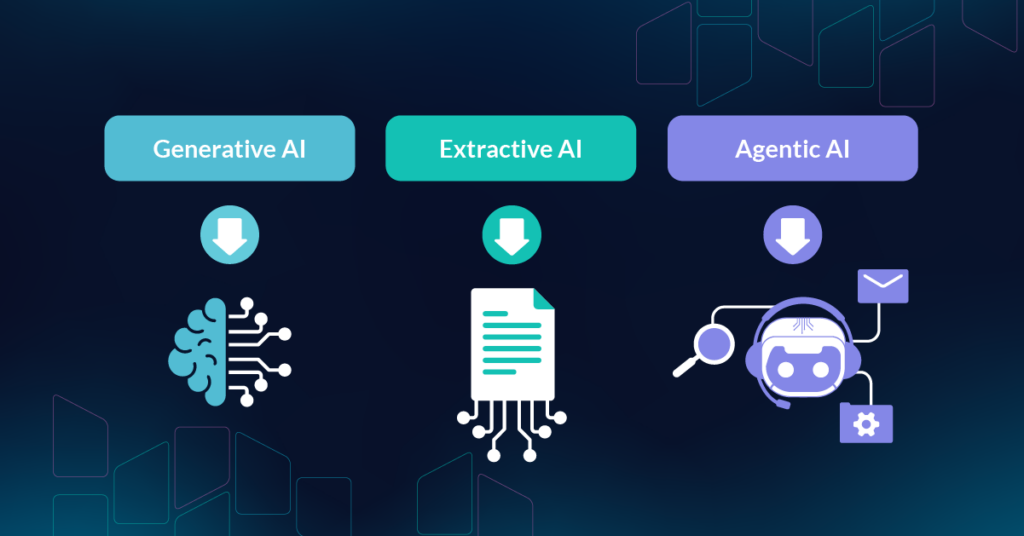
If you want a deeper breakdown of how these models differ under the hood, it’s worth understanding generative AI and extractive AI and what each is built to do.
In this video, LawVu’s Shaun Plant walks through the practical ways he uses AI every day: reviewing clauses, researching unfamiliar regulations, and drafting emails to support his legal judgment.
The real problem isn’t the AI – it’s fragmented operations
Scattered organizational knowledge is a problem most legal teams share. Information is usually stored across email threads, shared drives, spreadsheets, and a handful of disconnected systems that don’t talk to each other. Without one source of truth, it becomes tricky to feed AI sufficient data on situations such as accepted organizational risk tolerance and legal positions.
Important organizational information also often lives in negotiation history, in a lawyer’s mind or in watercooler conversations. AI can’t retrieve what was never captured in the first place. Sure, it can summarize a contract, but it can’t tell you why legal accepted a non-standard position in that contract, or what advice from outside counsel shaped that decision.
“Without that operational context, AI answers in isolation,” explains Webb, based only on the data it has been fed. That’s why legal teams need detailed guides and playbooks that capture the team’s knowledge and the organization’s position on key legal issues.
For a more detailed dive on expanding AI’s knowledge and capabilities, read our article on AI for in-house counsel: Proven strategies for safe and successful adoption.
Why legal AI needs a legal operating model
This is the piece that gets skipped in most legal AI conversations: for AI to give consistent, defensible answers, it needs structured legal data to reason over, including connected matters, contracts, institutional knowledge, workflows, approvals, and a clear audit trail of how decisions were made.
As Webb puts it, “a legal operating system is the system that holds your legal data, your workflows, your decisions, so that AI can operate inside how your team actually works.”
A legal operating system is what holds everything together in one place, so AI isn’t just retrieving a document, but rather its reasoning across the relationships between documents, decisions, and people. That’s also where governance stops being a checkbox and starts being infrastructure: access control, auditability, and a defensible record of why a call was made the way it was.
“In legal, it’s not enough to have an answer,” says Webb. “You need to be confident in where it came from, whether it aligns with your risk posture, and whether you can stand behind it.”
Sarah Webb explains why AI connected only to documents still misses the context behind legal decisions, and Shaun Plant breaks down the real differences between general AI, enterprise AI, and AI operating inside a legal operating system.
Legal AI should improve legal operations – not create more work
Once AI has strong foundations and sufficient data, it stops being a search tool and starts becoming operational. It can trigger a workflow when a subpoena arrives, flag a contract renewal that needs stakeholder sign-off, surface a similar matter your team has already handled, or recommend the next step based on how your legal function operates rather than generic guidance from the open web.
That’s the shift from AI as information retrieval to AI as execution. it’s a good illustration of what embedded AI can do inside legal workflows when it’s built into the operating model rather than bolted on top of it.
Five questions to answer before you invest further
Before writing another check for an AI tool, it’s worth being honest about where your foundation actually stands:
- Can your team locate any contract within minutes?
- Are legal decisions captured consistently, not just remembered by whoever was in the room?
- Can AI access structured legal information, rather than scattered files and inboxes?
- Is there an audit trail showing how and why decisions were made?
- Do you have an AI governance framework you could show a regulator tomorrow?
If most of your answers are “no,” the next investment shouldn’t be another AI tool. It should be strengthening the operational foundation AI depends on, regardless of which vendor you eventually choose.
Shaun Plant closes the webinar with the practical questions every legal team should answer before adopting AI.
The foundation is the differentiator
AI isn’t replacing good legal judgment, and it was never designed to. Its purpose is to amplify the teams that already operate well and expose the ones that don’t. AI doesn’t eliminate operational complexity; it reveals it, often faster than expected.
The legal teams getting the most out of AI right now won’t necessarily be running the newest model. They’ll be the ones who did the less glamorous work first: connecting their data, clarifying their governance, and building an operating model AI could be trusted to run on.
See how LawVu LegalOS gives AI the context it needs
Discover how a connected legal operating system brings your matters, contracts, documents, knowledge, workflows, governance, and AI together into one secure source of truth. Book a demo with our team today.