The end of the legal tech stack: Why general counsel are replacing point solutions

TL;DR
Legal has hit the same wall finance, sales, and HR already crossed: point solutions that once worked now leave the function fragmented and unable to give AI real context. The fix is a connected operating system, not another tool in the legal tech stack. Legal operations making this shift are already seeing faster turnaround and real visibility pay-off.
For the past decade, general counsel have been tasked with operating their department like a modern business function without the infrastructure one requires. The business expects legal answers at the speed of a direct message. Regulatory complexity keeps compounding across every market a company touches. Boards now expect legal to report the way finance does, with hard numbers on risk, spend, and workload. And AI has raised the bar again, promising every function instant intelligence, if it can get it.
Legal’s technology hasn’t kept pace with these expectations. Most departments still run on a patchwork of point solutions: a contract tool here, a matter tracker there, a spreadsheet holding the rest together. That isn’t a legal problem. It’s an operating model problem, and solving it is going to take a legal operations transformation, not another point solution.
Every business function reaches this point
Legal isn’t the first function to hit this wall. Finance once ran on ledgers and spreadsheets until ERP gave it a single system of record. Sales operated out of contact lists and inboxes until CRM connected every deal to one pipeline. HR consolidated payroll, benefits, and performance into one HRIS. In each case, the shift wasn’t really about better software. It was about replacing a collection of disconnected tools with one operating layer that gave the function visibility, consistency, and leverage across the business.
Legal is reaching the same inflection point. The point solutions that once solved individual problems well – contract repositories, matter trackers, standalone reporting tools – are now the reason legal struggles to see its own work clearly.
The hidden cost of specialization
Point solutions solved real problems in their day. But stitched together over time, they’ve quietly created:
- Multiple systems holding pieces of the same work
- Duplicate data entered and maintained twice, or not maintained at all
- Separate reporting that never adds up to one picture
- Administrative complexity that falls on the legal team itself
- Inconsistent experiences for the business users legal serves
The issue was never bad software. It’s organizational fragmentation, and it compounds every time a new tool is added.
| Point solutions | Legal operating system | |
| Data | Siloed by tool | Connected across matters, contracts, and spend |
| Visibility | Fragmented manually | Unified, available in real time |
| AI readiness | Limited to isolated context | Full operational context |
| Business experience | A different front door per tool | One front door for every request |
| Governance | Inconsistent across teams | Standardized and enforced |
AI didn’t create the problem. It exposed it.
Every AI system is only as good as the context it can draw on. It needs connected information, shared knowledge, and clear governance to produce anything a legal team can trust. Ask an AI tool to summarize matter risk, draft a renewal notice, or flag a compliance gap, and it can only work with what it can actually see. In a legal function split across five disconnected systems, that’s rarely the full picture.
This is why so many legal AI pilots stall, not because the models aren’t capable, but because the data beneath them was never connected in the first place. Real operating intelligence, the ability to reason across matters, contracts, spend, and risk as one body of work, depends on an operating model. It can’t be bolted on as another point solution.
The operating model is becoming the competitive advantage
Leading legal departments have stopped optimizing for software and started optimizing for the legal operating model underneath it. That means visibility across every matter and contract, standardized processes that don’t live in one person’s head, real business enablement, operational intelligence, and executive-grade reporting. None of that is a feature. It’s a design choice about how the function is built, and it’s quickly becoming the real story of legal department modernization.
What forward thinking general counsel are doing differently
Instead of buying better software, these leaders are:
- Consolidating fragmented technology onto one platform
- Standardizing how legal work moves through the business
- Connecting legal data across matters, contracts, and spend
- Measuring legal operations the way every other function measures itself
- Preparing the ground so AI has something real to work with
The shift shows up in the results. At Northern Tool, a $1 billion, 120-store retailer, the legal team once tracked contracts on shared drives and matters through email, with no shared view of who was working on what. After bringing both into one connected system, General Counsel Scott Millea’s team cut contract turnaround by five days and built the reporting to show the executive team exactly how much value legal was returning to the business. Read Northern Tool’s full story.
“LawVu has genuinely allowed us to have more visibility across the team and to manage the steady flood of issues that pop up in a corporation in an organized way.”
– Scott Millea, General Counsel, Northern Tool
The next operating model for legal
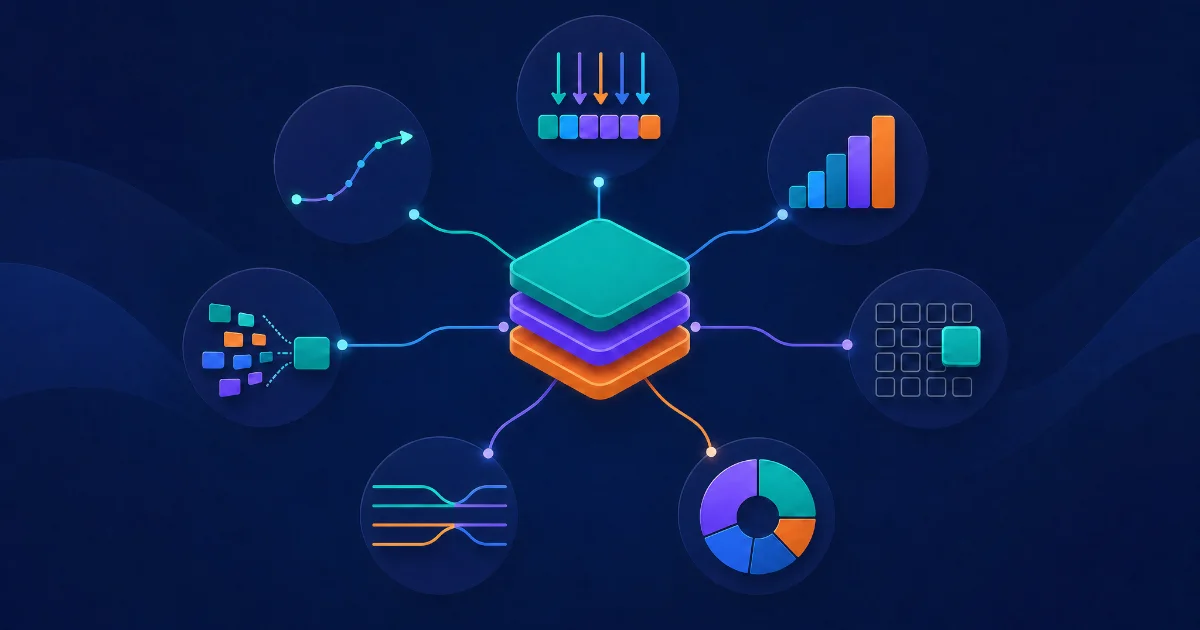
Only now does the shape of what replaces the old stack become clear: a legal operating system. Not another piece of software to evaluate, but the next layer of infrastructure, one that connects legal’s workflows, data, and AI the way ERP once connected finance’s.
In a LegalOS, matters and contracts share the same data instead of living in separate tools. Every request from the business arrives through one front door instead of scattered inboxes. AI can draw on the full context of legal’s work rather than fragments of it. And leadership finally gets the same connected reporting it already expects from every other function it runs. What emerges isn’t a bigger tech stack, it’s a single, connected legal technology ecosystem built as one legal operations platform from the ground up.
Emapta’s 20-person legal team felt this directly. Bringing governance, risk, and migration disciplines together under one system let them formalize workflows that had only ever existed in someone’s head, and extend contract self-service to roughly 600 business users across multiple geographies, without adding headcount to manage it. Read Emapta’s full story.
Looking ahead
The winning general counsel in the next decade won’t be a part of the organizations that buy the most software. They’ll be the ones that build the best operating model, one where legal work, data, and AI move as a single connected system instead of five disconnected ones.
Getting there is less a technology purchase than a legal transformation, and it starts with a legal technology strategy built around one connected platform rather than the next point solution. That is the future of legal.
Ready to see connected legal operations in action?
Explore how LawVu LegalOS helps legal teams replace fragmented technology with a connected operating platform that supports every deal, every decision, and every team.