Operationalizing contract playbooks: Turning legal knowledge into decisions
 LawVu
LawVu
This article draws on insights from a recent online webinar on how in-house legal teams are rethinking contract review. Featuring LawVu Legal Evangelist Shaun Plant and Head of Legal Risk and Compliance Josie Norris, it reflects a broader shift – from static playbooks to more operational, decision-driven approaches.
There’s a familiar rhythm to contract review in most in-house legal teams. A document lands. You scan for key clauses. You start redlining. Somewhere along the way, a question arises: what’s our position on this again? You pause, search for precedent, perhaps check a shared folder or an old email thread, and eventually move forward.
Individually, these moments feel small. Collectively, they define the experience of contract review: fragmented, repetitive, and often slower than it should be. It’s not that the legal work is inherently complex. More often, it’s the process around it that creates friction.
As Plant reflects, legal teams are spending “an inordinate amount of time on what I see as being non-legal activities. It’s admin, and it’s complex admin because we’re lawyers.”
That observation resonates because it reflects a broader truth. The challenge facing legal teams today isn’t a lack of expertise, it’s how that expertise is accessed, shared, and applied in real time.
The quiet problem behind contract review
For many teams, legal knowledge is abundant but unevenly distributed. It lives in documents, inboxes, and individual experience. It’s shaped over time through negotiation, judgment, and precedent. But it’s rarely captured in a way that makes it consistently usable.
This becomes more pronounced as teams grow. What once worked through proximity and shared understanding begins to strain. New joiners take longer to ramp. Senior lawyers become decision bottlenecks. And different parts of the team begin to interpret risk in slightly different ways.
Norris describes this dynamic, saying that when knowledge is “decentralized, that legal knowledge is fragile. It’s not useful to your legal team and the rest of the business.”
The impact isn’t always immediate, but it’s cumulative.
- Decisions become less consistent
- Time is spent searching rather than advising
- Risk becomes harder to see across the organization
- Confidence, both within the team and from the business, begins to erode
In this context, inefficiency isn’t just about speed. It’s about the reliability of legal outcomes.
Why playbooks matter – and where they fall short
Playbooks were introduced to solve exactly this problem. They represent an important shift: from individual knowledge to shared guidance. By capturing preferred positions, fallback language, and escalation paths, they provide a foundation for consistency.
And when implemented well, they do exactly that. They help new team members find their footing. They align legal advice with the organization’s risk appetite. They reduce unnecessary escalation. They create a shared language for decision-making. Importantly, they’re not about rigid control.
“A playbook is really about an enabler,” says Norris. “Allowing the legal team to work at their best, being confident, consistent.”
But even strong playbooks encounter a familiar challenge. They exist but they’re not always used. Not because they lack value, but because they sit just outside the flow of work. They’re documents to reference, rather than tools to act on. And in the pressure of live contract review, lawyers naturally revert to what’s fastest: their own judgment, supported by whatever information is easiest to access.
As Norris notes, the real difficulty isn’t defining legal positions, it’s “being able to apply that knowledge consistently and with speed.”
That gap, between knowing and doing, is where traditional playbooks reach their limit.
From static guidance to operational decision-making
What’s emerging now is a more practical evolution. Instead of treating playbooks as static repositories of knowledge, legal teams are beginning to embed them directly into their workflows – turning guidance into action.
This is the essence of contract intelligence.
At a practical level, it means:
- Playbook rules applied automatically during contract review
- Risks and deviations surfaced in context, not discovered manually
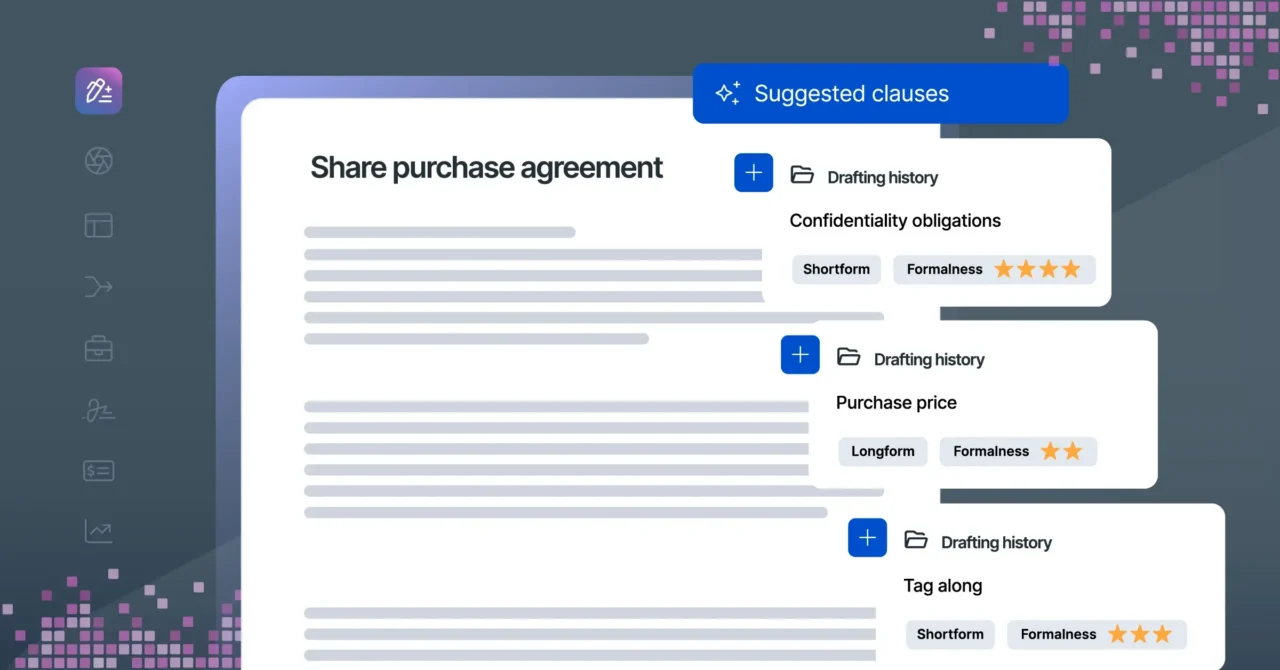
- Suggested language aligned to preferred positions
- Consistent commentary applied across the team
But the shift is more than functional. It changes how legal work feels.
Instead of pausing to find answers, lawyers are supported with the right information at the right moment. Instead of redoing the same work, they build on a shared foundation.
This is where LawVu Draft plays a central role.
As a recent addition to the LawVu operationalization system, Draft brings playbooks into the contract itself – analyzing documents against defined rules, highlighting inconsistencies, and guiding redlining directly within familiar tools like Microsoft Word.
What once required manual comparison and interpretation becomes visible immediately. What once took hours, or days, can be completed in a fraction of the time.
As Plant describes it, review processes that previously stretched out can now be completed “within seconds with consistency across the whole of the contract review process.”
And importantly, this doesn’t remove the lawyer’s role. It sharpens it.
Reframing AI: from concern to capability
For many in-house lawyers, the introduction of AI into contract review is met with a healthy degree of caution.
That’s understandable. Legal work is built on judgment, accountability, and trust. Any technology that touches decision-making naturally raises questions.
But the role AI plays in contract intelligence is far more grounded than it’s often perceived to be. It doesn’t replace legal reasoning. It supports it.
It helps by:
- Identifying patterns across documents that would be difficult to see manually
- Applying agreed rules consistently, every time
- Surfacing risks that might otherwise be overlooked
- Reducing repetitive, process-driven work
In this sense, AI is less about automation and more about augmentation.
As Plant notes, it works best when it becomes “part of a process, not something additional that you need to do.”
For legal teams, that distinction matters. It shifts AI from something to be evaluated cautiously on the side, to something that quietly improves how work already gets done.
From contracts to insight – and back again
One of the less visible, but most powerful, aspects of contract intelligence comes after the review is complete.
Traditionally, once a contract is signed, the insights gained during negotiation are rarely captured in a structured way. Patterns are missed. Lessons are lost. The playbook remains unchanged.
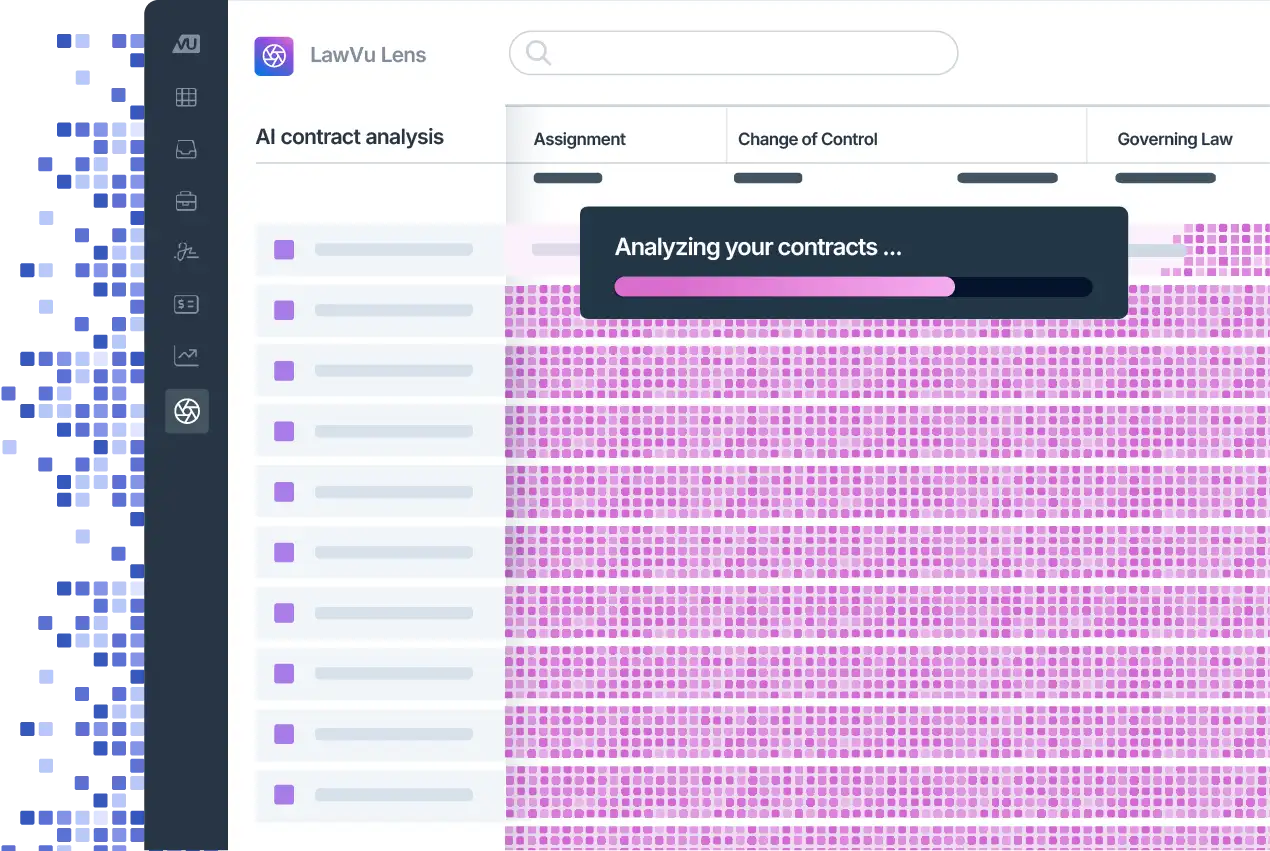
Contract intelligence closes that loop. By extracting and analyzing data across contracts, legal teams can begin to see:
- Which clauses are consistently negotiated
- Where deviations from preferred positions occur
- What risks appear most frequently
- How outcomes vary across the business
This data doesn’t sit in isolation – it feeds back into the playbook. Over time, the playbook evolves. It becomes more aligned with reality, more reflective of the organization’s true risk profile, and more effective in guiding decisions.
As Norris describes it, this creates a “consistent feedback loop informed by the actual outcomes and then refined over time.”
In doing so, the playbook becomes something it was never quite able to be before: a living system.
A more confident, connected legal function
When legal teams operationalize their playbooks in this way, the impact is both immediate and cumulative. Day to day, work becomes smoother:
- Less time spent searching for answers
- Fewer bottlenecks with senior lawyers
- Greater confidence across the team
- More consistent application of legal positions
Over time, the broader benefits emerge:
- Faster contract turnaround
- Improved visibility into risk
- Stronger alignment with the business
- Increased trust in legal as a strategic partner
But perhaps the most meaningful shift is less tangible. Lawyers regain the space to focus on what matters most: the judgment, the nuance, the strategic advice that defines their role.
Contract intelligence doesn’t change what legal teams do. It changes how effectively they can do it. And in that sense, it’s not a departure from traditional playbooks. It’s their natural next step; turning carefully captured knowledge into confident, consistent decisions at scale.
What makes a strong playbook?
A strong playbook isn’t defined by how comprehensive it is – it’s defined by how useful it is in practice.
The most effective playbooks share a few common characteristics.
They reflect your organization – not a template
Playbooks should be grounded in your business context: your commercial priorities, your regulatory environment, and your risk appetite.
As Norris notes, they should “reflect the size and structure of your organization, and your organization’s risk appetite.”
They provide clarity, not just ideals
Strong playbooks go beyond preferred positions. They prepare teams for real-world negotiation by including:
- Acceptable alternatives
- Common concessions
- Clear escalation pathways
This gives lawyers confidence to act without constant escalation.
They balance rules with judgment
Effective playbooks combine:
- Principles-based guidance for flexibility
- Rules-based guidance where consistency is critical
This balance allows teams to move quickly while still applying sound judgment.
They are accessible in the moment of need
A playbook only works if it’s used.
That means it must be:
- Easy to navigate
- Clearly structured
- Integrated into everyday workflows wherever possible
They support consistent communication
Legal advice isn’t just about decisions; it’s about explaining them.
Strong playbooks help lawyers clearly articulate:
- Why a position is taken
- What risk it addresses
- How it aligns with business priorities
They evolve continuously
A strong playbook is never static.
It should be refined based on:
- Real negotiation outcomes
- Emerging risks
- Changes in business strategy
Norris says a playbook should form part of a “consistent feedback loop informed by the actual outcomes.”
At its best, a playbook doesn’t just guide decisions, it enables them. And when operationalized through tools like LawVu Draft and a broader contract intelligence approach, it becomes something far more powerful: a living, operational system that ensures legal knowledge is consistently applied, shared, and improved over time.
Turn contracts into clarity