5 signs your team needs legal spend management and e-billing software
What is legal spend management software?
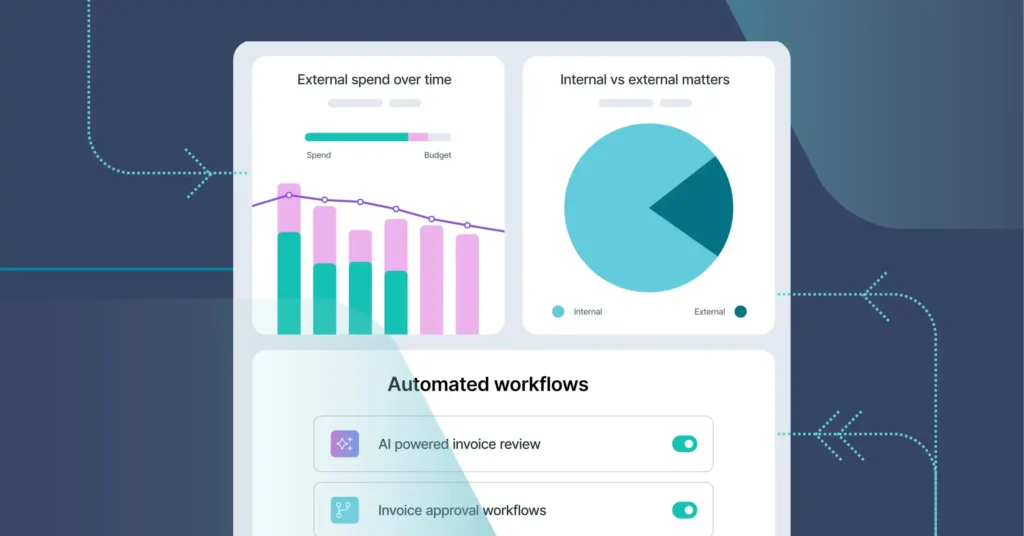
Legal spend management software helps in-house legal teams track, control, and report on what they spend with outside counsel and other legal service providers. Paired with e-billing, it centralizes invoices, automates approvals and billing-guideline reviews, and connects spend to matters so legal can forecast budgets accurately and show the business the value it delivers.
If you’re looking for ways to optimize your approach to e-billing and legal spend management but you’re not sure whether legal spend management software is right for your in-house team, this article will help. We’ll walk through the most common signs that it’s time to make the move – and show how LawVu’s legal spend management and e-billing software gives in-house teams a cost-effective way to take control.
Quick check: are you experiencing these signs?
Run your eye down the first column. If two or three of these feel familiar, this article is written for you.
If you recognize 2–3 of these signs, it’s time to evaluate legal spend management software.
See the LegalOS in action.
Why now’s the time to prioritize legal spend management and e-billing
New data shows that cost management is a critical success factor in a turbulent environment, legal leaders are increasing outside counsel spend, and operational efficiency is a top priority for in-house teams. The conclusion is hard to miss – it’s more important than ever to manage outside counsel spend and engagements effectively.
With just 39 percent of legal teams using spend management or e-billing software, it’s no surprise that LawVu’s research with IDC found a major cause of legal friction is the time teams lose to manual, administrative work tied to outsourced matters:
- 67 percent of legal teams spend 1–3 hours a day manually managing invoice approvals and spend reporting
- Teams spend an average of 5 hours a day emailing law firms for proposals, scope negotiation, and updates
- 69 percent estimate spending more than an hour a day searching email and other sources for matter history and outside counsel advice
That’s the real cost of the status quo: hours every day that could go to higher-value work. With so many teams struggling to maintain control over their budgets, automating the friction is the obvious next step and it’s exactly what e-billing and spend management software is built to do.
Sign #1: You don’t have real-time visibility into outside counsel spend
Many teams struggle with having real-time insight into what they’re spending on legal services. When someone asks for a status update, a year-on-year comparison, or the numbers to forecast a budget or justify a new hire, the answer is slow to find or impossible to produce with confidence.
Why it matters: when finance and the business can’t get a straight answer on legal spend, legal looks reactive rather than in control.
Forecasts become guesswork, budget conversations get tense, and the team loses its credibility by chasing numbers instead of advising the business.
How LawVu helps
- Consolidate and digitize invoices in one platform. Your team and your firm load invoices straight into the legal operating system instead of filing emails and updating spreadsheets. The result is a consistent, structured workflow and a reliable data repository anyone can access.
- Turn that data into instant answers. Out-of-the-box dashboards and exportable reports show exactly what you’re spending and where. Slice, filter, and sort to support budget forecasting, board reporting, and fast decisions.
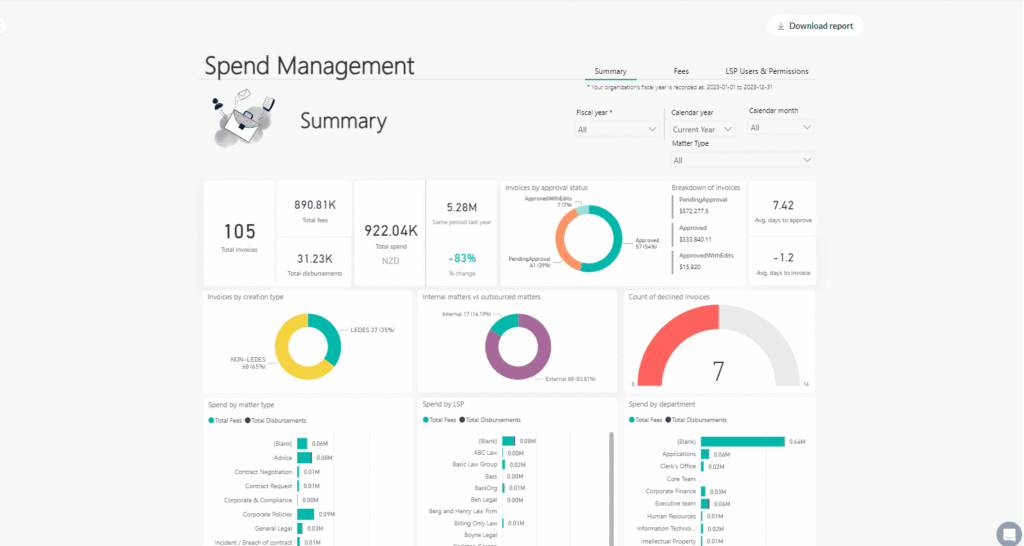
As invoices are centralized, interactive dashboards in LawVu give real-time visibility into legal spend, including budget tracking, trends over time, invoice statuses, and spend by providers, departments, and matters.
Sign #2: Your invoice review still runs on email and spreadsheets
Handling invoices through inboxes and spreadsheets is slow and inefficient. Too much time is spent on low-level admin – data entry, manual reminders, status updates – and the process is error-prone, which leads to unreliable data and missed deadlines.
Why it matters: manual review is where overbilling slips unnoticed and where deadlines get missed.
Every hour spent rekeying invoice data is an hour not spent on legal work, and a single missed billing-guideline breach can cost more than the tool itself.
How LawVu helps
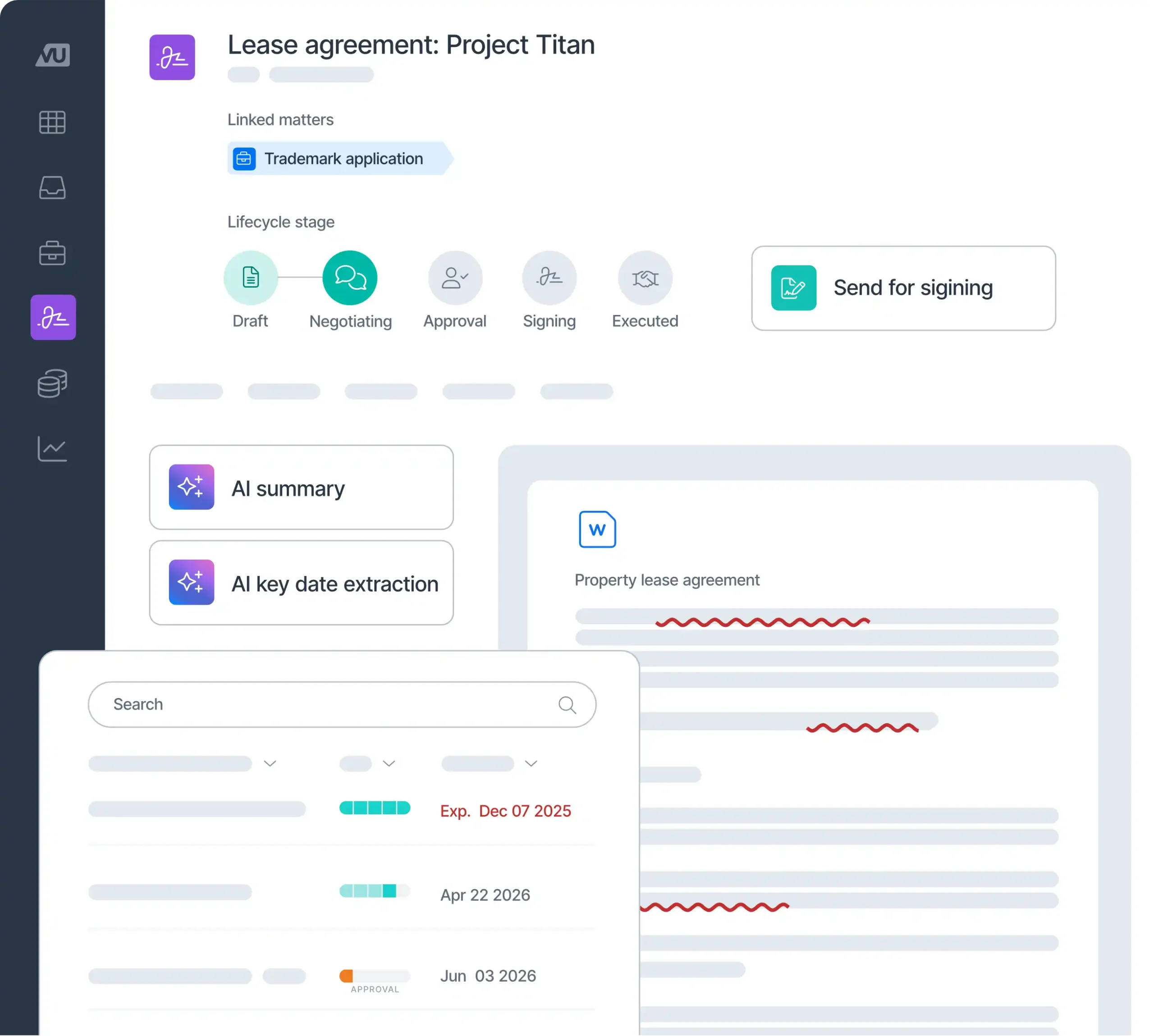
- In-house teams and outside counsel upload invoices into a centralized e-billing repository. Powered by AI data extraction, this source of truth provides real-time invoice tracking, removes manual admin, and reduces the risk of missing important details.
- With invoices in one place, automation does the rest: invoice approval workflows, billing-guideline review, and accrual management reduce email chasing, give time back, and keep everyone compliant with internal processes.
“We were constantly overwhelmed with emails and struggled to keep our information organized… now we use LawVu to keep our department and all our work organized, including the work we do with Legal Service Providers, and our LSPs say the platform is easy to use, which saves us time in the invoicing process.”Bridget Fuller, Senior Legal Assistant, Nabholz Construction
What high-performing legal teams do instead
The best in-house teams don’t patch these problems with another spreadsheet. They work from a single source of truth, where spend, invoices, and matters live together:
- Centralized spend and matter tracking, so every invoice is tied to the work it relates to
- Automated approval and billing-guideline workflows, so review is fast, consistent and compliant
- Real-time reporting dashboards, so the numbers are always ready before anyone asks
It’s the difference between reacting to spend after the fact and managing it as it happens.
Get real-time visibility into legal spend and matters. Book a demo to learn how.
Sign #3: Budget overruns keep catching you off guard
For many teams, unexpected overruns are routine. It’s frustrating when matter costs exceed expectations with no warning, but staying on top of progress and cost is hard when there’s no efficient way to create shared visibility with outside counsel.
Why it matters: surprise overruns erode trust with finance and make every future budget request harder to defend.
Catching cost creep early turns an awkward after-the-fact explanation into a proactive conversation with your firm.
How LawVu helps
LawVu lets legal teams set a budget, agree on scope, and receive updates as a matter progresses, including tracking how invoices affect the agreed budget as they arrive. No chasing information through email, and AI helps get rid of data entry. The result is a proactive approach that keeps teams informed, reduces surprise overruns, and gives them the data to reset expectations or have the crucial conversation with outside counsel early.

A matter in LawVu centralizes scope agreements, documents, updates, conversations, and invoices, making it easy to track spend against budget as the matter progresses.
“Before LawVu, there was a significant risk around documentation – it was scattered throughout emails. I now have a much more robust record of what’s happening, and LawVu has reduced our exposure for not having complete matters.”Andrew Hay, Head of Operations, Legal & Secretariat, Co-op
Sign #4: You can’t compare internal vs external legal work
Without a complete data set, understanding and reporting on internal versus external work is daunting. Missing the full picture makes it hard to plan budgets, balance workloads, and benchmark total legal spend – and you may be paying for work you could do in-house or unknowingly duplicating it with outside counsel.
Why it matters: you can’t make the in-house-versus-outsource call – or defend headcount – without seeing both sides of the work in one place.
Teams that can compare the two routinely find work they’re paying firms for that they could bring in-house at a fraction of the cost.
How LawVu helps
Once again, a unified source of truth is the answer. LawVu is built to manage the full lifecycle of matters, whether handled in-house or with outside counsel so your team doesn’t change workflows or learn a new tool, which means better adoption and a reliable view of total workload.
Three LawVu features that make holistic workload management possible
- A unified, matter-centric design. Every matter holds the work’s key information and securely stores related emails, documents, tasks, and updates. When outside counsel is involved, features for invoices, budget, and collaboration “just show up” so your information stays consistently structured in one repository and one data set.
- Intake and integrations. A “legal front door” for the business to raise requests, plus email integrations that load information without leaving your inbox. It means that no matter how work arises, there are no obstacles to it making its way into LawVu.
- Dashboards and reports. With that source of truth building as a by-product of daily work, data is ready for analysis. Out-of-the-box dashboards make it easy to see the volume of work managed internally and externally, with plenty of attributes to drill into.
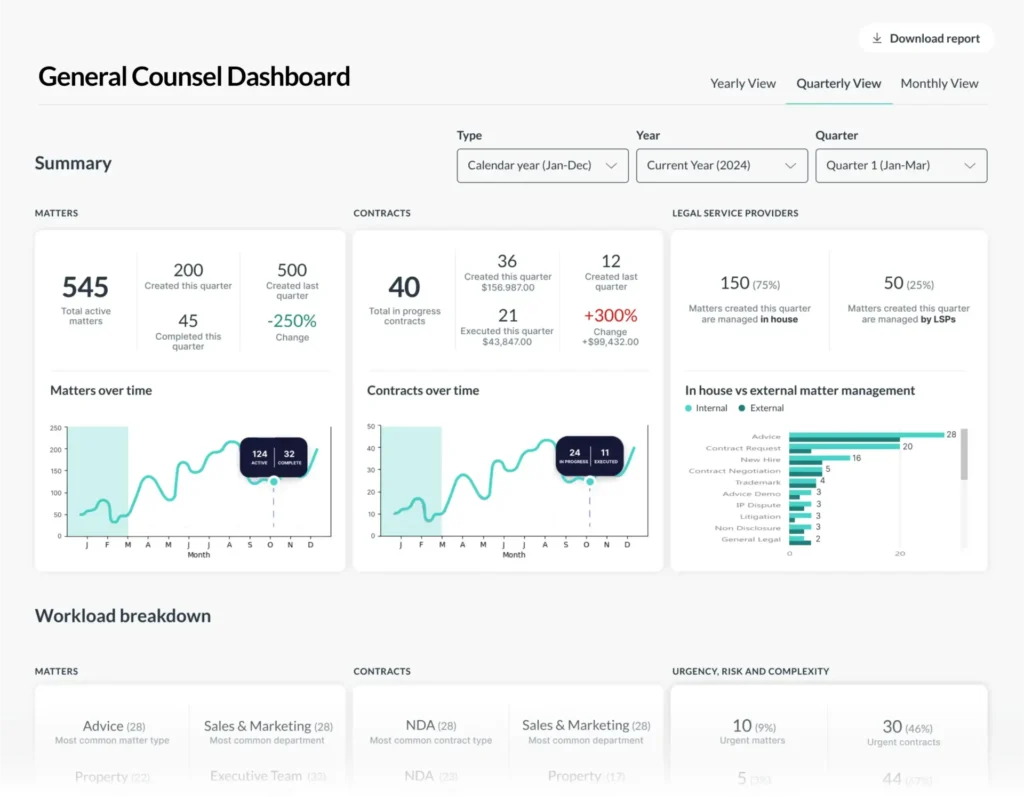
The general counsel dashboard in LawVu makes it easy to assess and communicate overall workload, with visuals to compare internal and external work.
Sign #5: Outside counsel communication lives in long email threads
Email matters but it gets slow and risky when threads grow long, multiple people become involved, and documents fly back and forth. It’s the default way many teams work with their firms, and it’s a barrier to both speed and business continuity.
Why it matters: when the record of a matter is buried in someone’s inbox, knowledge walks out the door when they do.
Scattered threads slow firms down, create version-control risk, and leave no shared, durable record of advice and decisions.
How LawVu helps
You can invite your external counsel to collaborate with you in LawVu, giving them direct access to the relevant matter. They can post and access documents, give and get status updates, work through a task template, and securely handle budget updates and embedded conversations. Moving this out of email means fewer manual touch points for everyone and a more robust system of record where the policies, advice, and documents from your providers are stored in a shared, accessible space.
“LawVu has improved our relationship with our panel law firms because through using the system it’s very clear the matters they are assigned and what we expect them to complete. There is a clear scope of work, and they will always need to do an estimate of costs based on this, as opposed to having to communicate that every time or chase emails.”Fiona McLeod, General Counsel, Nelson City Council
Where does your legal team sit today?
Most in-house teams move through four stages as they get control of legal spend. Find the row that sounds most like you then look at what’s holding you back from moving to the next stage.
The goal isn’t more tools – it’s fewer, working together. That’s the shift from managing spend to optimizing it, with matters, spend, and insights in one connected legal operating system.
It’s time to take critical action
According to Gartner’s latest publication, e-billing and matter management software remains critical technology for legal departments because of its essential role in managing a long-standing and key workflow.
Without these tools, too many in-house teams stay stuck with the pain points of limited visibility, insufficient insights, and inefficient workflows. By addressing them, LawVu helps in-house legal teams save time, cut costs, and enhance overall effectiveness. Watch the video below to see how.