Staying ahead of legislative change: How legal teams can identify impacted contracts and respond in hours
 Neil Smith
If you’ve worked within an in-house legal team during the last decade, you’ll have felt firsthand the unprecedented pace of legislative change.
Ten years ago, the General Data Protection Regulation (GDPR) changed everything, forcing businesses and subsequently legal teams to rethink the way they operated. Risk and compliance became central to navigating business and the correct handling of personal data in an increasingly technological world.
Structural changes followed suit and the legal world saw the expansion of risk and compliance teams in private practice and in-house legal teams in businesses, creating the legal environment we know today.
Today, the rapid development of AI and subsequent regulatory changes are creating this same pressure, and with add-ons such as intense scrutiny on data, health and safety regulations and sector-specific compliance obligations. The challenge we face now is that the window to respond is smaller, and the risk of getting it wrong is higher.
The unpredictability of legislative change
Legislative change is not something that sits politely in your inbox waiting to be read. When it lands, it hits you with force and the collateral of unexpected deadlines, board-level questions, and regulatory expectations.
In a previous role at an infrastructure business, I was part of a legal team that weathered the storm of an unsuspected breach of client data. We went from a normal Monday at workdealing with a ticking time bomb. Senior stakeholders wanted answers yesterday. Regulators had to be considered. Now. Fighting the fire of a data breach is no mean feat, and dealing with a ticking time bomb. Senior stakeholders wanted answers yesterday. Regulators had to be considered. Now. Fighting the fire of a data breach is no mean feat, and it is one that requires preparation.
Depending on government laws, regulators often have the power to turn up unannounced. In the UK, for example, competition authorities can conduct dawn raids where they can enter premises unannounced, request documents, and seize material as part of an investigation. This is when legal tech comes in. With the right systems in place, legal teams can respond to such requests with confidence and an air of calm
The risk of scattered contracts
Before the development of platforms like LawVu, the world of in-house counsel was often chaotic. Contracts were scattered across drives, lost in long-winded email threads, or forgotten about in dusty filing cabinets. It was impossible to collate data because there was no single source of truth, and sensitive information was frequently unaccounted for.
If your contracts are scattered across numerous places, even a straightforward piece of compliance analysis turns into an arduous and time-consuming exercise. Emails need to be fired off to multiple stakeholders, business units are asked to search their drives, and multiple versions of one document are compared. And that’s before you start analyzing the clauses themselves.
Imagine being approached by regulators in this situation – it’s not good. At the drop of a hat, you could be expected to identify a specific clause across thousands of contracts with no real comprehension of where they exist.
At their core, legal teams are guardians and protectors of an organization. If legislation changes and you need to assess your exposure, you cannot afford to guess where the relevant agreements might live.
You can't view the "CTA – Contract Intelligence – web banner 1" (#19902) item because it is in the Trash. Please restore it and try again.
Legal tech as a savior
Now, thanks to the development of legal technology, legal teams have the capability to store their contracts, matters, and spend data in one central place. It’s an undeniable game changer; everyone is working from the same information and the risk of missing a hidden contract is eliminated.
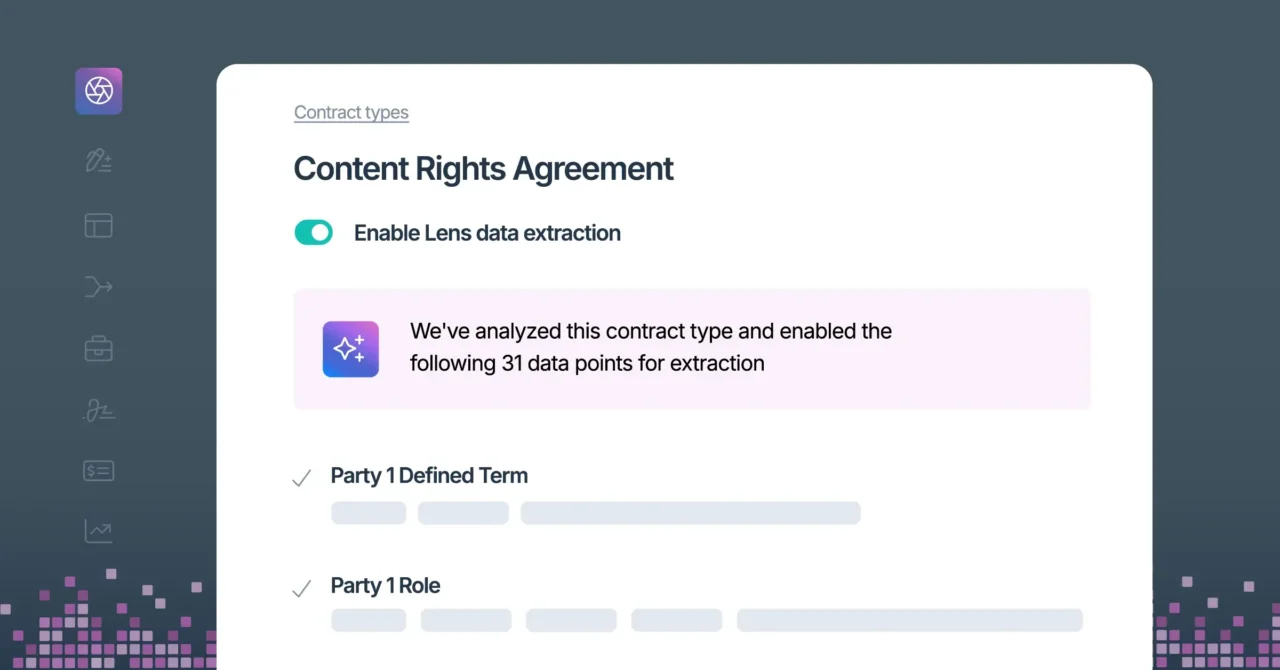
When you add intelligent search software like LawVu Lens, things are amplified. Legal teams have the ability to search through a repository of thousands of contracts and filter for a specific clause, retrieving results in mere seconds. In layman’s terms, you can spot the clause needle in the haystack across thousands of contracts with one push of a button. It’s transformative for legal teams.
Imagine new legislation is introduced affecting data processing obligations. Instead of manually reviewing hundreds of agreements, you can filter by specific clauses and search for defined terms, identifying contracts containing particular wording. Within hours, you have a clear picture of your exposure.
And thanks to clean and structured data, you can export the results into a report for executive teams or external counsel. That’s legislative change contract impact analysis done properly.
I must stress that this still requires legal judgment and interpretation. AI is not taking a lawyer’s job in this sense, but it is doing the manual grunt work, more efficiently and without the risk of human error.
Empowering legal teams
Apart from efficiency gains, one of the most useful benefits of consolidating contracts and matters in a legal workspace is the emergence of patterns.
Legal teams can track the frequency of clauses that often rub up against legislative change, they can monitor how quickly contracts are updated after regulatory shifts, and most importantly, they can begin to predict risk.
The use of AI for compliance gives counsel visibility like never before. It can take a tranche of digital documents and turn them into usable intelligence. In turn, this intelligence informs better contract drafting, negotiation, and preparation for the next onslaught of regulatory changes.
It’s important to note that the way we work has changed. Offices are often flexible, and remote team members have become the norm. There truly is no need for as a physical filing cabinet anymore.
Cloud-based, centralized systems have become our reality, and while they allow legal teams to collaborate from virtually anywhere, they require rigorous digital security infrastructure. Legal workspaces ensure both business and client data is secure and that legal teams aren’t at risk of a potential data breach.
The bottom line is that legislative change creates high-risk, urgent work for legal teams, and that will never change. How counsel prepare for this inevitability is what matters.
If your contracts are scattered and your clause analysis is manual, every regulatory shift becomes a headache. But if your contracts are centralized and searchable at a clause level, you move from a reactive to a controlled environment.
You can't view the "CTA – ARTICLE EMBED – Staying ahead of legislative change" (#19954) item because it is in the Trash. Please restore it and try again.