
The M&A advantage: Turning contract insight into faster due diligence
 David Lancelot
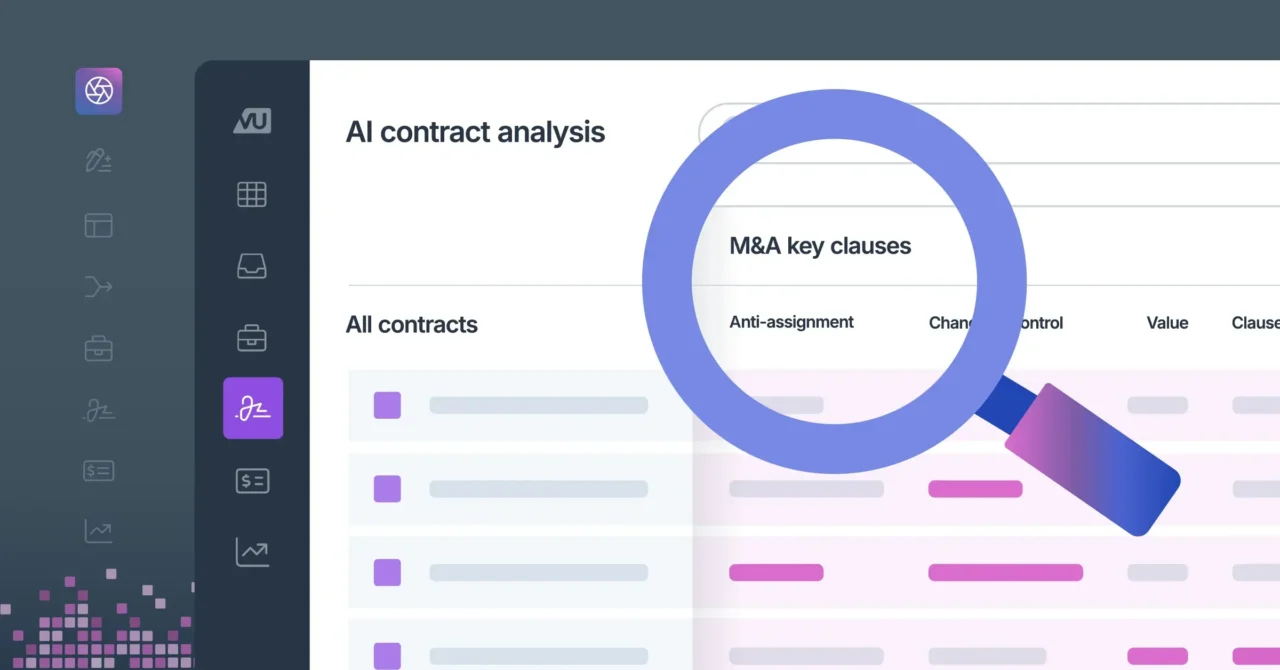
During mergers and acquisitions, legal teams are often asked to review hundreds, sometimes thousands, of contracts under intense time pressure. With the right visibility into contract data, what once took weeks of manual review can become a far faster, less expensive and more strategic exercise.
There’s a moment of quiet dread that most in-house lawyers know well. A due diligence questionnaire arrives in your inbox. Often hundreds of pages long. And somewhere in the middle is the section that belongs to legal.
It might be pages 47 to 78. Or pages 200 to 260. Somewhere in there, along with all the requests related to IP, Litigation, Competition, Employment etc. is a request that requires the team to Review all material commercial contracts the company has and explain what risks, obligations, and change-of-control provisions might affect the deal.
If your organization has thousands of agreements, that request can feel truly daunting. Your contracts may sit inside a repository, but the information that actually matters is usually buried deep in the text: termination rights, assignment clauses, jurisdiction and choice of law, and change-of-control provisions.
In other words, the organization may have the contracts, but very little clarity about what’s inside them.
Finding those answers has traditionally meant one thing: reading the contracts. Lots of them. And when the volume reaches into the hundreds or thousands, that job rarely stays inside the company. It’s pushed out to external counsel or consultants who can dedicate teams to manual review.
That process can take weeks, sometimes months. And the cost can easily reach hundreds of thousands, even millions, depending on the scale of the transaction.
For a function with limited bandwidth that’s always focused on the businesses key strategic objectives it’s an uncomfortable position. Legal can become a bottleneck.
Why contract visibility matters more than most teams realize
In any merger or acquisition, commercial contracts sit at the heart of the deal. They tell you how the business actually operates. They reveal where revenue comes from. They define obligations and risks. And they often contain clauses that can dramatically change the value of a company if ownership changes.
A change-of-control clause, for example, might allow a customer to terminate a contract if the company is acquired; if several of your largest customers have that clause, the deal suddenly looks very different.
Jurisdiction and choice of law clauses can expose the business to unfamiliar regulatory environments. Pricing terms might shift under currency fluctuations. Renewal or termination provisions might put future revenue at risk. Understanding those details is fundamental to assessing what a business is worth.
The problem is that the information is usually locked inside the documents themselves. Historically, contract management systems stored agreements as files with a few metadata fields – perhaps the contract name, parties, and key dates. But the deeper contractual language remained inaccessible unless someone manually reviewed the document.
That’s why contract visibility becomes such a major bottleneck during M&A. The insight exists. It’s just trapped.
From weeks of manual review to minutes of insight
This is where new approaches to contract analysis are starting to change the picture.
Tools like LawVu Lens use large language models and AI-driven analysis to examine the contents of an entire contract repository at once – surfacing the clauses and obligations that would normally require manual review.
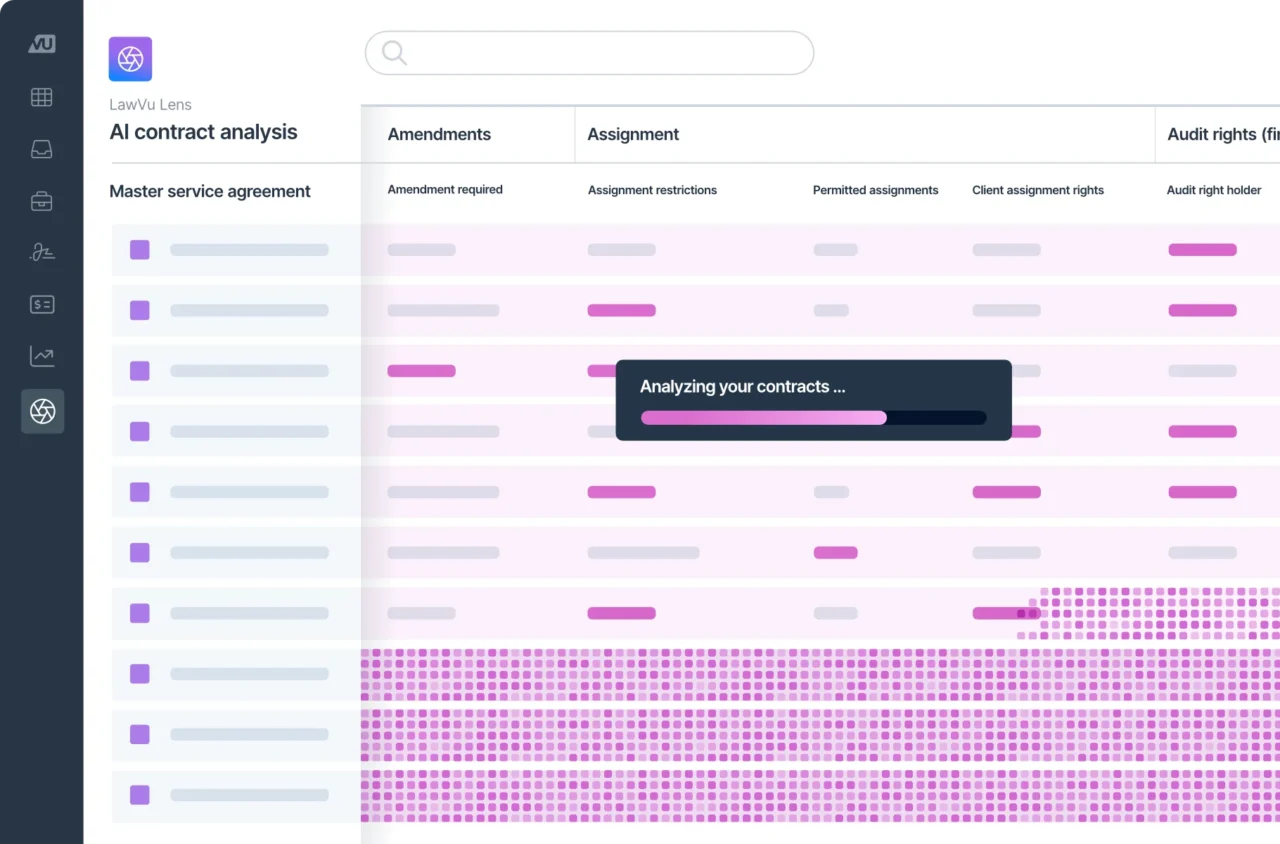
Instead of sending hundreds of contracts to a law firm or consultancy for analysis, a legal team can query the contract dataset directly.
Ask questions such as:
- Which agreements contain change-of-control clauses?
- Which contracts have termination rights triggered by acquisition?
- Where are our highest-value agreements governed by foreign jurisdictions?
The system can extract those provisions from the documents and present them in a structured view – turning unstructured contracts into usable data. What previously required weeks of document review and material expense can potentially be answered in minutes.
That kind of visibility has obvious implications for due diligence. But the real benefit goes deeper than speed. It changes the role legal can play in the deal.
Moving legal from reactive to prepared
In many organizations, legal only begins deep contract analysis when a transaction is already underway. That’s when the due diligence requests arrive. That’s when budget becomes available. That’s when external lawyers start combing through agreements. And that’s when everyone discovers how long the process might take.
But imagine the alternative. Imagine being able to run a quick health check across your company’s contracts at any time.
You could look across the portfolio and ask:
- How many agreements above a certain revenue threshold contain non-standard change-of-control terms?
- Where might termination rights create risk during an acquisition?
- Which contracts sit in jurisdictions that might complicate a deal?
Those answers give leadership something they rarely have in advance of a transaction: clarity. Clarity about risk. Clarity about obligations. Clarity about what might slow a deal down before it begins.
If you can understand the risks buried in thousands of contracts in hours instead of weeks, legal stops being a bottleneck and starts becoming a deal accelerator.
That kind of insight also helps with something many leadership teams overlook – preparation. Material events don’t always arrive with much warning. A potential acquisition, an investment round, or even IPO planning can suddenly trigger a wave of diligence questions.
If the legal team already has visibility across the contract ecosystem, those questions become far easier to answer. Instead of scrambling to assemble information, legal can provide structured insights immediately. And that shifts the perception of the legal function from gatekeeper to enabler.
The bigger shift for in-house legal teams
There’s a broader change happening here that goes beyond M&A. For years, legal departments have stored vast amounts of knowledge inside documents – contracts, policies, agreements – without a practical way to analyse them at scale.
A centralized contract repository solves part of that problem by bringing documents into one place. But the real value comes when those documents can be analysed collectively.
AI-driven contract analysis is turning repositories into something more powerful: a source of operational insight. Instead of static storage, contracts become data. Legal teams can examine trends across thousands of agreements, identify risks earlier, and answer business questions much faster.
And during high-pressure moments – a deal, an audit, or a regulatory issue – that visibility becomes invaluable. Because when leadership asks, “How exposed are we?”, legal doesn’t have to start reading contracts. They already know.
For General Counsel, the strategic advantage is straightforward. If legal work can be done faster and with better insight, the business moves faster too. In the context of M&A, that means due diligence can happen proactively, decisions can be made with greater confidence, and transactions can progress without the delays that traditionally come with large-scale contract review.
It also means fewer surprises. When you understand the structure and risk profile of your contracts ahead of time, you’re not discovering problems halfway through a deal. You already know where the risks are and how they might affect the outcome.
That’s a very different position for a legal team to be in. Because when the due diligence questionnaire lands on your desk, the one that used to trigger weeks of contract review, the answer no longer has to be “this is going to take a while” and “do you have the budget”. It can simply be: “I’ll get back to you shortly.”
Turn contract visibility into contract intelligence
If reviewing hundreds of contracts during due diligence feels overwhelming, it’s often because the insights you need are buried inside the documents themselves. With the right technology, those contracts can become a source of immediate clarity instead of weeks of manual work.
Contract intelligence helps legal teams surface key clauses, understand risk exposure, and answer business-critical questions across thousands of agreements in minutes – not weeks.
See how LawVu brings drafting, review, and contract analysis into one workspace, so in-house legal teams can move faster and act with confidence.
You can't view the "CTA – Contract Intelligence – web banner 1" (#19902) item because it is in the Trash. Please restore it and try again.