From reactive to strategic: 5 key takeaways higher education legal leaders should take from NACUA 2026
 Marcus Smith

The nexus of higher education and legal leadership was the hot topic of conversation at last week’s 2026 National Association of College and University Attorneys (NACUA) Annual Conference.
I spent the week immersed in deep discussions and workshops on the things that matter most to legal professionals working for universities and colleges. We covered a swathe of challenges, from fears around AI adoption and the struggle of justifying legal’s existence, to the importance of soft skills and the importance of understanding one’s organization.
NACUA made it clear that we are all seeking answers to the same problem – legal teams dealing with more requests and more complexity but expected to maintain the same headcount. This pressure results in a department that is purely reactive, lacking the capacity to create proactive systems. A reliance on traditional ways of working is often to blame, with resounding calls for legal to pivot and embrace technology as other back-office business departments such as HR and Finance have.
My five key takeaways from NACUA 2026 are:
1. Legal must become a strategic partner, not just a reactive service
NACUA left me convinced that a better legal department is within reach. General counsel, senior counsel, and legal operations professionals are weary of the relentless pressure placed on their teams and want to do more than simply fight fires. They want the opportunity to solve bigger problems, contribute to institutional success, and create lasting change.
Leading higher education legal departments are now asking a deliberate question before taking on any piece of work: does this serve an actual institutional objective?
Asking that question changes how these teams triage requests. Rather than treating each request with equal urgency, legal leaders are prioritizing based on risk and making conscious decisions about where work should live. Some work stays in-house, some is outsourced to Alternative Legal Service Providers, and some is sent to outside counsel.
When legal teams utilize their intake data and analyze it with intention, factoring in cost, capacity, and risk exposure, they become less of a cost center and shift toward being an accelerator for the institution’s broader goals.
2. Soft skills, not credentials, earn the seat at the table
An uncomfortable truth came up repeatedly at NACUA: higher education institutions don’t open their doors to legal automatically. Access to the C-Suite must be earned, and it’s earned through enduring relationships built upon trust and respect.
There was broad agreement that technical legal competence is assumed. On its own, it no longer sets anyone apart. What differentiates a legal leader who gets invited into strategic conversations early is their people skills. Listening, empathy, communication, and genuine curiosity about how the rest of the institution works are critical skills for a legal leader who has influence.
A legal function that can operate as a business partner rather than a gatekeeper gets pulled into closed-door meetings far earlier, which is exactly when legal can add the most value and catch the most risk. That kind of access isn’t won in a single meeting; rather, it’s built through consistent, low-key engagement over time, with an underlying message that legal is there to help the institution move forward, not slow it down.
3. Understand the situation before you change it
You can’t make changes if you don’t understand what it is you are trying to fix. Legal leaders need to have a solid read on an institution’s culture, risk appetite, and the priorities driving leadership and business objectives before they can meaningfully change how their department functions.
Legal leaders must understand where the organization currently sits, where it wants to go, and what the realistic path between those two points looks like. Talking with the heads of other business functions and the C-Suite is the best way to discern this information.
Risk appetites in particular are easy to misread. A legal department that treats every single matter as high-priority and high-risk doesn’t come across as thorough; it comes across as difficult. And that burns trust faster than anything.
Equally important is respecting an institution’s capacity for change. Higher education institutions are often highly bureaucratic, and meaningful transformation rarely happens overnight. When introducing new processes or technology, it’s essential to consider how staff will respond. Greater investment in communication, training, and onboarding from the outset builds confidence, reduces resistance, and leads to faster, more sustainable adoption.
4. Always begin with the ‘why’
Intentionality was the thread running through nearly every session at NACUA. Before redesigning a process, purchasing new technology, or taking on additional work, the leading departments are asking two questions:
- Why are we doing this?
- What does success look like when it’s done?
Operating with the ‘why’ as a north star is the difference between legal proving its value and legal simply demonstrating activity. A department that doesn’t take the time to ask if requests genuinely serve its institutional goals can quickly become a volume-driven cost-center, hinging its value on the number of contracts reviewed, tickets closed, and matters opened.
Asking what success looks like means defining goals, target metrics, and the ideal outcome before any work begins. You want to create a narrative that connects legal’s work to overarching business objectives and provide reports and data that demonstrate to the board and C-Suite how legal is achieving this.
5. Data is an amplifier
Data is one of the most powerful and underutilized assets available to a legal team. It turns opinion into evidence and may be the single most important lever for building credibility and trust across the institution.
The starting point is understanding your data. Take stock of the information you already collect and identify the trends, metrics, and insights that can improve decision making, demonstrate value, and strengthen the legal function.
It’s also important to identify gaps in your data, which most legal teams have. Legal work is often scattered across email threads, shared drives, and disconnected matter management tools, making consistent reporting nearly impossible.
Data visibility requires centralization. Legal teams need to understand that it is an operational decision and should prioritize centralizing their data onto a single legal operating system. By doing so, they can access trend analysis, resource planning, and generate reports that tell the story of legal’s institutional impact.
From five takeaways to one LegalOS
Higher education legal is in the midst of a transformation from reactive to strategic. Despite ongoing resource constraints, departments are making progress by being intentional about the work they take on, deliberate in how they build trust across campus, and disciplined in how they use data to demonstrate their value.
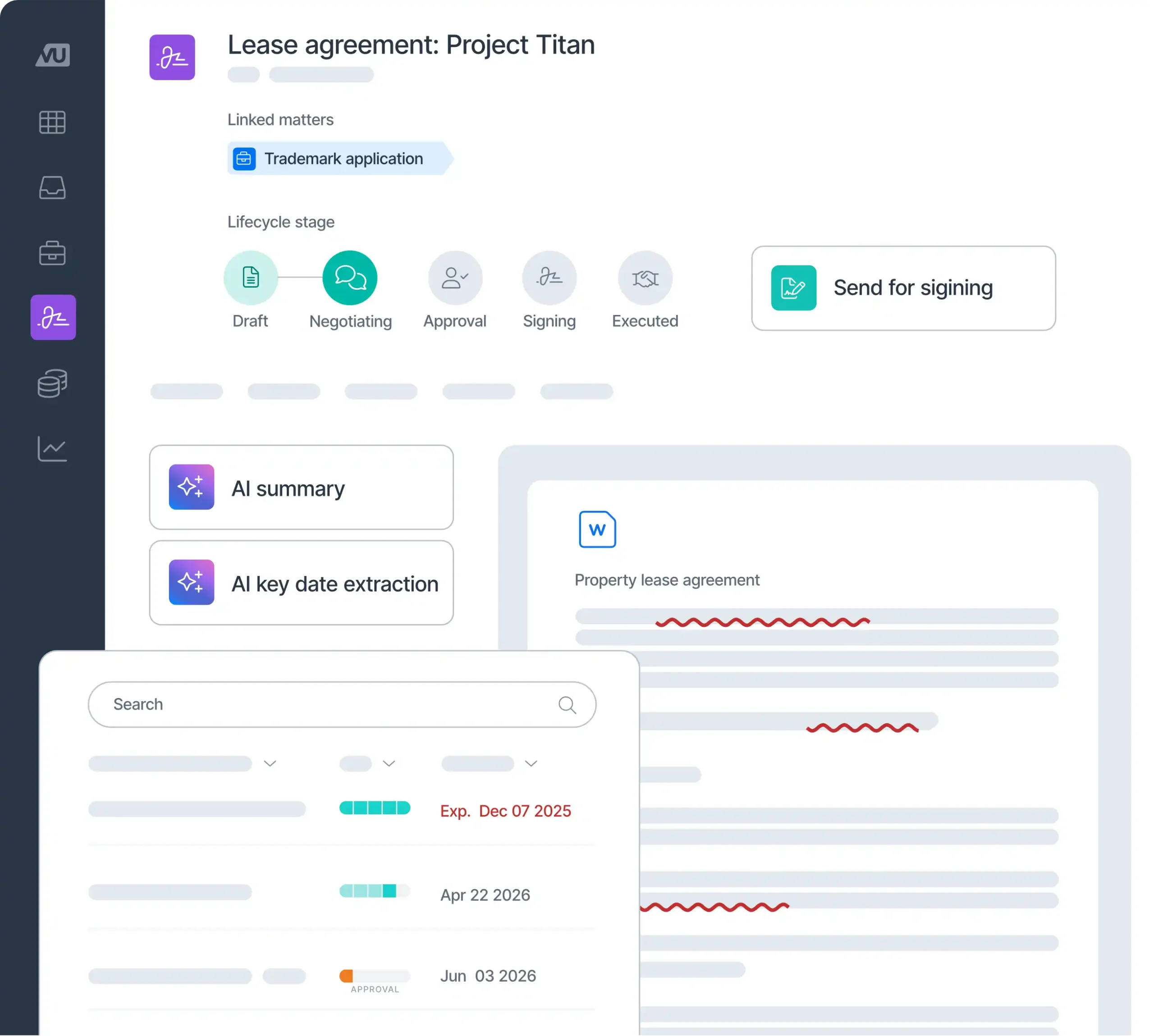
If your department is still operating out of inboxes and disconnected spreadsheets, these five takeaways from NACUA 2026 provide a great framework. They also share a common theme – none of them are fully achievable without centralized, visible data. This is where a platform like LawVu’s LegalOS comes in. It’s a single, centralized system for insights and reporting, matter management, and intake that gives legal leaders the visibility they need to make risk-based decisions, and the data to support conversations with C-Suite.
Be sure to see for yourself how LawVu’s LegalOS supports higher education legal teams making this shift.
See the LegalOS in action.