
From supplier risk to ESG readiness: How legal teams can audit contracts instantly with AI‑powered insight
 Ali Meredith
In the past decade, Environmental, Social, Governance (ESG) has become a fundamental part of the business ecosystem. What was once viewed as a reputational “nice to have” is now embedded in disclosure regimes, supply chain legislation, investor expectations and enterprise procurement requirements. According to PwC, boards and executive teams now recognize that environmental and social impact are crucial to the long-term sustainability of an organization. They are also linked directly to access to capital, investor confidence, and the regulatory resilience of an organization. However, implementing ESG controls creates a real contractual complexity for legal teams. Before diving into the mechanics of how ESG is codified in contractual obligations and how to effectively manage these, it’s worth exploring why ESG matters.
Why ESG visibility now matters
An increasingly complex regulatory landscape is driving greater ESG obligations across most regions. Compounding this is increased investor scrutiny, eligibility for government and enterprise contracts, growing stakeholder expectations and counterparty risk allocation.
For legal teams, the exposure is concrete. Modern slavery legislation, anti-corruption enforcement, climate disclosure regimes and supply chain due diligence all carry significant penalties, increase liability and create reputational consequences that can impact valuations and access to capital.
GCs are increasingly expected to provide assurances to the business that ESG related risks are understood and adequately mitigated. This requires:
- Understanding what the organization has contractually committed to
- Ensuring those obligations are enforceable and aligned with applicable laws
- Aligning public facing statements with contractual commitments
- Identifying gaps between contractual commitments and operational controls
- Managing downstream and back-to-back liability.
Without structured visibility into supplier and customer contracts, legal teams cannot confidently assess or quantify that exposure.
Common challenges with manual supplier audits
For a long time, ESG was aspirational, but ESG obligations are now firmly embedded in contracts- impacting renewal decisions, customer warranties, and board-level reporting. For legal teams, this makes it easy to capture and surface ESG clauses.
At renewal, legal teams must ask:
- Are ESG representations consistent with current regulatory or legislative requirements?
- Do the rights we have such as audit or termination rights provide any leverage in the case of an ESG breach?
- Do legacy contracts contain any commitments that exceed current policy?
Ascertaining this information is often a slow and tedious process. In practice, it requires assessing regulatory developments and then surfacing obligations to evaluate risk across hundreds or thousands of contracts.
At scale, manual review becomes slow and reactive. More importantly, it creates blind spots. Risk may sit in legacy customer contracts signed years ago, drafted under different standards but still binding today. Without complete visibility over the full contract landscape, risk remains difficult to quantify.
How AI clause analysis reveals gaps at scale
Leveraging AI for contract review reduces the amount of manual effort required to understand obligations and evaluate risk. Being able to quickly surface relevant obligations across an organization’s entire contract repository allows legal teams to act swiftly and become proactive and responsive partners to the business.
AI powered contract analysis solutions primarily function to quickly triage and narrow in on the highest priority areas across a database of contracts. By surfacing patterns, such as groups of contracts on similar templates, legal teams can easily identify gaps, which accelerates review.
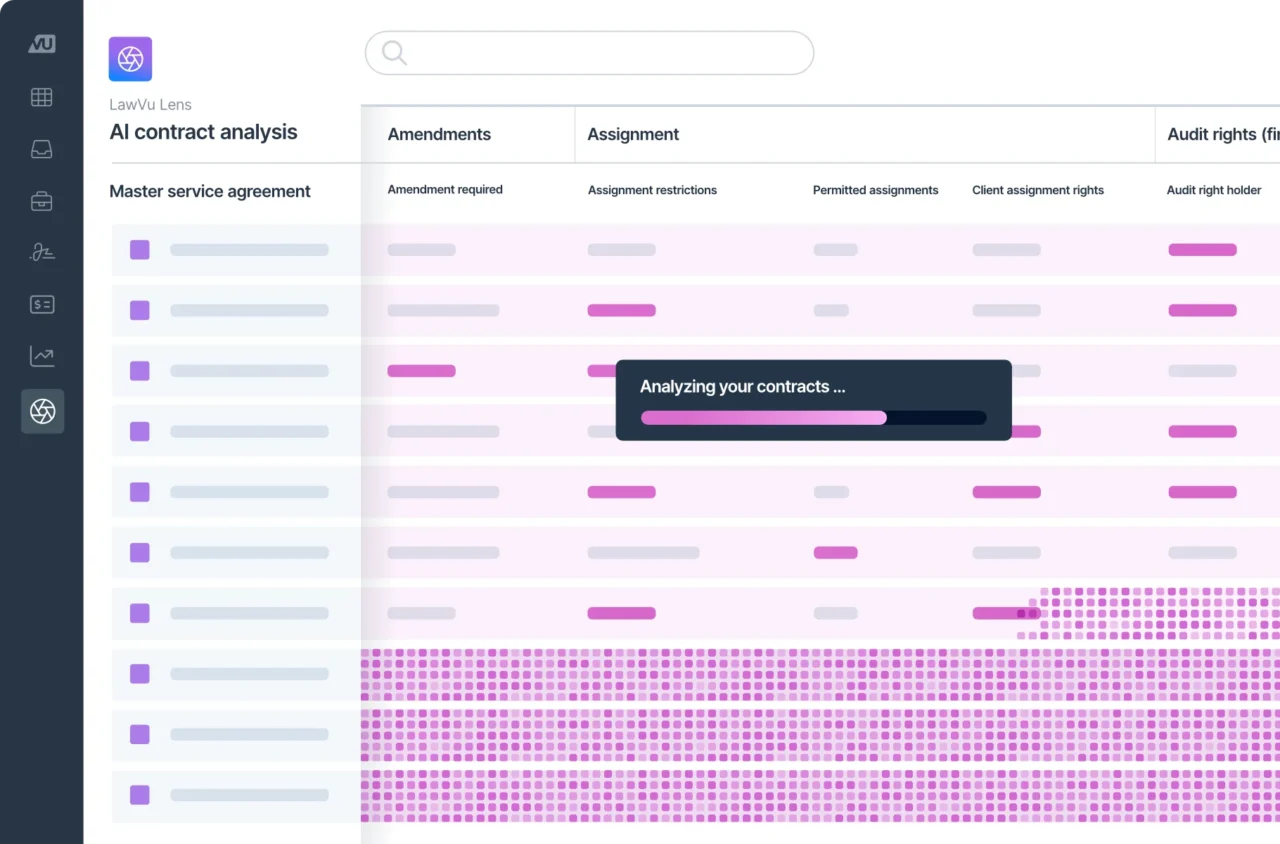
With solutions like LawVu Lens, contracts become structured, searchable, and easily comparable, allowing legal teams to:
- Identify ESG related clauses across an entire contract repository
- Compare representations and warranties and quickly identify problematic contracts
- Surface inconsistencies and detect potential misalignment between supplier obligations and customer commitments
- LawVu Lens can surface ESG-relevant provisions, clauses around anti-bribery, anti-slavery, ethical sourcing, governance, and environmental obligations, across an entire contract set.
Building ESG maturity through contract data
True ESG maturity is about understanding existing commitments and their enforceability. This applies to situations of both buying and supplying products and/or services.
When ESG expectations change, be it a regulation, supplier issue, or market shift, it’s important to understand what obligations you’ve already agreed to around issues such as anti-slavery, anti-corruption, anti-exploitation, and carbon efficiency.
Risk lies not only in future behavior but in past commitments and how they may be perceived in today’s world.
Benefits in practice
When contract data is visible and searchable, you can see what your standards are and what you’ve contracted your suppliers to do. The impact is immediate:
- Faster audits
ESG checks no longer start from scratch at renewal time. - Better reporting
Clauses can be traced, reviewed, and shared without manual copying. - Lower supplier risk
Legal knows where obligations sit before issues can escalate. - Clarity of timing
Legal can extract key dates and give themselves ample time to do due diligence before renewal.
These benefits often make the difference between proactive action and a reactive cleanup.
The ESG expectations placed upon businesses, and therefore legal teams, are ramping up in demand, and supplier risk isn’t getting any simpler. What is changing is how quickly legal teams can respond.
See how LawVu Lens provides contract intelligence that helps legal teams quickly understand obligations and risk – at scale.