From data chaos to clarity: how legal teams can turn reporting into a strategic advantage

TL;DR
Most legal teams have data, what they’re missing is strategy. This piece breaks down why legal reporting fails (fragmented systems, poor governance, no clear questions to answer), and what good looks like: structured data capture, integration across business systems, and a shift from generating dashboards to generating decisions. Includes real-world use cases like IP pipeline tracking, legal spend visibility, and contract cycle time.
Legal teams are under growing pressure to demonstrate business value, improve efficiency, and support faster decision-making, all while sticking to existing resources.
These demands require legal teams to use their time as effectively as possible, so they can focus on the high-level strategic work that makes an impact.
Reporting is one of the biggest drains on legal teams’ time and resources. Many counsel still spend hours manually gathering data, reconciling information across multiple systems, and building reports and spreadsheets that are difficult for leadership teams to interpret and act on.
According to International Data Corporation (IDC) research, 38 percent of business leaders report that a lack of data to measure performance is a major pain point when working with their legal team.
In-house counsel across industries agree that reporting is an arduous, fragmented, and frustrating exercise.
The hidden cost of legal reporting
“Seventy-three percent of people are saying it’s taking at least an hour per day. You could extrapolate that as a daily exercise,” said Patrick Kelley, Director of Channel Partnerships at LawVu, during a recent webinar on unlocking advanced reporting with LawVu and Elevate.
An hour a day on manual data extraction is five precious hours a week that counsel could be using for strategic legal work such as contract revision, negotiation, research, and more. The time spent on reporting becomes an opportunity cost.
IDC research shows that 53 percent of legal leaders find it difficult to compile data for reporting. The irony is that legal teams are surrounded by data in their daily operations. What they lack are the appropriate tools to sort through and analyze it.
As discussed in the webinar, reporting is a recurring operational burden rather than a strategic capability. So, how can this problem be solved? Looking at data is a great first step.
The real problem: a lack of strategy
Christopher Cahn, Managing Director at Elevate, put it simply: “Most legal teams have data. What they lack is strategy.”
Teams are stuck in a familiar but flawed cycle that looks something like this:
- Reporting requests arrive from leadership or regulators
- Counsel scramble to assemble the relevant data
- Information is then manually validated by counsel
- Reporting is delayed or lacks a full data set
- Strategic opportunities are missed
Disconnected systems lie at the root of this cycle.
Contracts, matters, external counsel spend and activity, and business requests all generate valuable information every day. When data is stored across an array of systems, it creates a problem; information is captured inconsistently and therefore lacks the structure to produce meaningful reports.
Leaders talking on the webinar resoundingly agreed that the most effective analytics initiatives are rooted in an intention to answer an overarching question from the business.
Look at your legal department’s pain points, your business’s strategic goals, and try to find the nexus point between them. Some examples of common problems for legal teams are:
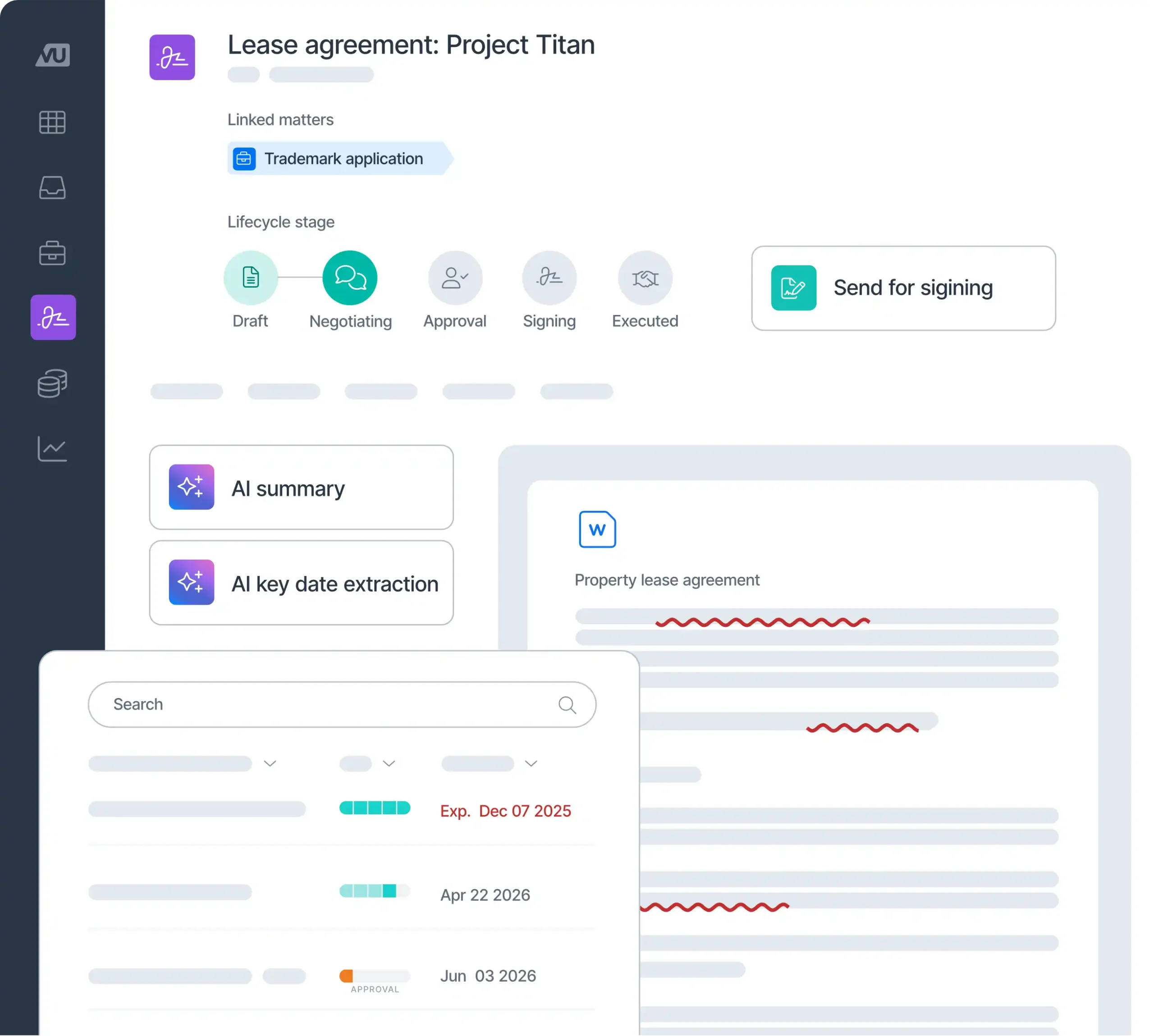
- The business is focused on reducing operational bottlenecks – reporting on ways to shorten the contract lifecycle addresses this issue
- Cost optimization is a priority for the business – reporting on legal spend visibility and outside counsel performance serves this need
Why legal data is so hard to get right?
Legal data environments are rarely simple, especially in large multinational organizations.
When businesses operate across multiple regions, industries, and systems, teams capture information differently depending on their geography, practice area, or location-specific ways of working.
As Kelley reflected, “I worked with customers where the Nordics would do their own thing, as would APAC, EMEA, and North America. What is good looks different in every region, but that changes when you’re working on a bigger project where global teams need to collaborate.”
Inconsistencies in data storage and management create major reporting challenges, and in many legal teams, there are two common causes:
1. No strong data foundation
Many legal teams do not have structured data capture in one place. Critical information could live across emails, spreadsheets, local drives, in the cloud, or even dusty and forgotten in an old filing cabinet.
2. Too many disconnected systems
Teams that are more mature in the technology adoption journey may have implemented legal software systems without realizing those systems can’t communicate with one another.
Legal teams may be using:
- A CLM platform
- An ERP system
- E-billing software
- Salesforce
- Contract and matter management tools
- Project management platforms
While each of these systems contains valuable information, without integration, reporting remains fragmented. The challenge legal leaders face is not about collecting more data; it’s creating connectivity and consistency with the data that already exists.
This is especially important in large enterprises where legal teams may operate with different workflows, priorities, and reporting requirements. Procurement teams may focus heavily on spend visibility and efficiency metrics, while IP teams care more about innovation pipelines and stage progression. Yet the underlying data architecture must support both.
For a detailed dive on data-driven legal teams, check out this article.
The foundation of great reporting
Cahn advised that legal leaders take a step backwards and, instead of asking “what reports can we generate,” determine the business outcomes you want legal’s reporting to support.
According to LawVu, organizations often fall into the trap of building reports without first defining the outcomes they want to achieve. Instead of identifying the insights leadership needs, teams collect whatever data is readily available and build dashboards around existing information rather than the questions they are trying to answer.
Strong reporting considers what questions it seeks to answer from the get-go. It also carefully considers how data is captured, structured, and maintained by adhering to these three principles.
Configuration
Legal teams must capture the right information from the start. If data fields are poorly designed or critical metadata is missing, reporting becomes unreliable later.
Structured data
When it comes to data entry, free-text fields create inconsistency and make analytics difficult.
Structured fields (think dropdowns, standardized categories, and controlled taxonomies) enable cleaner reporting and more reliable analysis.
Usability
Even well-designed systems fail if users avoid them. As Tal Haber, Director of Professional Services at LawVu, said, “If it’s not convenient, people will not fill it out, and you’re not going to get the data you’re looking for.”
Data quality depends heavily on adoption. If workflows are arduous, users will skip fields, enter inconsistent information, or bypass processes entirely.
Three questions every legal team must answer
Before building advanced reporting capabilities, legal teams should evaluate their data readiness using these three foundational questions.
1. Do you have the right data?
Are you capturing the information that matters most to the business?
Many teams collect large amounts of operational data without identifying which metrics truly drive decisions.
2. Is the data structured correctly?
Can the information be consistently categorized, filtered, and analyzed?
Unstructured or inconsistent data creates reporting friction and undermines confidence.
3. Can you trust the data?
This is the most important question. As Cahn said, “If you can’t trust it, you shouldn’t report on it.”
If leadership questions the accuracy of legal data, dashboards quickly lose credibility, and adoption suffers.
Reliable reporting requires ongoing governance, accountability, and data stewardship.
Real-world use cases: what legal teams track
When legal reporting is implemented effectively, it becomes a powerful operational and strategic tool. As discussed in the webinar, legal teams have been able to improve their visibility, streamline their workflows, and demonstrate business value through intentional reporting tools.
Some common use cases are:
IP pipeline tracking
Bob Kanapka, Associate General Counsel at Dun & Bradstreet, explained how he has harnessed LawVu to manage and track how matters progress through different stages of intellectual property workflows.
“We use a dashboard to show how many invention disclosures come in, and how they move through our pipeline to different stages of the patent process, from provisional filing to non-provisional filing, to office action, and hopefully a granted patent.” This visibility helps his team to identify bottlenecks, forecast workloads, and improve coordination.
Legal spend visibility
Analytics can monitor outside counsel spend, identify trends, and support cost optimization initiatives.
One particularly compelling example involved combining legal operations data with ERP data to identify law firms operating outside approved visibility processes and flag spend that was previously difficult to track.
As Kanapka said, the value came not just from the data itself, but from finally making the problem visible: “Sometimes you don’t even know what you want to work on until you have that stark visual.”
Contract cycle time
Cycle time remains one of the most widely tracked legal metrics. Several speakers on the webinar emphasized that contract analytics are invaluable as they allow legal teams to demonstrate how legal enables business velocity rather than slow it down.
Tracking contract turnaround times helps legal teams identify delays, improve efficiency, and demonstrate responsiveness to the business.
Project management dashboards
Some teams use reporting to manage legal projects, resource allocation, and operational priorities more effectively. These dashboards provide visibility into workload distribution, timelines, and progress across initiatives.
The most successful reporting programs focus on practical, decision-oriented metrics rather than vanity metrics.
The power of integration: connecting the dots
Integration was repeatedly identified as one of the biggest differentiators between basic reporting and genuinely strategic analytics. The real value of legal analytics emerges when organizations connect data across systems.
While a standalone dashboard can provide visibility, an integrated data ecosystem can drive transformation.
Integrating legal operating systems such as LawVu with other business systems like Workday or Salesforce enables organizations to combine operational, financial, and business data into a more complete picture.
Integration enables several high-impact capabilities:
- Full legal spend visibility
- Automated workflows and approvals
- Cross-functional reporting
- Business-wide operational insights
- Better forecasting and planning
As Kanapka noted, “You can only marry that data if you have that data feed outside of LawVu.”
Integration is valuable, but teams early in their adoption journey may not have it available, since it requires access to data from existing business workflow systems.
From reporting to storytelling
It’s easy to get swept up in new software tools, creating endless dashboards and reports. But as Cahn advised, “The goal here is not more dashboards. The goal is better decisions and better insights.
“Those insights could be around cycle times, workload, bottlenecks, risk, or resource allocation.”
Insights are ultimately what provide value to the legal team and wider business. You want to use the data you generate to tell stories and identify where gaps lie.
This mindset is critical when approaching legal analytics. Instead of measuring success by the number of reports legal creates, smart leaders will focus on whether reporting helps the business make faster, smarter, and more defensible decisions.
When legal teams can clearly communicate outcomes, trends, and opportunities for their department and others, they strengthen their influence within the organization.
The biggest mistake: ignoring governance
Lawyers work in the business of risk, so they understand, more than most, the importance of governance.
Without proper governance, even successful reporting initiatives can lose integrity over time and damage the legal team’s credibility.
As discussed in the webinar, governance is often overlooked during transformation initiatives. Teams may successfully clean and structure data during implementation, only to see reporting quality degrade over time because standards were not maintained.
Cahn has seen this scenario play out firsthand, where free-text fields and a lack of oversight within reporting systems leave teams unable to fully trust the data they rely on.
To avoid this, it’s important to establish good governance practices such as:
- Consistent data field definitions
- Clear ownership of data standards
- Regular audits and data clean-up
- Controlled taxonomy management
- Ongoing user training
Good governance is often the difference between long-term success and failure.
Start small, then scale
Many legal teams delay analytics initiatives because they believe they need perfect data sets before getting started. On the contrary, one of the clearest lessons from the webinar was that reporting maturity develops through experimentation and iteration.
No one can build the perfect reporting environment overnight, but they can start to extrapolate insights from the data they already have. As Kanapka said, “Sometimes you don’t even know the story until you start playing around with the data.”
Experimenting with and visualizing data will unearth insights that you might never expect. Legal teams that invest in data quality, integration, and governance today will be significantly better positioned to deliver strategic value tomorrow.
The organizations gaining the most value from their legal teams aren’t just collecting data; they’re using it.
See the LegalOS in action.